NAD+ Injections vs Pen: Format Comparison Guide
Published: 2025-06-07 13:25:00 | PEPTEX Research
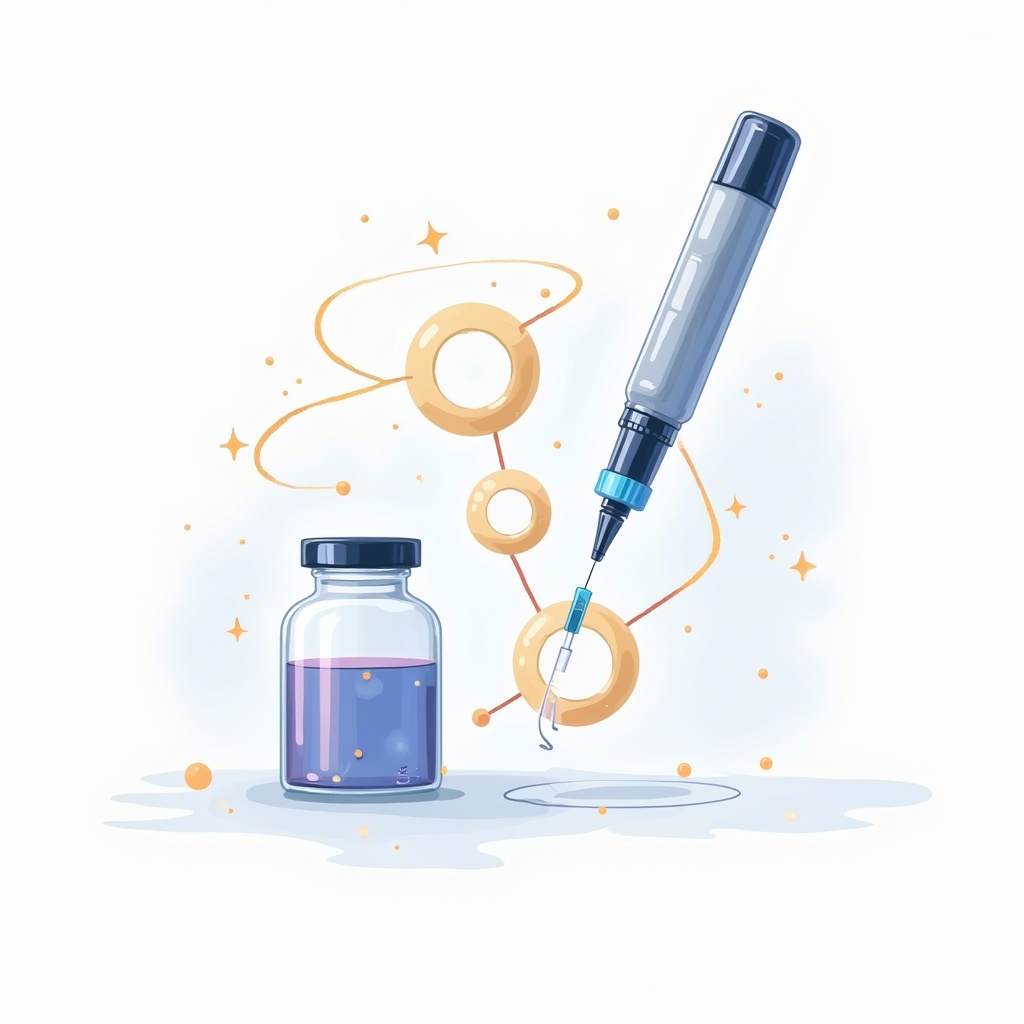
NAD+ has gone from a niche biohacking compound to one of the most talked-about molecules in longevity research. The science is solid: nicotinamide adenine dinucleotide sits at the center of over 500 enzymatic reactions in your body. Without it, your mitochondria stall, DNA repair slows down, and your cells basically forget how to function properly. The question most people face today isn't whether to supplement NAD+ — it's how.
Two formats dominate the injectable NAD+ market right now: traditional vials that you reconstitute and draw yourself, and pre-loaded peptide pens that work like insulin delivery devices. Both deliver the same molecule. But the experience of using them day-to-day is wildly different, and that difference matters more than most people realize when they're choosing between the two.
What NAD+ actually does (the short version)
NAD+ is a coenzyme present in every living cell. It acts as an electron carrier in metabolic reactions — without it, your body cannot convert food into ATP (cellular energy). As you age, NAD+ levels drop. By age 50, most people have roughly half the NAD+ they had at 20. This decline correlates with nearly every hallmark of aging: mitochondrial dysfunction, impaired DNA repair, increased inflammation, and reduced sirtuin activity.
Sirtuins are a family of seven proteins that regulate everything from circadian rhythm to gene expression to inflammatory response. They're completely dependent on NAD+ to function. When NAD+ drops, sirtuin activity drops with it, and the downstream effects cascade through multiple organ systems.
Injectable NAD+ bypasses the digestive system entirely, delivering the molecule directly into tissue where it can be utilized. Oral precursors like NMN and NR work too, but they require conversion steps and the bioavailability is significantly lower. For people serious about maintaining or restoring NAD+ levels, injection remains the gold standard.
The traditional vial: maximum flexibility
NAD+ in lyophilized vial form is the format most clinics and experienced users default to. You receive a vial of freeze-dried powder, reconstitute it with bacteriostatic water, and draw your doses with an insulin syringe. It's straightforward once you've done it a few times, and it offers the most control over your protocol.
Dosing precision
With a vial, you choose exactly how much NAD+ goes into each injection. Typical dosing ranges from 100mg to 500mg subcutaneously, though some protocols call for much higher IV doses in clinical settings. If you want to start at 100mg for the first week, bump to 200mg, then settle at 250mg for maintenance — a vial lets you do that without waste. You're drawing from a larger reservoir and can calibrate each dose to the microgram using standard insulin syringes.
This flexibility is particularly valuable during the loading phase. Many users experience a noticeable flush or mild nausea when they first start NAD+ injections, especially at higher doses. Starting low and titrating up over 7-10 days is standard practice, and vials make this effortless.
Cost per milligram
Vials generally offer the lowest cost per milligram of NAD+. You're buying the raw compound in bulk, essentially. There's no pen mechanism, no cartridge assembly, no pre-filled convenience factor built into the price. For users running longer cycles (8-12 weeks) or higher doses, the savings add up meaningfully.
Storage and handling
Reconstituted NAD+ should be stored refrigerated at 2-8°C and used within the shelf life window. Unreconstituted lyophilized powder is more stable and can be stored at room temperature for extended periods. You'll need bacteriostatic water, insulin syringes, and alcohol swabs — basic supplies that any peptide user already has on hand.
The handling requirements are the same as any reconstituted peptide: keep it sterile, keep it cold once mixed, and don't draw from the vial with a used needle.
The NAD+ Pen: convenience engineered
The NAD+ Pen is a pre-loaded, dial-a-dose injection device that eliminates the reconstitution step entirely. You uncap it, dial your dose, inject, and you're done. No mixing, no syringes, no measuring. The pen comes with the NAD+ already in solution and ready to use.
Zero preparation time
This is the pen's primary selling point and it's a real one. Reconstituting a vial takes 3-5 minutes if you're being careful — drawing bacteriostatic water, injecting it into the vial, gently swirling until dissolved, then drawing your dose. It's not complicated, but it's a process. The pen reduces that to about 15 seconds: dial, inject, done.
For people who travel frequently, the pen is transformative. No carrying bacteriostatic water, no worrying about syringes going through airport security screening, no finding a clean surface to prep on in a hotel room. The pen fits in a toiletry bag and works anywhere.
Dose consistency
Every click of the pen dial delivers a pre-calibrated dose. There's no chance of drawing 0.3ml instead of 0.25ml because you misread the syringe markings. For users who've settled on a consistent daily dose and want repeatability without thought, the pen mechanism is essentially foolproof.
This matters more than you'd think. Dose accuracy with manual syringes requires decent eyesight and steady hands — two things that aren't universal. The pen removes both variables from the equation.
Reduced injection anxiety
Not everyone is comfortable handling syringes. Even experienced users admit that the pen format feels less "medical" and more like a routine wellness step. The needle is built into the device, the injection depth is consistent, and the whole process feels more controlled. For people who are new to peptide injections or who have any degree of needle sensitivity, the pen significantly lowers the psychological barrier.
Head-to-head comparison
| Factor | NAD+ Vial | NAD+ Pen |
|---|---|---|
| Preparation time | 3-5 minutes (reconstitution) | ~15 seconds (dial and inject) |
| Dose flexibility | Full range — any dose you want | Fixed increments per click |
| Best for titrating | Yes — easy to start low | Limited by click increments |
| Travel friendliness | Low — needs supplies | High — self-contained |
| Cost per mg | Generally lower | Slightly higher (convenience premium) |
| Storage | Refrigerate after reconstitution | Refrigerate, ready to use |
| Injection technique | Requires syringe skill | Minimal skill needed |
| Multi-dose from one unit | Yes — many doses per vial | Yes — many clicks per pen |
Who should choose the vial
The NAD+ vial makes the most sense for three types of users:
Experienced peptide users. If you're already reconstituting BPC-157, GHK-Cu, or other peptides regularly, adding NAD+ to your rotation is trivial. You have the supplies. You have the technique. The vial slots right into your existing workflow and gives you the best value for money.
People who want dose control. If you're experimenting with different dosing protocols — say, comparing 150mg daily versus 300mg every other day — the vial gives you the freedom to adjust without committing to a fixed-dose device. This is especially relevant during the first cycle when you're establishing your personal response curve.
Budget-conscious users on longer cycles. NAD+ cycles often run 8-12 weeks for meaningful results, particularly for anti-aging and mitochondrial support goals. Over that timeframe, the lower per-milligram cost of vials saves you real money. If you're already budgeting for blood work and other supplements, the vial format helps keep costs manageable.
Who should choose the pen
The NAD+ Pen fits a different profile:
New users. If NAD+ is your first injectable peptide, the pen removes the steepest part of the learning curve. No reconstitution math, no syringe technique to learn, no risk of contamination from improper handling. You can focus on the effects of the compound rather than the logistics of administering it.
Frequent travelers. Business travelers, athletes on competition circuits, anyone who's regularly away from home — the pen's portability is a genuine advantage. It's one self-contained device versus a kit of vials, water, syringes, and sharps disposal.
People who value routine simplicity. Some users don't want to think about their injection process at all. They want to wake up, dial, inject, and move on with their day. The pen caters to exactly this mindset. When compliance is the bottleneck — and for a lot of people it is — reducing friction at the administration step directly translates to better consistency.
Combining both formats
Here's something most articles won't tell you: plenty of experienced NAD+ users keep both formats on hand. They use the vial at home where they have their prep station and can dose precisely, and they carry a pen for travel or on days when they're rushing. It's not an either/or decision if your budget allows it.
This hybrid approach also makes sense for loading protocols. Start with the vial during your first two weeks when you're titrating doses upward and monitoring how your body responds. Once you've dialed in your maintenance dose and it matches one of the pen's click increments,...
💬 Комментарии