Peptides for Stress & Cortisol: DSIP and BPC-157
Published: 2025-11-05 11:36:00 | PEPTEX Research
Why Chronic Stress Reshapes Your Biology
Cortisol, the glucocorticoid hormone released by the adrenal cortex, follows a strict circadian rhythm under normal conditions. It peaks within 30 minutes of waking — the cortisol awakening response (CAR) — then declines gradually throughout the day, reaching its nadir around midnight. This pattern coordinates glucose metabolism, immune surveillance, and cognitive focus across a 24-hour cycle.
Chronic psychological stress disrupts this architecture. Sustained activation of the hypothalamic-pituitary-adrenal (HPA) axis flattens the diurnal cortisol curve: morning peaks diminish while evening levels stay elevated. The downstream consequences are well-documented in endocrinology literature — impaired glucose tolerance, visceral fat deposition, suppressed mucosal immunity, and disrupted slow-wave sleep. In practical terms, you feel wired at night and exhausted in the morning.
What makes this cycle especially difficult to break is the bidirectional relationship between cortisol and sleep. Elevated evening cortisol suppresses melatonin secretion and reduces deep sleep duration. Poor sleep, in turn, amplifies next-day HPA reactivity. Without targeted intervention, this feedback loop can persist for months or years.
The Gut-Brain Axis: Cortisol's Hidden Amplifier
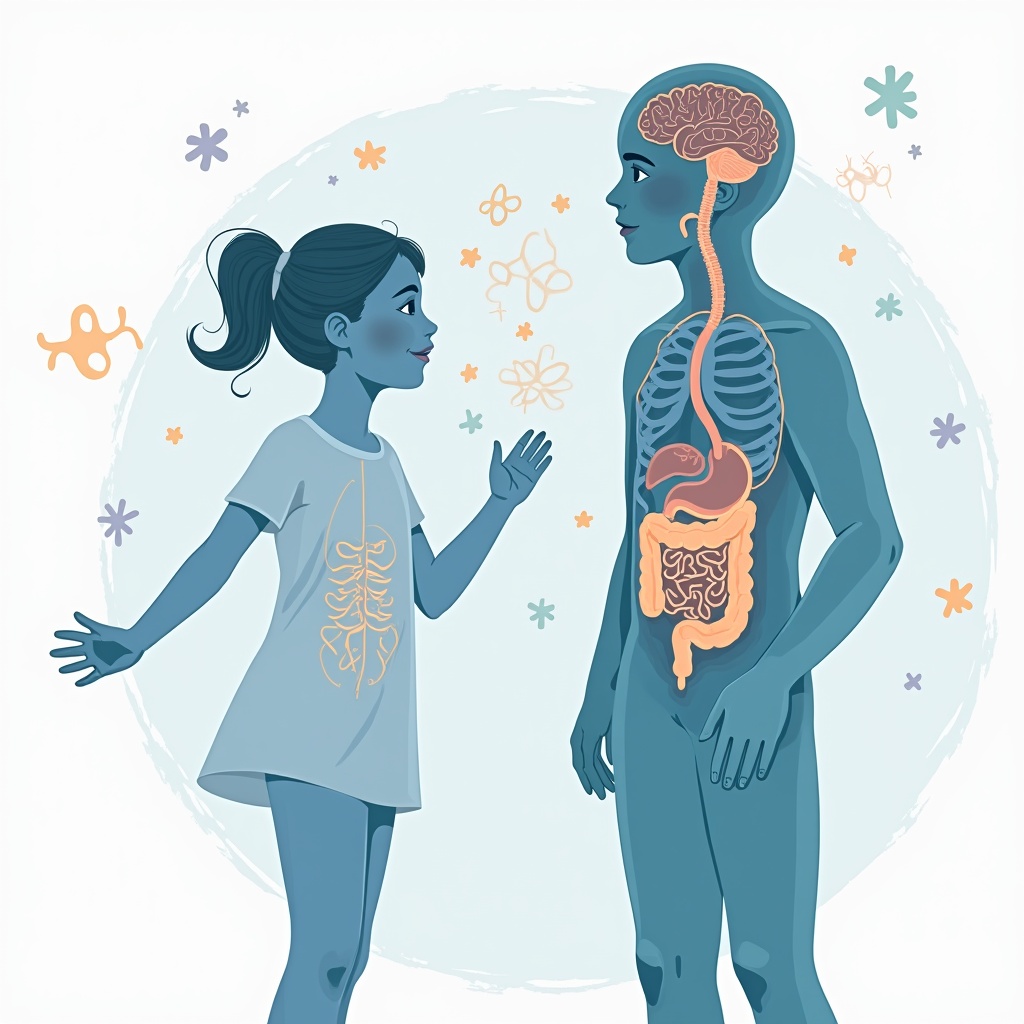
One mechanism that has received increasing research attention is the gut-brain axis — the network of vagal afferents, enteric neurons, and microbial metabolites connecting the gastrointestinal tract to the central nervous system. Cortisol directly affects intestinal permeability by modulating tight-junction protein expression (claudins and occludin). Elevated cortisol loosens these junctions, increasing paracellular permeability — a condition sometimes called "leaky gut" in clinical shorthand.
When the intestinal barrier becomes more permeable, bacterial lipopolysaccharides (LPS) translocate into the systemic circulation. LPS activates toll-like receptor 4 (TLR4) on peripheral immune cells, driving pro-inflammatory cytokine production — primarily IL-6, TNF-alpha, and IL-1 beta. These cytokines cross the blood-brain barrier and further stimulate the HPA axis. The result is a peripheral amplification loop: cortisol damages gut integrity, gut permeability generates systemic inflammation, and inflammation drives more cortisol.
This pathway explains why many individuals with chronic stress also develop gastrointestinal symptoms — bloating, irregular motility, food sensitivities — alongside fatigue, anxiety, and cognitive impairment. Addressing only the psychological dimension often yields incomplete results because the peripheral inflammatory component remains active.
DSIP: Restoring the Cortisol Rhythm Through Sleep Architecture
Delta-sleep inducing peptide (DSIP) is a nine-amino-acid neuropeptide (Trp-Ala-Gly-Gly-Asp-Ala-Ser-Gly-Glu) originally isolated from rabbit cerebral venous blood during electrically induced sleep. It crosses the blood-brain barrier and acts on multiple neurotransmitter systems — GABAergic, serotonergic, and opioidergic — without binding to a single dedicated receptor, which gives it a modulatory rather than sedative pharmacological profile.
Research indicates that DSIP normalizes sleep architecture by increasing delta-wave (stage N3) duration without suppressing REM sleep. This distinction matters because benzodiazepines and Z-drugs increase total sleep time but typically reduce slow-wave and REM proportions, leading to non-restorative sleep. DSIP, by contrast, appears to shift the sleep stage distribution toward a more physiological pattern.
The cortisol connection is direct. Slow-wave sleep is the primary window for overnight cortisol suppression. During healthy N3 sleep, the HPA axis is inhibited, allowing cortisol to reach its circadian nadir. By extending N3 duration, DSIP supports the natural overnight cortisol trough, which in turn permits a stronger morning CAR. Over consecutive nights, this can help re-establish the diurnal cortisol slope that chronic stress erodes.
Additional properties described in the research literature include modulation of corticotropin-releasing hormone (CRH) sensitivity at the hypothalamic level and normalization of ACTH pulsatility. DSIP also demonstrates antioxidant activity by upregulating superoxide dismutase (SOD) expression, potentially reducing oxidative damage associated with prolonged cortisol elevation.
Typical research protocols use DSIP in evening administration cycles of 10-14 days, followed by assessment periods. Users frequently report improved subjective sleep quality, faster sleep onset, and reduced nighttime awakenings within the first 3-5 days.
BPC-157: Repairing the Gut-Brain Axis From Below
Body Protection Compound 157 (BPC-157) is a 15-amino-acid peptide derived from a segment of human gastric juice protein. It has been studied extensively in preclinical models for its cytoprotective properties across multiple tissue types — gastrointestinal mucosa, tendons, ligaments, muscle, and nervous tissue.
In the context of stress-related pathology, BPC-157 addresses the peripheral component of the cortisol-inflammation loop through several documented mechanisms:
- Tight-junction restoration: BPC-157 upregulates expression of tight-junction proteins (ZO-1, occludin, claudin-1) in intestinal epithelial cells, directly counteracting the barrier damage caused by chronically elevated cortisol. In NSAID-induced and alcohol-induced gut injury models, BPC-157 accelerates mucosal healing and reduces permeability markers.
- Anti-inflammatory signaling: The peptide modulates the JAK2/STAT3 and NF-kB pathways, reducing local and systemic production of pro-inflammatory cytokines. By lowering circulating IL-6 and TNF-alpha, it attenuates the cytokine signal that stimulates HPA hyperactivity.
- Nitric oxide system modulation: BPC-157 interacts with the NO system to normalize vascular tone in the splanchnic circulation, improving gut blood flow. Adequate mucosal perfusion is essential for epithelial cell turnover and barrier maintenance.
- Vagal nerve interaction: Emerging data suggest BPC-157 may influence vagal afferent signaling, potentially modulating the ascending gut-to-brain information flow that contributes to anxiety and stress perception.
By targeting the intestinal epithelium and its inflammatory cascade, BPC-157 works at a level that most conventional anxiolytics and sleep aids do not address. This makes it a logical complement to centrally acting peptides like DSIP — one normalizes the cortisol rhythm from the top down (sleep architecture), while the other resolves the peripheral inflammatory driver from the bottom up (gut barrier integrity).
Combining DSIP and BPC-157: A Two-Level Strategy
The rationale for concurrent use of these two peptides rests on their complementary mechanisms. Stress-related cortisol dysregulation operates as a loop with both central (HPA-sleep) and peripheral (gut-inflammation) arms. Intervening at only one level often produces partial results because the intact arm continues to drive the cycle.
A combined approach might look like this in research settings:
- DSIP administered in the evening to restore N3 sleep duration and support overnight cortisol suppression. This addresses the central arm — reducing CRH sensitivity and normalizing the diurnal cortisol slope.
- BPC-157 administered in the morning or divided into two daily doses to restore intestinal barrier function and reduce systemic inflammatory mediators. This addresses the peripheral arm — removing the cytokine-driven HPA stimulation.
As the cortisol curve normalizes, secondary improvements typically follow: better morning energy and cognitive clarity, reduced evening anxiety, improved glucose metabolism, and gradual resolution of stress-related gastrointestinal symptoms. The gut microbiome, which is highly sensitive to cortisol levels and barrier integrity, also begins to shift toward a more balanced composition as the inflammatory environment resolves.
Practical Considerations
Several factors influence the effectiveness of peptide-based approaches to cortisol management:
Timing matters. Cortisol follows a circadian pattern, so interventions should align with that rhythm. Evening protocols for sleep-targeted peptides and morning protocols for gut-targeted peptides respect the underlying biology rather than working against it.
Duration of use. The HPA axis does not reset overnight. Research protocols typically run 2-4 weeks to allow cumulative normalization of both the cortisol curve and downstream tissue changes. Shorter protocols may show subjective improvement in sleep quality but are less likely to produce stable neuroendocrine changes.
Lifestyle synergy. Peptides operate within the context of an individual's overall stress load. Basic circadian hygiene — consistent wake times, morning light exposure, limiting blue light after sunset, and regular physical activity — amplifies the effects by supporting the same biological systems that DSIP and BPC-157 target. Caffeine timing also matters: cortisol is already high on waking, so delaying caffeine by 90 minutes avoids blunting the natural CAR and reduces afternoon cortisol rebound.
Individual response. The degree of HPA dysregulation varies considerably between individuals. Those with long-standing chronic stress may need longer intervention wind...
💬 Комментарии