Collagen is the most abundant protein in the human body — roughly 30% of total protein mass. It provides the tensile strength that keeps skin firm, the scaffold that bones mineralize around, and the flexible matrix that gives cartilage its resilience. After age 25, collagen synthesis drops by approximately 1% per year. By 50, cumulative loss reaches 20-30%, manifesting as wrinkles, sagging, thinning dermis, and slower wound healing.
Most collagen interventions work at the surface level: topical retinoids nudge fibroblast activity, oral collagen supplements provide amino acid precursors, and cosmetic fillers physically replace lost volume. None of these approaches address the underlying regulatory decline — the progressive shutdown of genes responsible for producing new structural proteins.
This is where GHK-Cu enters the picture. First isolated by Dr. Loren Pickart from human plasma in 1973, GHK-Cu (glycyl-L-histidyl-L-lysine copper complex) is a naturally occurring tripeptide that the body produces in decreasing quantities with age. Research has shown it activates over 4,000 human genes — including those responsible for collagen I and III production, the two types most critical for skin structure.
The Collagen Decline Problem
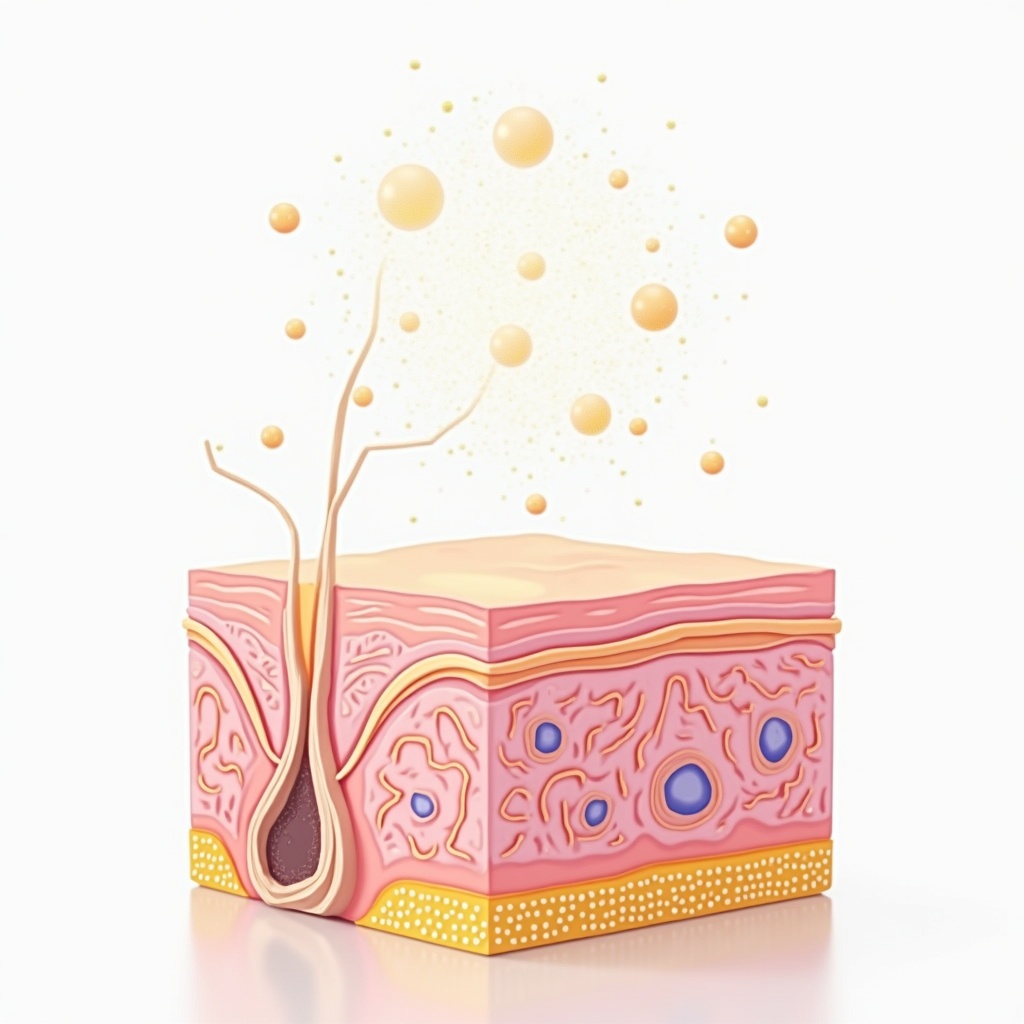
Understanding why skin ages requires understanding collagen architecture. The dermis — the thick middle layer of skin — is composed primarily of type I collagen (80-85%) and type III collagen (10-15%), organized into dense bundles that provide structural integrity. Elastin fibers interwoven with collagen provide snap-back resilience.
Three simultaneous processes drive dermal aging:
Decreased synthesis. Fibroblasts — the cells responsible for producing collagen — become less active with each passing year. Studies using skin biopsies show that collagen I mRNA expression in photoaged skin drops by 50-60% compared to sun-protected skin of the same individual. The cellular machinery for building collagen doesn't break; it receives fewer activation signals.
Increased degradation. Matrix metalloproteinases (MMPs), particularly MMP-1, MMP-3, and MMP-9, break down existing collagen fibers. UV exposure, chronic inflammation, and oxidative stress all upregulate MMP production. A single significant sunburn can elevate MMP-1 levels for up to 7 days, during which active collagen degradation outpaces any new synthesis.
Cross-linking and glycation. Remaining collagen fibers accumulate advanced glycation end-products (AGEs), which create rigid cross-links between collagen molecules. Cross-linked collagen loses flexibility and cannot be enzymatically remodeled by normal cellular processes, creating a progressively stiffening dermal matrix.
The net result: skin that was once 2-3mm thick in the dermis may thin to 1-1.5mm by age 70, with remaining collagen increasingly fragmented and rigidified.
GHK-Cu: Mechanism of Genetic Activation
GHK-Cu is not a drug designed in a laboratory. It is an endogenous peptide — a molecule the human body naturally produces. Serum levels of GHK average approximately 200 ng/mL at age 20 and decline to approximately 80 ng/mL by age 60, a 60% reduction that parallels the trajectory of collagen loss.
Dr. Pickart's research, spanning from 1973 through the 2010s, progressively revealed the scope of GHK-Cu's biological activity. The foundational discovery was that GHK-Cu could stimulate collagen synthesis in fibroblast cultures at concentrations as low as 1 nanomolar. Subsequent work using the Broad Institute's Connectivity Map — a genome-wide expression database — revealed that GHK-Cu affects 32% of human genes, with 59% of those being upregulated (activated) and 41% downregulated (suppressed).
The gene expression changes most relevant to skin structure include:
Collagen synthesis genes. GHK-Cu upregulates COL1A1, COL1A2 (type I collagen), and COL3A1 (type III collagen). These are the primary structural genes whose declining expression directly causes dermal thinning.
Decorin and other proteoglycans. Decorin regulates collagen fibril diameter and spacing. Without adequate decorin, newly synthesized collagen forms disorganized fibers rather than the tight, parallel bundles characteristic of young skin. GHK-Cu restores decorin expression, improving the architectural quality of new collagen.
Elastin production. GHK-Cu stimulates elastin synthesis, restoring the elastic recoil that disappears from aging skin. Elastin fibers cannot be replaced once degraded through normal biological processes — their restoration requires active genetic signaling that GHK-Cu provides.
MMP regulation. While GHK-Cu does not globally suppress all MMPs (some are needed for tissue remodeling), it shifts the MMP/TIMP (tissue inhibitor of metalloproteinases) balance toward net collagen preservation. Specifically, it reduces the excessive MMP-1 and MMP-2 activity associated with photoaging while maintaining the baseline MMP activity needed for healthy tissue turnover.
Antioxidant gene activation. GHK-Cu upregulates superoxide dismutase (SOD) and other antioxidant enzymes, reducing the oxidative stress that drives both collagen degradation and MMP overexpression. This creates a secondary protective effect: less oxidative damage means less inflammatory signaling, which means less MMP production, which means less collagen loss.
The Copper Factor
The copper ion in GHK-Cu is not decorative — it is functionally essential. Copper serves as a cofactor for lysyl oxidase, the enzyme responsible for cross-linking collagen and elastin fibers into their mature, functional forms. Without adequate copper delivery to dermal tissue, newly synthesized collagen lacks structural integrity.
GHK functions as an intelligent copper delivery vehicle. The tripeptide has a binding affinity for Cu(II) that is strong enough to prevent copper from generating free radicals through Fenton chemistry, yet weak enough to release copper at target tissues where lysyl oxidase and other copper-dependent enzymes operate. This balanced affinity — measured at a dissociation constant of approximately 10^-16.2 M — represents an elegantly evolved solution to the problem of delivering a necessary but potentially toxic metal ion.
Research has confirmed that copper delivered via GHK-Cu is more biologically available than copper from inorganic sources. Fibroblasts exposed to GHK-Cu show significantly higher intracellular copper levels than cells exposed to equivalent concentrations of copper sulfate, with none of the cytotoxicity associated with free copper ions.
Clinical Evidence: From Cell Culture to Skin Tissue
The progression of GHK-Cu research from bench to application followed a rigorous trajectory.
Fibroblast studies. Multiple independent laboratories confirmed that GHK-Cu stimulates collagen synthesis in cultured fibroblasts. A landmark study by Maquart et al. (1988) demonstrated that GHK-Cu at 10^-9 M concentration increased collagen synthesis by 70% in cultured fibroblasts while also increasing proteoglycan synthesis — a dual effect indicating coordinated extracellular matrix restoration rather than isolated collagen production.
Wound healing models. Animal studies showed that GHK-Cu accelerated wound closure rate, increased tensile strength of healed tissue, and promoted angiogenesis (new blood vessel formation). The improved vascularity is particularly significant because fibroblasts in aging skin often suffer from reduced nutrient delivery due to capillary regression.
Gene expression profiling. The Broad Institute Connectivity Map analysis, published by Pickart et al., provided the most comprehensive view of GHK-Cu's activity. Comparing GHK-Cu's gene expression signature against thousands of bioactive compounds revealed that GHK-Cu's pattern of gene activation is uniquely suited to tissue repair and regeneration, with no comparable synthetic compound matching its breadth of effect.
Comparative studies. When compared against other peptides and growth factors used in dermatology, GHK-Cu demonstrated a distinctive advantage: it does not simply increase fibroblast proliferation (which can cause fibrosis) or globally stimulate growth factors (which carries theoretical oncogenic risk). Instead, it restores a gene expression pattern characteristic of healthy, younger tissue. This reset-rather-than-stimulate mechanism is what distinguishes GHK-Cu from conventional growth factor approaches.
Practical Application: Using GHK-Cu for Skin Rebuilding
GHK-Cu is available in both injectable and topical forms. The choice depends on the depth of intervention desired and individual protocol preferences.
Subcutaneous injection. Injectable
GHK-Cu from Peptex delivers the peptide directly into subcutaneous tissue, where it can access dermal fibroblasts without the barrier function of the stratum corneum. Typical research protocols use 1-2 mg daily, administered subcutaneously in the periorbital area, nasolabial folds, or other areas of visible collagen loss. The peptide's small molecular weight (403 Da) allows rapid tissue distribution from the injection site.
Topical application. While injectable delivery ensures full bioavailability, topical formulations containing GHK-Cu have also demonstrated efficacy in clinical settings. The tripeptide's small size allows partial penetration through intact skin, particularly when formulated with appropriate delivery vehicles. However, bioavailability via topical route is significantly lower than via injection.
Synergistic approaches. Combining GHK-Cu with complementary peptides can enhance outcomes. The
GLOW anti-aging blend from Peptex combines multiple peptides that target different aspects of skin aging — from collagen synthesis to pigmentation regulation — creating a multi-vector approach to dermal restoration.
A typical protocol progression for skin structure re...
💬 Комментарии