GHK-Cu for Wrinkles: Topical vs Injectable Compared
Published: 2025-10-23 08:15:00 | PEPTEX Research
Why GHK-Cu Keeps Showing Up in Anti-Aging Research
Walk into any dermatology conference today and you will hear GHK-Cu mentioned in at least three separate sessions. The tripeptide-copper complex — glycyl-L-histidyl-L-lysine bound to a copper(II) ion — was first isolated from human plasma by Loren Pickart in 1973. What began as a curiosity about wound healing proteins has grown into one of the most heavily cited peptide compounds in skin biology, with over 140 peer-reviewed studies addressing its role in collagen remodeling, anti-inflammation, and tissue repair.
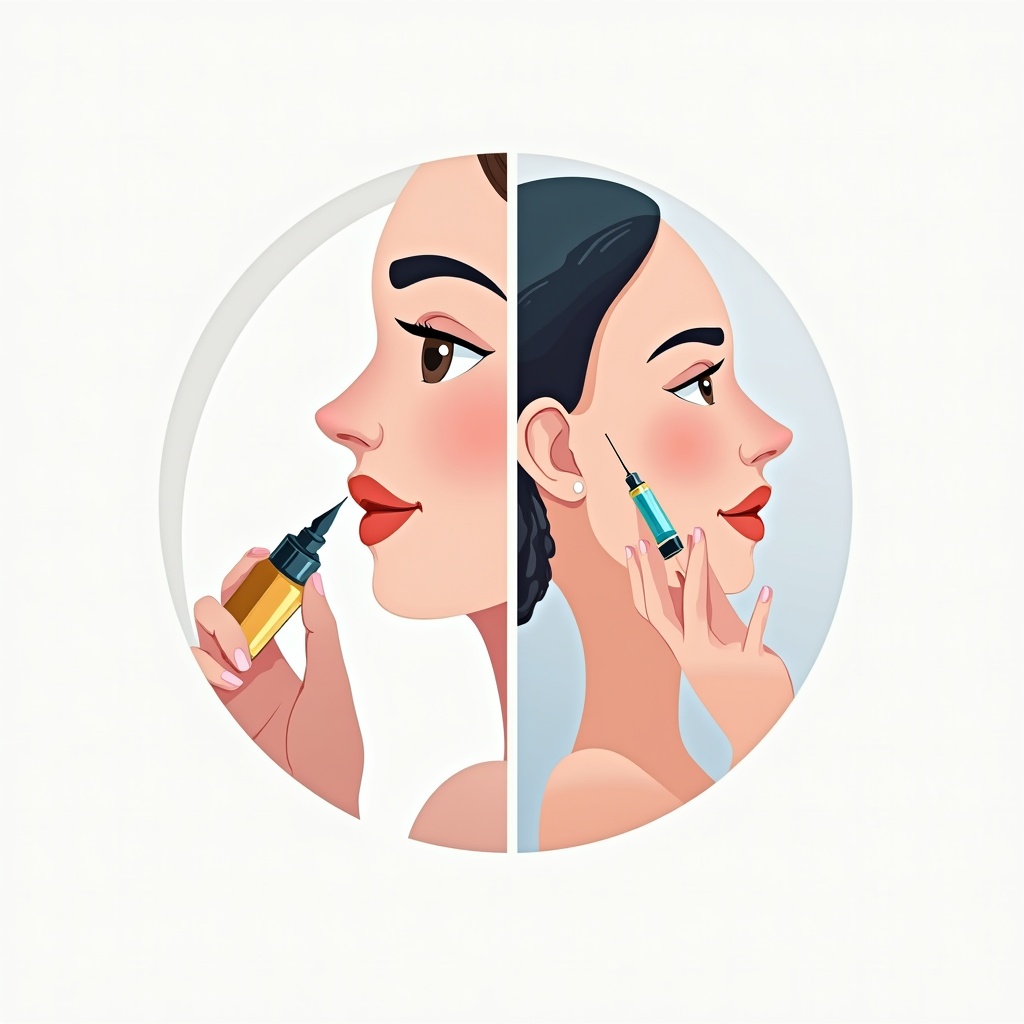
For consumers chasing visible wrinkle reduction, the real question is not whether GHK-Cu works — the evidence base is substantial. The practical question is how to deliver it: through a topical serum applied at home, or via subdermal injections administered by a clinician. Each route carries distinct pharmacokinetic advantages and limitations, and the answer depends on your goals, your skin condition, and how quickly you need measurable change.
The Biochemistry Behind Wrinkle Reversal
Wrinkles form when collagen and elastin networks in the dermal matrix degrade faster than the body replaces them. After age 25, collagen synthesis drops roughly 1-1.5% per year, while matrix metalloproteinases (MMPs) — enzymes that break down structural proteins — become progressively more active under UV exposure and oxidative stress.
GHK-Cu intervenes at multiple points in this cascade. First, it upregulates collagen types I and III by activating fibroblast proliferation and increasing TGF-beta signaling. Second, it suppresses MMP-2 and MMP-9 activity, slowing the degradation side of the equation. Third, the copper ion itself is a cofactor for lysyl oxidase, the enzyme responsible for cross-linking collagen fibers into stable, resilient networks.
A 2018 study published in the Journal of Cosmetic Dermatology demonstrated that GHK-Cu at concentrations as low as 0.01% stimulated fibroblast collagen production by 70% relative to untreated controls. At higher concentrations used in clinical formulations, the effect was even more pronounced — but the delivery method determined how much peptide actually reached the target cells.
Topical GHK-Cu: What Actually Penetrates the Skin?
The stratum corneum — the outermost layer of skin — is an exceptionally effective barrier. Its role is to keep molecules out. GHK-Cu has a molecular weight of approximately 403 Da, which sits just at the upper boundary of what passive diffusion can carry through intact skin (the general cutoff is around 500 Da). In practice, penetration depends heavily on the formulation vehicle, skin hydration, and whether the product uses penetration enhancers.
Modern topical peptide formulations rely on several strategies to improve delivery. Liposomal encapsulation wraps the peptide in a lipid bilayer that fuses with skin cell membranes. Hyaluronic acid vehicles create a hydration reservoir that temporarily loosens the stratum corneum. Some clinical-grade preparations use mild chemical penetration enhancers like dimethyl isosorbide. The Peptex GLOW serum combines GHK-Cu with a carrier system designed to maximize dermal absorption while maintaining stability.
Even with optimal formulation, topical delivery achieves lower dermal concentrations than injection. Estimates from tape-stripping studies suggest that roughly 5-15% of applied GHK-Cu penetrates past the stratum corneum within the first four hours. For someone applying a 1% GHK-Cu serum, this translates to a dermal exposure of approximately 50-150 micrograms per square centimeter — enough to trigger measurable collagen synthesis, but delivered gradually.
Topical protocol: what the clinical literature supports
Most studies showing visible wrinkle improvement with topical GHK-Cu use twice-daily application over 8-12 weeks. A frequently cited trial used a 0.4% GHK-Cu cream applied to periorbital wrinkles (crow's feet) for 12 weeks and found a statistically significant increase in skin thickness measured by ultrasound dermatoscopy, with participants averaging 15-20% greater dermal density.
The practical takeaway: topical GHK-Cu is a slow-build intervention. You will not wake up with tighter skin after one week. The mechanism requires sustained fibroblast activation and accumulation of newly synthesized collagen. Most users report noticeable texture improvement by weeks 4-6, with progressive refinement of fine lines over the subsequent two months.
Best-case scenarios for topical GHK-Cu include fine lines, early crow's feet, superficial forehead creases, and overall skin texture roughness. Deep nasolabial folds and established expression lines respond less dramatically because the collagen deficit extends too deep for topical concentrations to fully address.
Injectable GHK-Cu: Direct Delivery to the Dermal Matrix
Subcutaneous or intradermal injection of GHK-Cu bypasses the stratum corneum entirely, delivering the peptide directly to the dermal layer where fibroblasts reside. This route achieves local tissue concentrations 10-40 times higher than topical application, which translates to faster and more robust collagen stimulation.
Injectable GHK-Cu is typically reconstituted from lyophilized powder — the form that Peptex offers as GHK-Cu peptide — and administered using either mesotherapy-style micro-injections across the treatment area or deeper point injections targeting specific wrinkle sites. Reconstitution protocols generally use bacteriostatic water or sterile saline at concentrations ranging from 100-500 mcg per injection site.
Pharmacokinetics of injected GHK-Cu
After subcutaneous injection, GHK-Cu distributes through the local tissue within 15-30 minutes. The peptide has a plasma half-life of approximately 30-60 minutes, but tissue-level effects persist much longer because the downstream signaling cascades — TGF-beta activation, TIMP upregulation, fibroblast migration — continue operating for 24-72 hours after the initial peptide exposure.
This pharmacokinetic profile supports the common clinical protocol of injecting 2-3 times per week, allowing each session to reinforce the collagen-building signal before it fully attenuates. A typical course runs 4-8 weeks, after which patients transition to maintenance sessions every 1-2 weeks or switch to a topical protocol to preserve gains.
Injectable protocol: realistic expectations
Clinicians experienced with peptide mesotherapy report visible skin tightening and wrinkle depth reduction within 2-3 weeks of starting an injectable GHK-Cu protocol — roughly twice as fast as topical-only approaches. Ultrasound measurements in observational studies show dermal thickness increases of 20-35% over an 8-week injection course, compared to 15-20% with topical use over 12 weeks.
Injectable GHK-Cu addresses a wider range of concerns than topical alone. It is particularly effective for moderate nasolabial lines, jawline laxity, neck creasing, and perioral lines — areas where deeper collagen loss is the primary driver. It also shows stronger results for photoaged skin with significant elastin damage.
Head-to-Head: Topical vs Injectable in Practice
Onset of visible results
Topical: 4-6 weeks for initial texture changes, 8-12 weeks for measurable wrinkle reduction. Injectable: 2-3 weeks for visible tightening, 4-8 weeks for substantial improvement. The difference is dose-dependent — injection simply delivers more peptide to the target tissue in a shorter window.
Depth of effect
Topical GHK-Cu primarily affects the upper dermis, making it well-suited for fine lines and surface texture. Injectable GHK-Cu reaches mid-to-deep dermis, where structural collagen networks that support skin firmness are located. For moderate-to-deep wrinkles, the injectable route provides more meaningful structural remodeling.
Convenience and compliance
Topical application is self-administered, requires no clinical visit, and integrates seamlessly into an existing skincare routine. Injectable protocols require either clinical visits or self-injection experience, proper reconstitution technique, and attention to sterile handling. For many users, a topical like GLOW represents the practical starting point, with injections reserved for targeted intensification.
Safety profile
Both routes have favorable safety data. Topical GHK-Cu rarely causes irritation — the peptide is naturally occurring in human serum at measurable concentrations (roughly 200 ng/mL in young adults, declining with age). Injectable administration carries the standard risks of any subcutaneous injection: transient redness, mild bruising, and rare local infection if sterile technique is not followed. No systemic adverse effects have been reported in published GHK-Cu studies at therapeutic doses.
Cost and accessibility
Topical GHK-Cu serums are generally more affordable on a per-month basis and available without prescription. Injectable GHK-Cu peptide has a higher per-unit cost but covers a defined treatment course rather than ongoing daily use. Many advanced users combine both: injections during an initial intensive phase, followed by topical maintenance.
The Combination Strategy: Why Either/Or Is the Wrong Frame
The most effective approach documented in clinical practice is not topical or injectable — it is both, sequenced strategically. A reasonable evidence-based protocol looks like this:
Phase 1 (weeks 1-6): Intensive. Injectable GHK-Cu 2-3 times weekly at 200-500 mcg per session, distributed across target areas via mesotherapy technique. Concurrently, a...
💬 Комментарии