BPC-157 & TB-500 Post-Surgery Recovery Protocol
Published: 2025-08-21 15:18:00 | PEPTEX Research
Introduction: Why Standard Recovery Is Not the Ceiling
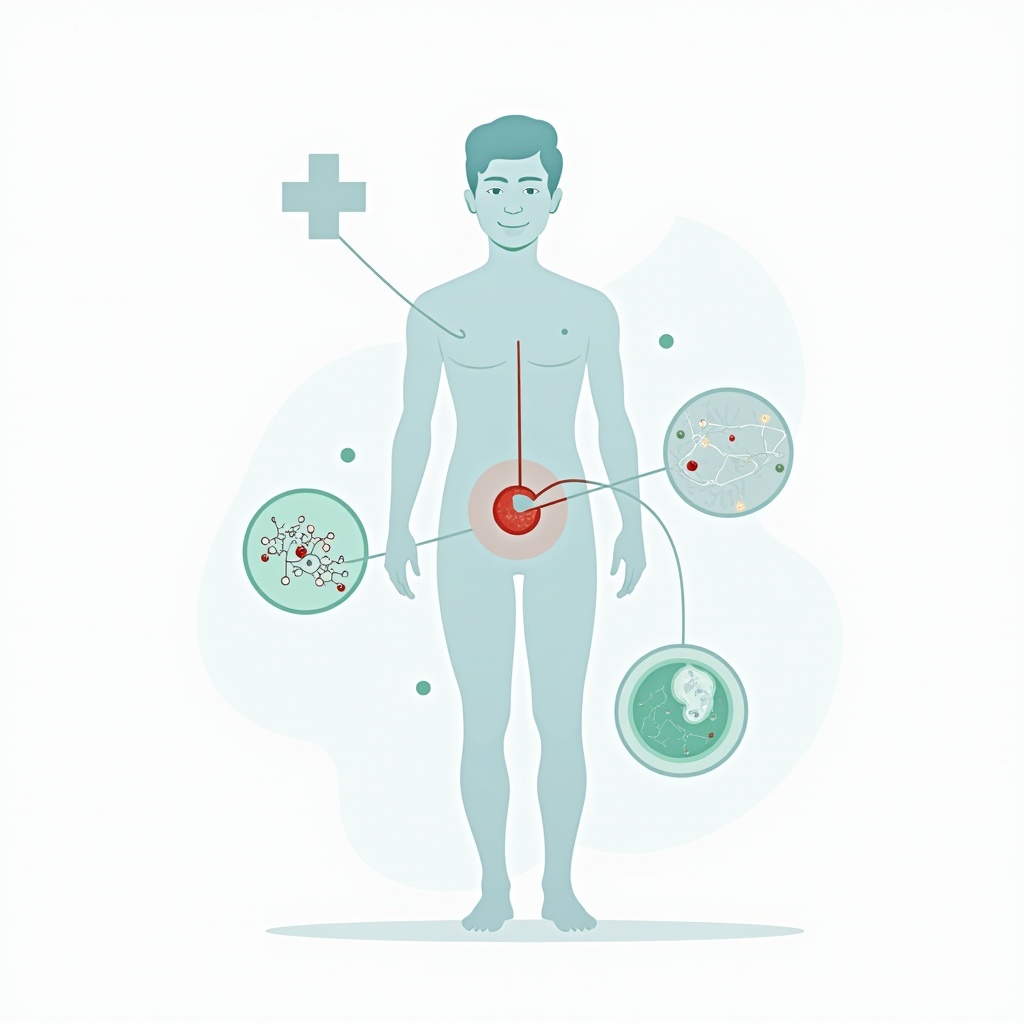
Surgery puts the body through significant stress, triggering cascading inflammatory responses, tissue destruction, and prolonged restructuring of damaged areas. Standard rehabilitation protocols involve rest, physical therapy, and pain management, but the actual pace of healing depends on biological mechanisms: angiogenesis, collagen synthesis, stem cell migration, and inflammation modulation. This is precisely where two peptides — BPC-157 and TB-500 — have drawn serious attention from surgeons, sports medicine physicians, and researchers.
Patients using BPC-157 return to normal activity 30–40% faster than standard timelines. This is not a marketing claim but an observation from rehabilitation clinics, supported by preclinical data. In this article, we will examine the mechanisms of both peptides, specific pre- and post-operative protocols, a week-by-week timeline, and common mistakes that slow recovery.
BPC-157: Mechanism of Action in Surgical Injuries
BPC-157 (Body Protection Compound-157) is a pentadecapeptide consisting of 15 amino acids, originally isolated from gastric juice. Its defining property is systemic stability: unlike most peptides, it withstands the acidic environment of the stomach and remains active across various pH levels.
Angiogenesis and Vascularization
After surgery, damaged tissues suffer from inadequate blood supply. BPC-157 activates VEGF (vascular endothelial growth factor) and stimulates the formation of new capillaries in the injury zone. In experiments involving skin flap models, ischemic injuries, and intestinal anastomoses, the peptide accelerated vascularization by 40–60% compared to control groups.
For a post-surgical patient, this translates to faster edema resolution, reduced bruising, and accelerated healing of surgical incisions.
Inflammation Modulation Through the NO System
BPC-157 interacts with the nitric oxide (NO) system, maintaining balance between pro-inflammatory and anti-inflammatory processes. Rather than completely suppressing inflammation (which would actually impair healing), it channels the response constructively: the inflammatory phase concludes more rapidly, and the body transitions sooner into the proliferative phase — building new tissue.
Tendon Protection and Repair
Orthopedic surgeries — ACL reconstruction, rotator cuff repair, Achilles tendon procedures — require healing of tissues with inherently low regenerative capacity. BPC-157 stimulates fibroblast migration and synthesis of type I and type III collagen, which is critical for tendon junction strength. Studies on transected Achilles tendon models showed biomechanical strength recovery to 85% of baseline within 4 weeks in the BPC-157 group versus 60% in controls.
TB-500: Systemic Mobilization of Repair
TB-500 (Thymosin Beta-4) is a 43-amino-acid peptide naturally present in all cells of the body. Its concentration rises in areas of damage — it serves as an endogenous signal to initiate repair.
Actin Sequestration and Cell Migration
The primary mechanism of TB-500 is binding to G-actin, preventing its polymerization and maintaining a pool of monomeric actin within the cell. This allows cells to rapidly form motility structures (lamellipodia) and migrate toward the injury site. Keratinocytes, endothelial cells, fibroblasts — all key participants in healing gain a mobility advantage.
Anti-Inflammatory and Anti-Fibrotic Effects
TB-500 reduces levels of pro-inflammatory cytokines (IL-1 beta, TNF-alpha) while simultaneously suppressing excessive scar tissue formation. For post-operative recovery, this represents a dual benefit: less pain and swelling in the early days, less scarring and adhesions in the long term.
Cardiac and Muscle Tissue Regeneration
In myocardial ischemia models, TB-500 demonstrated the ability to activate cardiac progenitor cells and reduce the scarring zone by 30–45%. While this is most relevant to cardiac surgery, the systemic effect of stem cell mobilization is significant for any surgical procedure.
BPC-157 + TB-500 Synergy: Why Combination Works Better
Using both peptides simultaneously does not simply add up their effects — their mechanisms complement each other at different levels:
- Different targets: BPC-157 operates primarily through VEGF and the NO system (vasculature and inflammation), while TB-500 works through the actin cytoskeleton (cell migration and tissue repair)
- Different phases: BPC-157 is most active during the inflammatory and early proliferative phases, TB-500 during the proliferative and remodeling phases
- Different tissues: BPC-157 shows the greatest activity in tendons, ligaments, and the GI tract; TB-500 in muscles, skin, and cardiac tissue
- Enhanced angiogenesis: both peptides stimulate new blood vessel formation through different signaling pathways, providing more comprehensive vascularization
The practical takeaway: for abdominal surgeries, BPC-157 may be more critical (gut protection, suture healing); for orthopedic procedures, TB-500 (muscle and tendon regeneration). The combination covers both fronts.
Pre-Operative Protocol: Preparation 7–14 Days Before Surgery
Starting peptides before surgery is a strategy that many practitioners consider optimal. The goal is to saturate tissues with signaling molecules so that by the time surgical damage occurs, the cellular repair machinery is already mobilized.
Week -2 (14 Days Before Surgery)
- BPC-157: 250 mcg subcutaneously, once daily, near the planned surgical site (or abdominally for abdominal procedures)
- TB-500: 2 mg subcutaneously, twice weekly (e.g., Monday and Thursday)
- Goal: initial VEGF activation, thymosin beta-4 accumulation in tissues
48 Hours Before Surgery
- Last BPC-157 injection — 48 hours before the procedure
- Last TB-500 injection — 72 hours before the procedure
- Mandatory: inform your surgeon and anesthesiologist about all substances including peptides. While BPC-157 and TB-500 are not known to affect blood clotting, full disclosure to your medical team is standard safety practice
Post-Operative Protocol: Week-by-Week Timeline
Days 1–3: Inflammatory Phase
The body launches acute inflammation — a necessary stage of healing. The objective: do not suppress it, but control its magnitude.
- BPC-157: 250 mcg subcutaneously, twice daily (morning and evening), as close to the surgical site as possible
- TB-500: do not start during the first 48 hours to avoid interfering with natural clot formation
- TB-500 start: 2–2.5 mg subcutaneously on day 3, single dose
Week 1 (Days 4–7): Transition to Proliferation
Acute inflammation subsides, granulation tissue and new blood vessels begin forming.
- BPC-157: 250 mcg subcutaneously, twice daily
- TB-500: 2 mg subcutaneously, twice during the week
- Add: gentle mobilization per surgeon instructions (passive range of motion, isometric exercises)
Weeks 2–3: Active Proliferation
Peak collagen synthesis and scar tissue formation. A critical window for healing quality.
- BPC-157: 250 mcg subcutaneously, 1–2 times daily (can reduce to once daily if progress is good)
- TB-500: 2 mg subcutaneously, twice weekly
- Physical therapy: gradual increase in range of motion, light loading
Weeks 4–6: Remodeling
Scar tissue reorganizes, type I collagen replaces type III collagen, and tissue gains strength.
- BPC-157: 250 mcg subcutaneously, once daily
- TB-500: 2 mg subcutaneously, once weekly (maintenance dose)
- Activity: progressive loading per rehabilitation plan
Weeks 7–12: Late Remodeling
Tissue continues gaining strength. Full tendon remodeling takes up to 12 months, but primary functional strength is achieved by week 12.
- BPC-157: 250 mcg subcutaneously, every other day or as needed
- TB-500: 2 mg subcutaneously, once every 10–14 days
- Monitoring: assess range of motion, strength metrics, visual scar evaluation
Considerations by Surgery Type
Orthopedic (ACL, Rotator Cuff, Meniscus)
Focus on tendon and ligament regeneration. BPC-157 is injected locally — near the operated joint. TB-500 is administered subcutaneously in the abdomen for systemic effect. Full protocol duration: 10–12 weeks.
Abdominal (Hernia, Cholecystectomy, Bariatric)
BPC-157 is particularly effective here due to its gastric origin. Subcutaneous administration in the abdominal area. Oral BPC-157 (capsule form) may be considered if injections are difficult. Protocol duration: 6–8 weeks.
Cardiac Surgery
TB-500 is the priority peptide due to its cardioprotective properties. BPC-157 serves a supporting role for sternotomy healing. Protocol duration: 8–12 weeks. Coordination with a cardiologist is mandatory.
Plastic and Dermatological
Scar quality is the critical metric. The BPC-157 + TB-500 combination targets scar minimization, accelerated healing, and edema reduct...
💬 Комментарии