TB-500 vs TB-4: Differences, Dosing, Which to Choose
Published: 2025-11-23 16:12:00 | PEPTEX Research
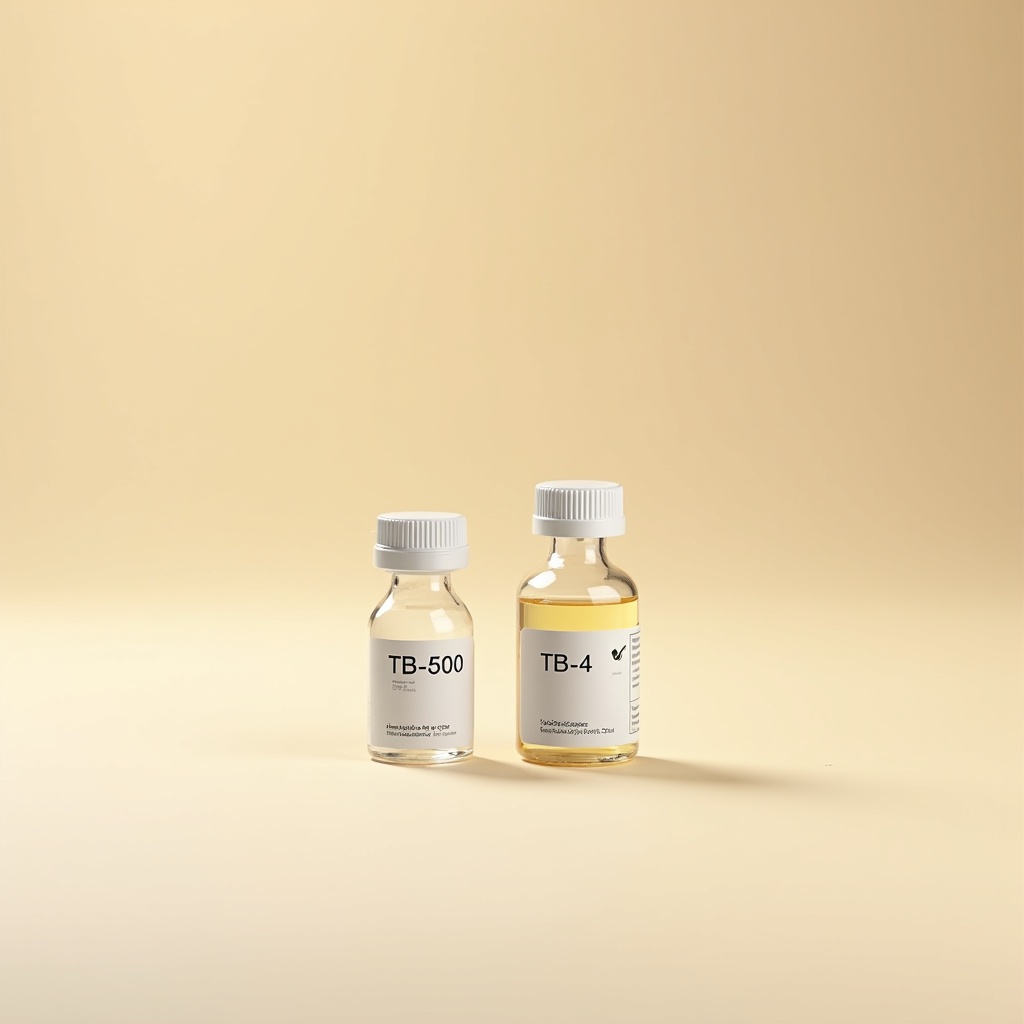
TB-500 and TB-4: Why the Confusion Is a Problem
Ask around any peptide community about recovery, and someone will tell you to grab TB-500 and inject it a few times a week. Simple enough. But here's the thing most people miss: TB-500 and TB-4 (Thymosin Beta-4) are not the same molecule. And the gap between them is bigger than you'd think.
Almost every human clinical trial you'll find referenced? That was done with full-length TB-4. What gets sold as "TB-500" is a fragment — just 7 amino acids out of 43. The actin-binding domain. So when someone says "TB-500 is clinically proven," they're actually citing data from a completely different peptide.
What TB-4 Actually Is (And What TB-500 Keeps)
TB-4 — Thymosin Beta-4 — is a 43-amino-acid peptide your body produces naturally in response to tissue damage. It handles cell migration, new blood vessel formation, inflammation regulation, and wound repair. Multiple functional regions, each doing its own job.
TB-500 is the actin-binding fragment of TB-4. Seven amino acids. It helps cells move (actin is a cytoskeletal protein), and that's essentially where its function ends.
What Gets Lost in the Fragment
- Anti-inflammatory and anti-scarring effects. The first 4 amino acids of TB-4 (Ac-SDKP) suppress inflammation and scar tissue formation. TB-500 doesn't have this region.
- Cell survival (anti-apoptosis). The first 15 amino acids of TB-4 activate cell survival pathways. Without them, cells in the injury zone die faster.
- Antimicrobial properties. Full-length TB-4 has direct antimicrobial action — useful for open wounds and post-surgical recovery. TB-500 can't do this.
- Gene activation for healing. TB-4 triggers expression of genes linked to tissue regeneration. A 7-amino-acid fragment simply cannot replicate this systemic effect.
Now, TB-500 isn't useless. The actin-binding domain genuinely works for cell migration. But calling it "the same as TB-4" is like calling a steering wheel a car.
Clinical Evidence: TB-4 vs TB-500
TB-4 has actual human data. Here's what the trials showed.
Wound Healing
Phase 2 trial, 73 patients with chronic wounds. The TB-4 group healed a full month faster than controls. For chronic wounds that can persist for years, one month is significant.
Heart Function After Heart Attack
Cardiac function improved by 50% in the TB-4 group. The peptide helped restore damaged heart muscle, reduced scar area, and supported new vessel formation in the ischemic zone.
Corneal Healing
Phase 3: 60% healing rate in the TB-4 group versus 13% for placebo. Nearly five times the difference. That's not noise — it's a clinically meaningful result.
And TB-500? Zero completed human clinical trials. Everything gets extrapolated from the TB-4 data. When you hear "TB-500 is clinically proven," the actual logic is: "Well, it's a piece of TB-4, so it probably does something similar." Probably.
Pharmacokinetics: Why TB-500 Dosing Is Different
TB-500 does have one practical advantage: it sticks around longer. TB-500 metabolites are detectable in blood 72 hours post-injection. TB-4 clears much faster — half-life around 1.5 hours.
What this means in practice:
- TB-4 dosing: 500 mcg subcutaneous daily, can increase to 1 mg. 4-6 weeks on, 6+ weeks off.
- TB-500 dosing: same 500 mcg - 1 mg range, but 2-3 times per week. The longer half-life means fewer injections.
Fewer shots is convenient. But convenience doesn't compensate for missing five out of six mechanisms of action.
Oral TB-500 Doesn't Work
This comes up regularly: can you take TB-500 by mouth? Short answer — no. TB-500 has no oral bioavailability. It gets destroyed in the GI tract before absorption. This is different from [[BPC-157|22]], which does work orally (though injections are still more effective). So subcutaneous injection is the only viable route.
Quinn Stillson, MD: TB-4 Wins Almost Every Time
Dr. Quinn Stillson (his deep dive on this topic has 39,000 views) puts it bluntly: TB-4 is superior to TB-500 in nearly every scenario. His recommendation is clear — go with TB-4 unless cost makes it impossible. Switch to TB-500 only when TB-4 pricing is genuinely out of reach.
And it makes sense. Why pay for 7 amino acids when you can get all 43 — plus the anti-inflammatory, anti-apoptotic, and antimicrobial effects?
Combining with BPC-157: When and How
A separate question: how to pair [[TB-500|25]] (or TB-4) with [[BPC-157|22]]. It depends on the injury type.
Chronic Injury (Tendinitis, Old Tears, Non-Healing Ligaments)
Start with [[BPC-157|22]] solo. It handles local healing and angiogenesis well. If you plateau after 2-3 weeks, add TB-4 (or [[TB-500|25]] if budget is tight). BPC pulls recovery from the bottom up, TB adds systemic mechanisms from the top down.
Acute Injury (Fresh Tear, Post-Surgical Recovery)
Both peptides from day one. With acute injuries, every day matters: BPC-157 kicks off local healing, TB-4 controls inflammation, protects cells from apoptosis, and drives stem cell migration to the damage site.
If you don't want to source components separately and build your own protocol, Peptex carries [[GLOW|23]] — a ready-made blend combining BPC-157, TB, and [[GHK-Cu|24]] in one vial. Convenient when the goal is maximum recovery without complex logistics. Shelf life after reconstitution is 90 days.
Risks: What Doesn't Get Talked About
Both TB-4 and TB-500 carry the same potential risks as [[BPC-157|22]]. The mechanisms that aid healing could theoretically be problematic if there's existing cancer:
- Angiogenesis — new blood vessel formation helps injuries heal, but tumors also need blood supply.
- Anti-apoptosis — protecting cells from death is great in the injury zone, not so great if those cells are cancerous.
- Epithelial-mesenchymal transition — a mechanism involved in cell migration that's also implicated in metastasis.
This doesn't mean peptides "cause cancer." But if there's an undiagnosed growth, stimulating vessel formation and shielding cells from death isn't what you want. The recommendation is straightforward: screen before you start. Basic bloodwork, tumor markers, imaging if warranted.
TB-500 or TB-4: The Bottom Line
Here's the summary:
- TB-4 = 43 amino acids, full spectrum of mechanisms, human clinical data
- TB-500 = 7 amino acids, actin-binding domain only, no human clinical data
- TB-500 is more convenient for dosing (2-3x/week vs daily)
- TB-500 is usually cheaper
- Oral TB-500 doesn't work — injections only
- When possible, choose TB-4
- Combining with BPC-157 enhances results
- The [[GLOW|23]] blend = BPC + TB + GHK-Cu in one vial
Got questions about choosing between TB-500 and TB-4, dosing protocols, or compatibility with other peptides? Reach out to support. We'll help you figure out the right approach for your situation.
💬 Комментарии