BPC-157 : Mécanisme, dosage et guide de recherche
Publié : 2025-10-21 11:14:00 | PEPTEX Research
What Is BPC-157 and Why Does It Matter?
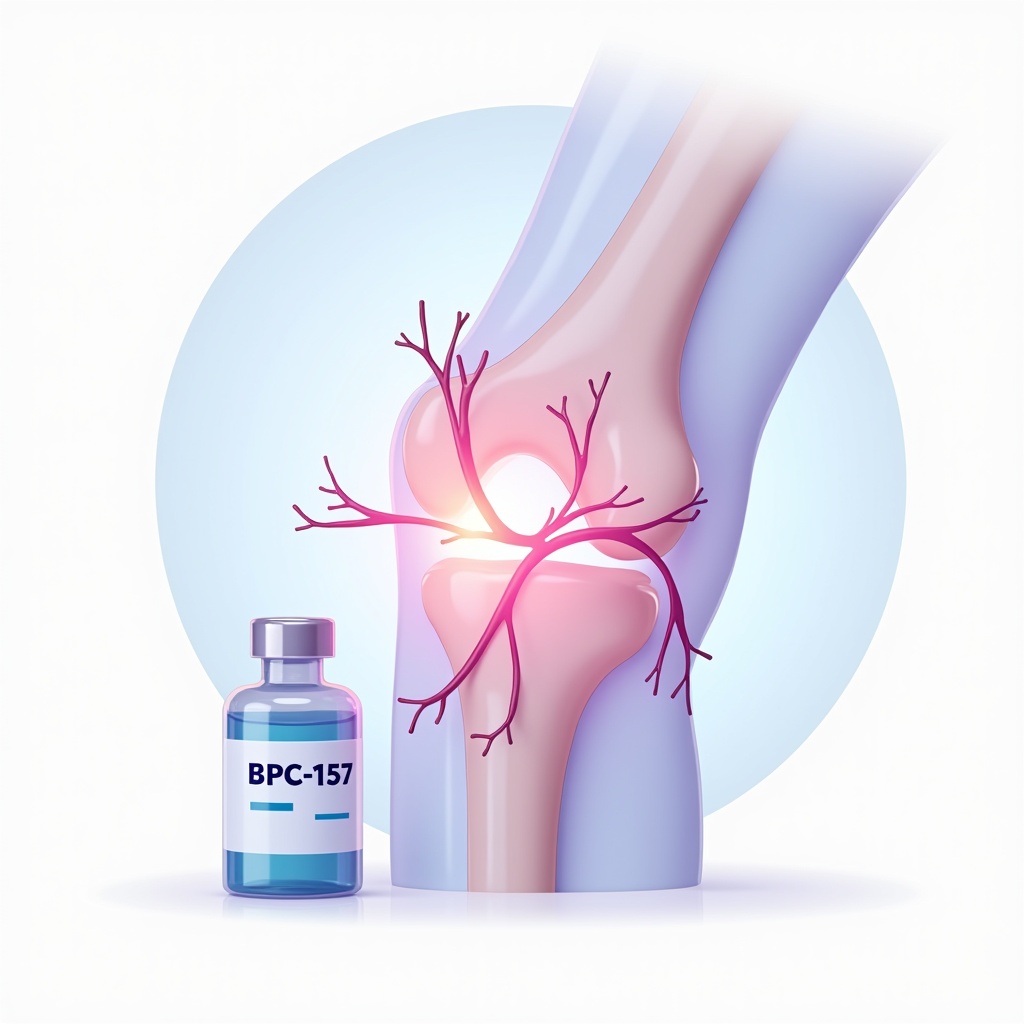
BPC-157 is a synthetic peptide derived from a protective protein found in human gastric juice. The name stands for Body Protection Compound, and the sequence is 15 amino acids long. It was first isolated in the early 1990s by researchers studying how the stomach lining repairs itself so efficiently despite constant exposure to acid and digestive enzymes.
Since then, hundreds of animal studies have explored its potential. And the results keep pointing in the same direction — accelerated healing of tendons, ligaments, muscles, the gut lining, and even nerve tissue. That consistency across different injury models is what makes BPC-157 one of the most talked-about peptides in the performance and recovery space.
If you've been researching peptides for any length of time, you've probably come across bold claims. So let's cut through the noise and look at what the science actually says, how people are using it, and what you should know before you start.
How BPC-157 Works: The Mechanism
BPC-157 operates through several overlapping biological pathways. Understanding them helps explain why it shows up in so many different contexts — from tendon healing to gut repair to neuroprotection.
Angiogenesis and Blood Flow
One of the primary mechanisms is the promotion of angiogenesis — the formation of new blood vessels. Injured tissue needs blood supply to heal. BPC-157 upregulates vascular endothelial growth factor (VEGF) and related signaling molecules, which accelerates the development of new capillary networks at the injury site. More blood flow means more oxygen, more nutrients, and faster removal of waste products from damaged cells.
Nitric Oxide System
BPC-157 modulates the nitric oxide (NO) system. Nitric oxide is a signaling molecule involved in vasodilation, inflammation regulation, and tissue repair. Animal studies show that BPC-157 can help restore normal NO pathways when they've been disrupted by injury or medication. This is particularly relevant for gut healing, where NO balance plays a central role.
Growth Hormone Receptors and FAK-Paxillin Pathway
Research has demonstrated that BPC-157 upregulates growth hormone receptors in injured tissue. It also activates the FAK-paxillin signaling pathway, which is involved in cell migration, adhesion, and the structural reorganization that happens during wound repair. Think of it as helping cells move to where they're needed and anchor properly once they arrive.
Tendon and Ligament Fibroblasts
In tendon-specific studies, BPC-157 has been shown to stimulate tendon fibroblast proliferation and accelerate collagen organization. For anyone dealing with chronic tendon issues — Achilles tendinopathy, tennis elbow, rotator cuff problems — this mechanism is directly relevant. The peptide appears to help tendons lay down organized collagen rather than the disorganized scar tissue that often forms during slow healing.
What the Research Shows
Animal Studies
The bulk of BPC-157 research comes from animal models, and the volume is substantial. Over 100 published studies have examined its effects in rats across a range of injury types:
- Transected Achilles tendons showed significantly faster functional recovery
- Muscle crush injuries healed with better tissue quality and less fibrosis
- Ligament tears demonstrated accelerated repair and improved mechanical strength
- Gastric ulcers and intestinal damage healed faster, including NSAID-induced lesions
- Peripheral nerve injuries showed improved axonal regeneration
- Traumatic brain injury models showed reduced damage markers
The consistency of positive outcomes across different tissues and injury types is noteworthy. But it's important to keep context in mind — these are animal studies, primarily in rats.
Human Data
Direct human clinical data on BPC-157 remains limited. There have been small trials and case reports, but we do not yet have large-scale, double-blind, placebo-controlled human trials published in major journals. What we do have is a growing body of anecdotal reports from athletes, coaches, and clinicians who have incorporated BPC-157 into recovery protocols.
Many users report noticeable improvements in chronic tendon injuries within 2-4 weeks. Gut issues related to long-term NSAID use or general GI inflammation are another commonly reported area of benefit. And some users describe improvements in joint comfort and overall recovery speed between training sessions.
So where does that leave us? The animal data is strong and consistent. The human anecdotal evidence is encouraging. But rigorous human clinical trials are still catching up. That's a fair and honest assessment.
The Angiogenesis Question: Does BPC-157 Increase Cancer Risk?
This is one of the most common concerns, and it deserves a straight answer. Since BPC-157 promotes angiogenesis, and tumors rely on new blood vessel formation to grow, the question is logical: could BPC-157 feed an existing cancer?
Here's what we know. In the animal studies conducted so far, BPC-157 has not shown tumor-promoting effects. Some researchers have actually noted anti-tumor properties in certain experimental models. But these findings are preliminary, and the mechanism is complex.
The practical takeaway: if you have an active malignancy or are at elevated risk for cancer, this is a conversation to have with your oncologist. For healthy individuals using BPC-157 in standard doses for defined cycle lengths, the current evidence does not suggest a meaningful cancer risk. But the honest answer is that long-term human safety data specifically addressing this question does not yet exist.
Responsible use means acknowledging what we know and what we don't. And if you have any concerns about your individual risk profile, consult a qualified healthcare provider before starting.
BPC-157 Dosing Guide
Dosing protocols for BPC-157 have been refined over years of practical use within the peptide community. Here are the most commonly followed guidelines.
Subcutaneous Injection
The standard subcutaneous dose is 250-500 mcg per day. Most users inject once daily, ideally as close to the injury site as practical. For systemic benefits or gut healing, abdominal subcutaneous injection is typical.
- Starting dose: 250 mcg/day for the first week
- Standard dose: 250-500 mcg/day
- Cycle length: 4-8 weeks
- Injection site: Subcutaneous, near the area of concern when possible
You'll need [[Bacteriostatic Water|30]] for reconstitution. Once reconstituted, store your vial in the refrigerator. Reconstituted BPC-157 has a shelf life of 90 days when stored properly at 2-8°C.
Oral Administration
BPC-157 can also be taken orally, which is particularly relevant for gut-related applications. The oral dose is higher because absorption through the GI tract is less efficient than injection:
- Oral dose: 500-1000 mcg per day
- Taken on an empty stomach for best absorption
- Cycle length: 4-8 weeks
Some users combine both routes — subcutaneous injection for a localized injury plus oral dosing for gut support. This approach is common among people dealing with both musculoskeletal issues and GI problems simultaneously.
Cycling and Breaks
Most protocols recommend cycling BPC-157 rather than using it indefinitely. A typical pattern is 4-8 weeks on, followed by 2-4 weeks off. This allows you to assess your response and gives your body periodic breaks. Some users run shorter cycles of 4 weeks for acute injuries and longer 6-8 week cycles for chronic issues.
The Wolverine Stack: BPC-157 + TB-500
If you spend any time in peptide forums or communities, you'll hear about the "Wolverine stack" — the combination of [[BPC-157|22]] and [[TB-500|25]]. The nickname comes from the enhanced healing effect when these two peptides are used together.
Why They Work Together
[[TB-500|25]] (Thymosin Beta-4) works through complementary but distinct mechanisms. While BPC-157 drives local angiogenesis and tissue-specific repair pathways, TB-500 promotes cell migration, reduces inflammation systemically, and upregulates actin — a protein essential for cell structure and movement.
The combination covers more ground than either peptide alone:
- BPC-157 — localized healing, angiogenesis, tendon fibroblast activation, NO modulation
- TB-500 — systemic anti-inflammatory effect, cell migration, tissue remodeling
Together, they address both the local injury environment and the broader inflammatory context. Many experienced users consider this the gold standard stack for serious injury recovery.
Wolverine Stack Dosing
- BPC-157: 250-500 mcg/day subcutaneously
- TB-500: 2-2.5 mg twice per week for the first 4 weeks (loading), then 2 mg once per week (maintenance)
- Cycle length: 6-8 weeks
This combination is especially popular among athletes dealing with stubborn injuries that haven't responded well to rest alone — chronic Achilles tendon pain, lingering rotator cuff issues, post-surgical recovery, and recurring muscle strains.
Reconstitution and Storage
Proper handling matters. BPC-157 typically comes as a lyophilized (fr...
PEPTEX livre en France, Belgique, Suisse et Luxembourg — expédition rapide, qualité certifiée, livraison gratuite dès 150 €.
Lire la suite : BPC-157 : Mécanisme, dosage et guide de recherche
💬 Комментарии