Peptides pour CrossFit – Récupération et prévention des blessures
Publié : 2026-03-14 08:03:00 | PEPTEX Research
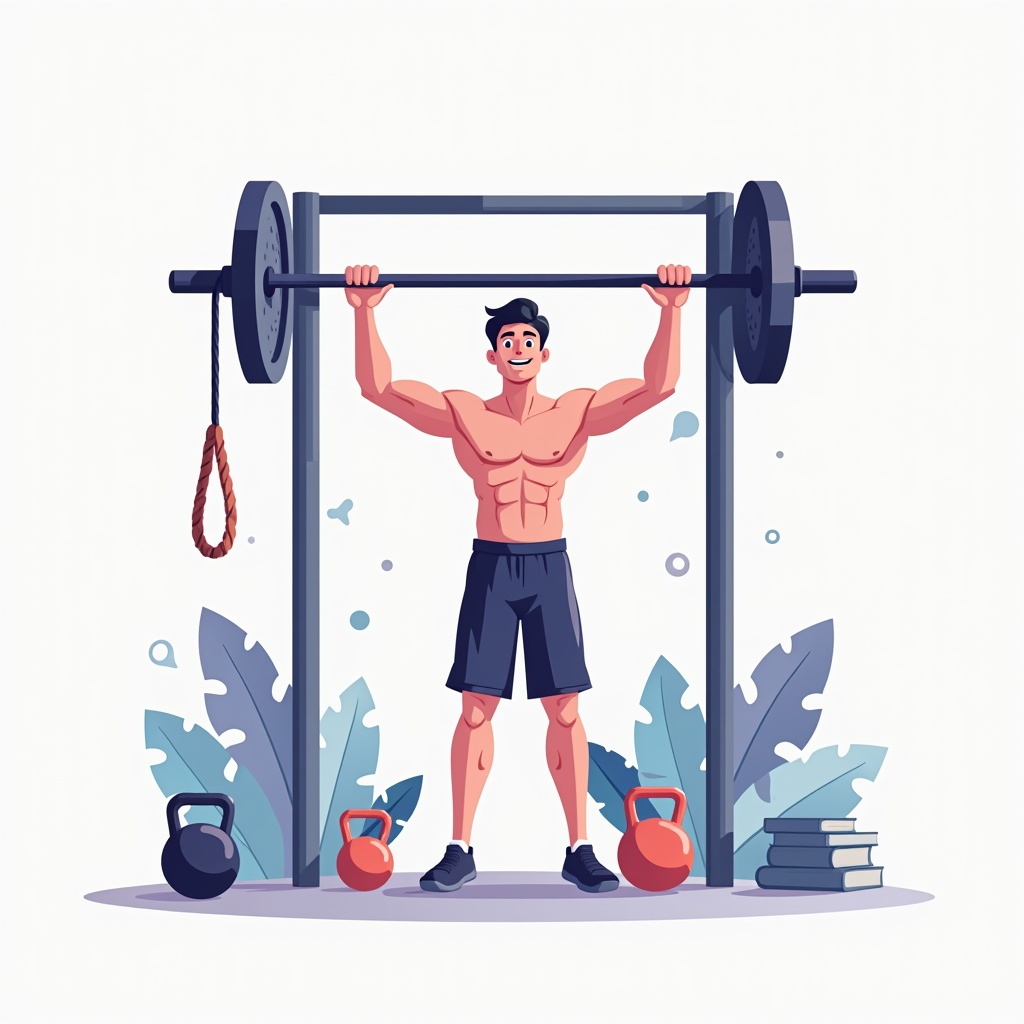
Why CrossFit Athletes Are Turning to Peptides
CrossFit occupies a unique position in the fitness landscape. No other discipline demands such a broad combination of cardiovascular endurance, Olympic-lifting technique, gymnastic proficiency, and raw power — often compressed into a single workout that lasts under fifteen minutes. That compressed intensity creates a recovery challenge conventional approaches struggle to address. Foam rolling and protein shakes have their place, but the tissue-repair demands of repeated muscle-ups, heavy cleans, and high-rep box jumps push the body beyond what passive recovery alone can manage.
This is where bioactive peptides enter the conversation. Over the past decade a growing body of preclinical research — and consistent anecdotal reports from competitive athletes — has highlighted three peptides with particular relevance to the CrossFit training model: BPC-157, TB-500, and Ipamorelin. Each targets a distinct physiological mechanism, and together they form what many practitioners now describe as a comprehensive recovery stack.
In this guide we will examine the research behind each compound, explain why their mechanisms map so well to CrossFit-specific stressors, and outline practical considerations for athletes who want to integrate peptides into a structured training program.
The CrossFit Recovery Problem
A typical competitive CrossFitter trains five or six days per week, cycling through heavy barbell work, metabolic conditioning, and skill sessions. Unlike a powerlifter who can schedule a deload week around a single peak, or a marathon runner who tapers before race day, the CrossFitter must maintain broad capacity year-round. Competition can arrive on any weekend, and the programming is intentionally unpredictable.
This structure produces a specific injury profile. Published surveys of CrossFit participants consistently identify the shoulder, lower back, and knee as the three most common injury sites. Tendon overuse injuries — particularly in the rotator cuff, patellar tendon, and Achilles — appear at rates that reflect the high eccentric loading of movements like kipping pull-ups, pistol squats, and rebounding box jumps. Soft-tissue strains in the hip flexors and forearm extensors are also common, driven by the volume of barbell cycling and gymnastic grips.
Standard recovery protocols — sleep optimization, nutrition periodization, soft-tissue work — remain foundational. Peptides do not replace these fundamentals. They augment them by operating at the cellular level, accelerating processes that diet and rest alone activate more slowly.
BPC-157: The Tendon and Gut Repair Peptide
Body Protection Compound 157 is a pentadecapeptide — fifteen amino acids — originally isolated from human gastric juice. Its research profile is unusually broad. Animal models have demonstrated accelerated healing in tendons, ligaments, muscles, and even bone, along with notable gastroprotective effects.
Mechanism of Action
BPC-157 promotes angiogenesis — the formation of new blood vessels — in damaged tissue, which increases the local delivery of oxygen and nutrients critical to repair. It upregulates growth hormone receptor expression in injured tissue and modulates nitric oxide pathways that control inflammation. In tendon-injury models, rats treated with BPC-157 showed significantly faster restoration of biomechanical strength compared to controls, with collagen fibers exhibiting more organized alignment rather than the disordered scar tissue typical of natural healing.
Why It Matters for CrossFit
Tendons are the Achilles heel — sometimes literally — of CrossFit athletes. The patellar tendon absorbs enormous forces during squat cleans and wall balls. The supraspinatus tendon endures repetitive overhead loading from snatches, handstand push-ups, and kipping movements. These structures have inherently poor blood supply compared to muscle tissue, which makes them slower to heal and more susceptible to chronic overuse pathology.
BPC-157's angiogenic properties directly address that vascular limitation. By driving new blood vessel formation into tendon tissue, it may accelerate the repair timeline for the types of micro-tears that accumulate during high-volume CrossFit training. Athletes who integrate BPC-157 into their recovery protocols often report reduced joint stiffness during morning training sessions and faster resolution of nagging tendon discomfort that would otherwise require extended deload periods.
The gastric benefits carry a secondary advantage. Many competitive CrossFitters rely on high-calorie diets that stress the GI tract — large protein meals, intra-workout carbohydrate drinks, and sometimes NSAIDs for pain management. BPC-157's well-documented gastroprotective action can support gut integrity under these conditions.
TB-500: Systemic Tissue Remodeling
Thymosin Beta-4, the parent protein of TB-500, is a 43-amino-acid peptide present in virtually every human cell. It plays a central role in cell migration, differentiation, and tissue repair. TB-500 is a synthetic fragment that retains the active region responsible for actin-binding and wound-healing signaling.
Mechanism of Action
TB-500 works primarily by sequestering G-actin, a monomeric form of the protein actin that is essential for cytoskeletal organization. By regulating actin polymerization, TB-500 facilitates cell motility — the ability of repair cells to migrate to an injury site. It also promotes differentiation of progenitor cells and reduces inflammatory cytokine expression, creating a biochemical environment that favors organized repair over fibrotic scarring.
Why It Matters for CrossFit
Where BPC-157 excels in localized repair, TB-500 operates systemically. It reaches tissues throughout the body, making it particularly useful for athletes who accumulate damage across multiple sites simultaneously — which describes every serious CrossFitter. A single training week might produce micro-damage in the rotator cuff from overhead squats on Monday, hamstring fatigue from deadlifts on Wednesday, and intercostal strain from rowing intervals on Friday.
TB-500's anti-inflammatory profile is worth highlighting. CrossFit's metabolic conditioning workouts produce significant systemic inflammation — elevated CRP and IL-6 levels that can persist for 48 to 72 hours after an intense session. Chronic low-grade inflammation impairs sleep quality, blunts training adaptations, and increases injury risk. TB-500 helps modulate this inflammatory load without the gastrointestinal side effects associated with chronic NSAID use.
In practical use, athletes who combine TB-500 with BPC-157 often describe a synergistic effect: BPC-157 handles the specific tendon or joint issue, while TB-500 addresses the background systemic inflammation and general tissue repair that keeps the whole body moving between sessions.
Ipamorelin: Growth Hormone Optimization for Recovery
Ipamorelin is a growth hormone secretagogue — a pentapeptide that stimulates the pituitary gland to release growth hormone (GH) in a pulsatile, physiological pattern. Unlike exogenous GH administration, Ipamorelin works within the body's natural feedback mechanisms, producing GH elevations that mirror healthy endogenous rhythms rather than the sustained supraphysiological spikes associated with direct injection.
Mechanism of Action
Ipamorelin selectively activates the ghrelin receptor (GHS-R1a) on pituitary somatotroph cells. It does not significantly increase cortisol or prolactin — a selectivity that distinguishes it from older secretagogues like GHRP-6. The resulting GH pulse triggers hepatic IGF-1 production, which drives protein synthesis, collagen formation, and lipolysis. GH also promotes deep-wave sleep, the recovery phase during which the majority of tissue repair occurs.
Why It Matters for CrossFit
Growth hormone is the master recovery hormone. It governs the rate at which damaged muscle fibers are rebuilt, the speed at which connective tissue remodels, and the efficiency of fat oxidation during both rest and exercise. For a CrossFitter who needs to recover from a heavy squat session, adapt to a gymnastics skill session, and maintain competition-ready body composition simultaneously, optimized GH output is not a luxury — it is a competitive necessity.
Ipamorelin is particularly appealing because of its clean side-effect profile. The absence of cortisol elevation means it does not add to the adrenal stress that high-intensity training already produces. The lack of appetite stimulation (common with GHRP-6) makes it easier for weight-class-conscious athletes to manage caloric intake. And the enhanced sleep quality it promotes addresses what is arguably the single most under-optimized recovery variable among competitive CrossFitters.
Athletes who use Ipamorelin consistently report improvements in body composition — specifically a reduction in abdominal fat with maintenance or slight increase in lean mass — alongside subjective improvements in recovery speed between sessions. These effects become most noticeable after four to six weeks of consistent use.
The CrossFit Recovery Stack: How the Three Work Together
Each of these peptides addresses a different layer of the recovery process. Understanding how they complement one another helps explain why many athletes use them in combination rather than isolation.
| Peptide | Primary Target | CrossFit Application |
|---|---|---|
| BPC-157 | Localized tissue repair, angiogenesis<... PEPTEX livre en France, Belgique, Suisse et Luxembourg — expédition rapide, qualité certifiée, livraison gratuite dès 150 €. Lire la suite : Peptides pour CrossFit – Récupération et prévention des blessuresArticlesВведите корректный email
Введите имя и фамилию
▾
Get in touchChoose how you'd like to reach us
or email us
🎁
Special offer for youEnter your email and get 15% off your first order 🪙 Оплата криптовалютойШаг 1 из 2 — выберите валюту
Dosage Calculator
1
Loading...
💬
SupportChoose a convenient way to contact us Проверка подлинностиВведите серийный код с упаковки
0
Задания
⏳
⏳
FAQ⏳
|
💬 Комментарии