Mazdutide vs Tirzepatide – Confronto tra i due agonisti del glucagone del GLP-1 | Peptex
Pubblicato: 2026-03-07 20:18:00 | PEPTEX Research
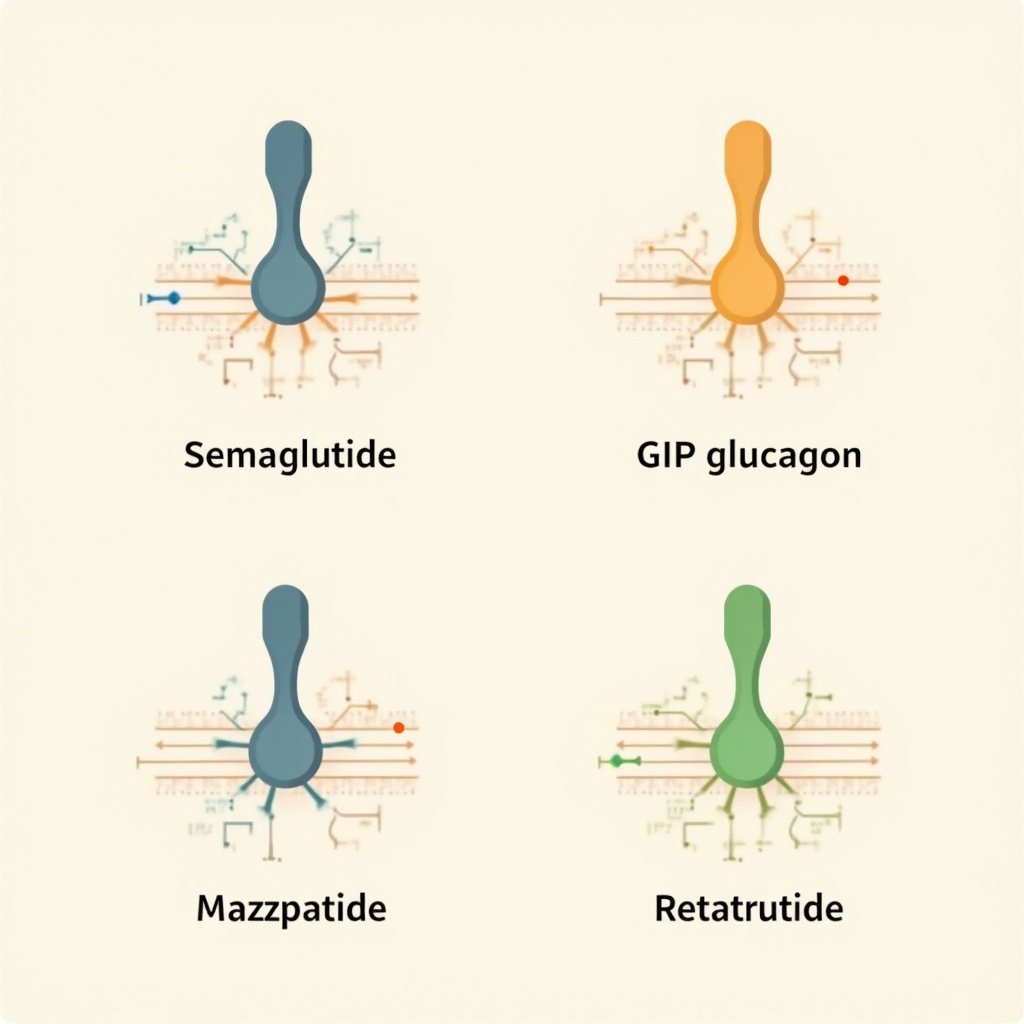
If you've been following the world of weight-loss peptides, you've probably heard of semaglutide and tirzepatide. But there's another compound that deserves your attention — mazdutide (IBI362). It's a dual agonist, just like tirzepatide, but it targets a completely different second receptor. And that difference matters more than you might think.
Let's break down what mazdutide actually does, how it compares to tirzepatide, why the glucagon receptor isn't something to fear, and where each compound fits in the bigger picture.
What Is Mazdutide
Mazdutide is a dual agonist of GLP-1 and glucagon receptors. It was developed by Innovent Biologics, a Chinese pharmaceutical company, in partnership with Eli Lilly. Like most modern compounds in this class, it's administered as a once-weekly subcutaneous injection.
The key word here is glucagon. That second receptor is what sets mazdutide apart from tirzepatide. And it's not just a technical footnote — it's a fundamentally different mechanism of action that changes how your body actually sheds fat.
When people hear "dual GLP-1 agonist," they automatically think of tirzepatide. But mazdutide is a different dual agonist, with a different receptor combination. The gap between the two is much larger than it appears at first glance.
The Receptor Map: Who Activates What
To understand why one GLP-1 compound differs from another, you need to know which receptors each one engages. That's what determines the effect profile — appetite suppression, speed of fat loss, liver impact, tolerability. Here's a clear breakdown:
| Compound | GLP-1 | GIP | Glucagon | Amylin |
|---|---|---|---|---|
| Semaglutide | ✔ | — | — | — |
| [[Tirzepatide|10]] | ✔ | ✔ | — | — |
| [[Mazdutide|13]] | ✔ | — | ✔ | — |
| [[Retatrutide|11]] | ✔ | ✔ | ✔ | — |
| [[Cagrilintide|12]] | — | — | — | ✔ |
Notice that tirzepatide and mazdutide are both dual agonists, but their second receptor is different. Tirzepatide adds GIP, mazdutide adds glucagon. Think of them as two cars with the same base engine but different turbochargers. Both are fast, but the driving experience is different.
And then there's [[retatrutide|11]] — the triple agonist that combines all three: GLP-1, GIP, and glucagon. It essentially takes what tirzepatide and mazdutide each do separately and rolls it into a single molecule.
[[Cagrilintide|12]] stands apart entirely — it works through amylin receptors, a completely different appetite and metabolic regulation system. Not GLP-1, not GIP, not glucagon — a separate pathway that complements the others.
Why Glucagon Matters
Most people think of glucagon as the "enemy" — it raises blood sugar, which sounds bad. And in the context of diabetes management, glucagon can indeed be problematic. But in the context of weight loss and metabolic health, the glucagon receptor does several very useful things:
- Increases resting energy expenditure. Glucagon stimulates thermogenesis — the process of heat production where your body burns more calories simply to maintain body temperature. It's like raising your basal metabolic rate without extra exercise. You're not running more — your body is just burning more on its own.
- Enhances fat oxidation. Your body more actively switches to using fat stores as its primary energy source. This isn't just eating less (which is what GLP-1 does) — it's actively redirecting metabolism toward lipolysis.
- Helps with non-alcoholic fatty liver disease (NAFLD). Glucagon activation promotes mobilization of fat from hepatocytes. This is critically important because hepatic steatosis is a common companion of obesity and metabolic syndrome, and many GLP-1 compounds don't address this problem directly.
- May improve lipid profiles. Glucagon receptor activation affects hepatic lipid metabolism, potentially improving cholesterol and triglyceride levels.
This glucagon component is exactly what makes [[retatrutide|11]] so impressive in clinical trials — up to 24% body weight loss over 48 weeks. And it's exactly what [[mazdutide|13]] brings to the table — something tirzepatide, which went the GIP route, doesn't offer.
Mazdutide vs Tirzepatide: Head-to-Head
This is probably the main question for anyone choosing between these compounds. Both are dual agonists built on a GLP-1 backbone. Both are given once weekly. Both show significant weight loss in clinical trials. But the second receptor they each activate defines their character and effect profile.
Mazdutide Advantages
- Thermogenesis and increased calorie burning. The glucagon component can increase resting energy expenditure — meaning your body doesn't just eat less, it also burns more. A double hit on fat stores. This mirrors the mechanism that makes retatrutide such a powerful weight-loss tool.
- Potential liver benefits. Clinical data from Innovent Biologics studies show positive effects on fatty liver disease markers. Reduction in liver fat content is a real therapeutic effect, not a side bonus. For people with NAFLD, this could be the deciding factor when choosing a compound.
- Strong clinical trial results. Phase II and III Chinese studies demonstrate significant weight loss, HbA1c improvements, and positive metabolic marker trends.
- A different metabolic pathway. If your body doesn't respond well to the GLP-1 + GIP combination (meaning tirzepatide isn't delivering expected results), the GLP-1 + glucagon combination might prove more effective. Metabolism is individual.
Tirzepatide Advantages
- Significantly more clinical data. [[Tirzepatide|10]] has gone through the extensive SURPASS (type 2 diabetes) and SURMOUNT (obesity) trial programs. There is an order of magnitude more safety, efficacy, and long-term outcome data compared to mazdutide.
- GIP reduces nausea. This is a non-obvious but critically important advantage. The GIP receptor helps offset the nausea caused by GLP-1 activation. This means tirzepatide is noticeably better tolerated than pure GLP-1 agonists at comparable or even greater efficacy levels.
- Proven cardiovascular outcomes. Large-scale studies have confirmed positive cardiovascular effects for tirzepatide. Mazdutide doesn't have this data yet.
- Better tolerability for most people. Fewer GI side effects compared to compounds without the GIP component. That means less nausea, vomiting, and diarrhea — especially during the titration phase.
In simple terms: [[tirzepatide|10]] is the more studied and gentler option with excellent tolerability. [[Mazdutide|13]] is more aggressive in terms of fat burning, with unique effects on liver health and energy metabolism. The choice depends on your priorities and how your body responds to specific receptor combinations.
Where Mazdutide Fits
Mazdutide occupies an interesting niche between tirzepatide and retatrutide. It's a good fit for those who:
- Want the glucagon effect (thermogenesis, enhanced fat burning, liver support) but aren't ready for a full triple agonist like retatrutide
- Have already tried tirzepatide and want to try a different approach — a different second receptor, a different effect profile
- Are interested in exploring alternative metabolic pathways within the GLP-1 family for maximum results
- Have fatty liver disease issues and want a compound that specifically targets this problem
Here's an important point: different people respond differently to different receptor combinations. What works brilliantly for one person may be less effective for another. Genetics, body composition, metabolic status — all of these affect the response. That's exactly why having multiple GLP-1 compound options is an advantage, not a complication.
Retatrutide: The Best of Both Worlds
If mazdutide gives you GLP-1 + glucagon, and tirzepatide gives you GLP-1 + GIP, then [[retatrutide|11]] com...
PEPTEX consegna in Italia e Svizzera — spedizione veloce, qualità certificata, consegna gratuita sopra 150 €.
Leggi di più: Mazdutide vs Tirzepatide – Confronto tra i due agonisti del glucagone del GLP-1 | Peptex
💬 Комментарии