Peptiden en cellulaire veroudering | Onderzoek tegen veroudering
Gepubliceerd: 2025-10-10 11:12:00 | PEPTEX Research
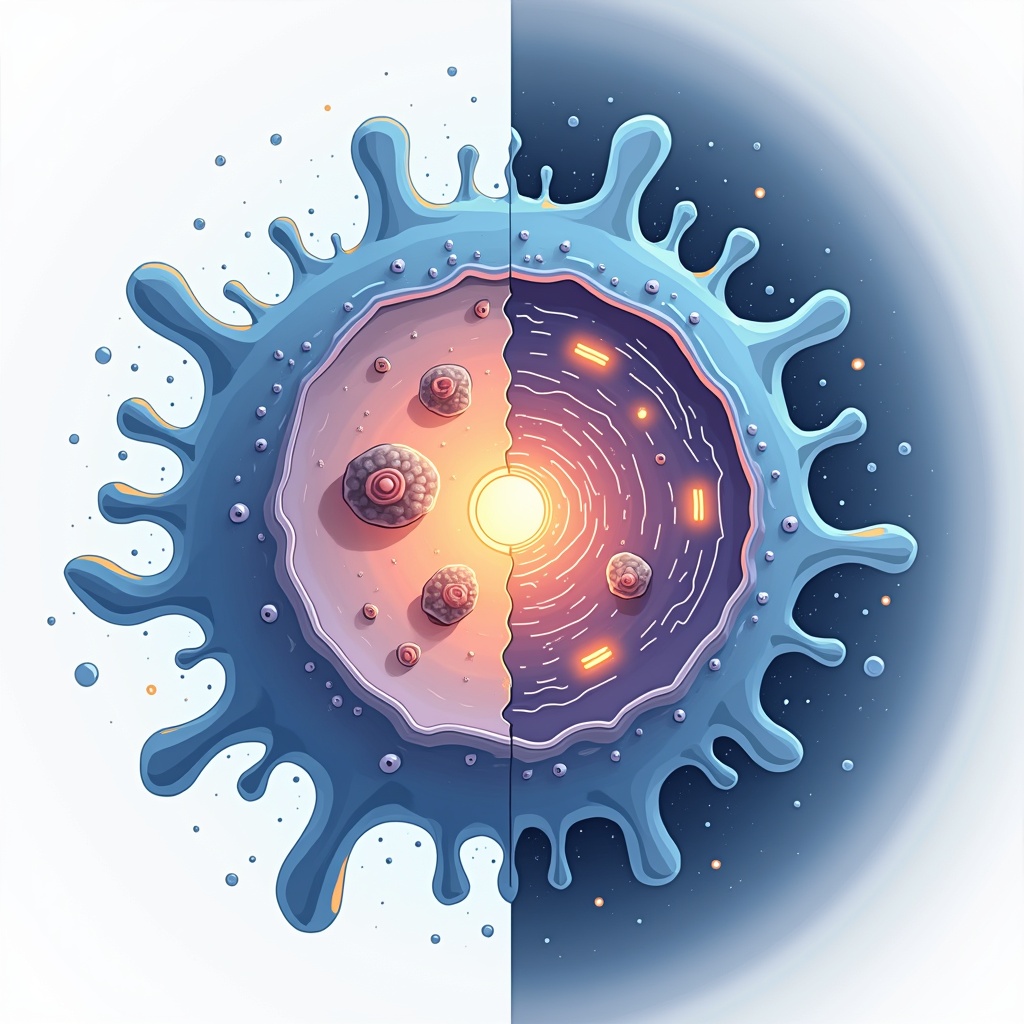
Your cells have an expiration date. Not a dramatic one with alarm bells, but a quiet shift where a cell stops dividing, refuses to die, and starts pumping out inflammatory molecules that damage everything around it. Researchers call this cellular senescence. Your body calls it aging.
By age 60, senescent cells make up a small percentage of your total cell count, but their impact is wildly disproportionate. They secrete a cocktail of pro-inflammatory cytokines, chemokines, and proteases known as the senescence-associated secretory phenotype (SASP). This SASP drives tissue degradation, fuels chronic inflammation, and accelerates the decline of organs that were otherwise functioning fine.
The good news: senescence is not a one-way street. A growing body of research points to specific peptides that can either slow the accumulation of senescent cells, mitigate their harmful output, or support the cellular repair systems that keep tissues young. Three compounds stand out in this space.
What Actually Drives Biological Aging
Before talking solutions, it helps to understand the machinery. Biological age and chronological age are different things. A 45-year-old marathon runner and a 45-year-old with metabolic syndrome can have a decade of biological age between them. The gap comes down to a handful of measurable processes.
Telomere shortening. Every time a cell divides, the protective caps on chromosome ends (telomeres) get a little shorter. When they reach a critical length, the cell either dies or enters senescence. Telomere length is one of the most reliable biomarkers of biological age. A 2013 meta-analysis in the BMJ covering 104,000+ participants confirmed shorter telomeres correlate with higher all-cause mortality.
NAD+ depletion. Nicotinamide adenine dinucleotide is the central coenzyme in cellular energy production. Levels drop roughly 50% between age 40 and 60. When NAD+ falls, mitochondria produce less ATP, DNA repair slows down, and sirtuins (the "longevity enzymes") lose the fuel they need to function. A 2018 study in Cell Metabolism showed that restoring NAD+ levels in aged mice reversed vascular aging within two weeks.
Extracellular matrix degradation. Collagen, elastin, and the structural proteins holding tissues together break down faster than they are rebuilt. This is not just a cosmetic problem. ECM degradation contributes to arterial stiffness, joint deterioration, and impaired wound healing.
Chronic inflammation. Sometimes called "inflammaging," this low-grade, persistent inflammation is both a cause and a consequence of senescent cell accumulation. It creates a feedback loop: inflammation damages cells, damaged cells become senescent, senescent cells produce more inflammation.
Epithalon and the Telomere Question
Epithalon (also spelled Epitalon) is a synthetic tetrapeptide (Ala-Glu-Asp-Gly) developed by Professor Vladimir Khavinson at the St. Petersburg Institute of Bioregulation and Gerontology. Its primary mechanism is activation of telomerase, the enzyme that rebuilds telomere length.
The foundational research is substantial. A 2003 study published in Bulletin of Experimental Biology and Medicine demonstrated that Epithalon induced telomerase activity in human somatic cells, leading to elongation of telomeres by up to 33%. The same research group conducted a 15-year observational study on elderly patients. Those receiving Epithalon-based treatment showed a 28% reduction in cardiovascular mortality and a notable improvement in several biomarkers of aging compared to untreated controls.
What makes [[Epithalon|15]] particularly interesting is its effect on the pineal gland. Khavinson's work showed that the peptide restores melatonin production in aging subjects, normalizing circadian rhythms. Since disrupted sleep is itself a driver of accelerated aging (poor sleep increases inflammatory markers and impairs autophagy), this secondary effect compounds the telomere benefit.
A 2004 animal study found that Epithalon administration extended maximum lifespan by 13.3% in mice. The treated animals also showed delayed onset of age-related pathologies, including tumors. Note: animal lifespan data does not directly translate to humans, but the consistency across multiple studies and species gives the mechanism credibility.
Typical research protocol: 5-10 mg subcutaneously per day for 10-20 days, cycled 2-3 times per year. Some researchers use lower doses (1-3 mg/day) for longer periods. The cycling approach mimics how the body naturally regulates telomerase, preventing overshoot.
NAD+ Peptide: Refueling Cellular Energy
If Epithalon addresses the telomere clock, [[NAD+|14]] tackles the energy crisis. NAD+ is not technically a peptide but a nucleotide-derived coenzyme. It works at the intersection of energy metabolism, DNA repair, and epigenetic regulation.
The decline of NAD+ with age is one of the most well-documented phenomena in gerontology. David Sinclair's lab at Harvard published a landmark paper in 2013 (Cell) showing that raising NAD+ levels in old mice made their mitochondria functionally indistinguishable from those of young mice within just one week. The implications were significant: many aspects of mitochondrial aging appeared to be reversible.
NAD+ supplementation affects aging through several pathways simultaneously:
Sirtuin activation. SIRT1 through SIRT7 are NAD+-dependent enzymes that regulate gene expression, DNA repair, and metabolic efficiency. Without sufficient NAD+, these enzymes cannot function. A 2016 study in Science showed that SIRT1 activation alone was sufficient to improve healthspan in mice, extending the period of life free from disease.
PARP support. Poly(ADP-ribose) polymerases are the primary DNA repair enzymes in the cell. They consume NAD+ to fix double-strand breaks and oxidative damage. In aged cells where NAD+ is scarce, PARP activity drops, and DNA damage accumulates, pushing more cells toward senescence.
CD38 regulation. CD38 is an enzyme that degrades NAD+ and increases with age. This creates a vicious cycle: more CD38 activity means less NAD+, which means less energy for repair, which means more cellular damage. Supplementing NAD+ directly helps overcome this bottleneck.
Clinical data is building. A 2020 randomized controlled trial published in Nature Communications tested NMN (an NAD+ precursor) in 25 postmenopausal women with prediabetes. After 10 weeks, participants showed improved insulin sensitivity and muscle remodeling. A larger 2022 trial (also NMN-based) in 66 healthy middle-aged adults found improvements in walking speed, grip strength, and NAD+ blood levels.
Direct NAD+ administration bypasses the conversion steps required by precursors like NMN or NR, potentially offering faster and more complete replenishment of cellular NAD+ pools.
GHK-Cu: Rebuilding the Structural Foundation
Glycyl-L-histidyl-L-lysine copper complex (GHK-Cu) is a naturally occurring tripeptide that declines sharply with age. At age 20, plasma levels sit around 200 ng/mL. By age 60, they have dropped to roughly 80 ng/mL. This decline parallels the degradation of the extracellular matrix and the loss of tissue regenerative capacity.
[[GHK-Cu|24]] is the most extensively studied peptide for tissue remodeling. A 2014 study by Loren Pickart (the researcher who originally isolated GHK from human plasma in 1973) used the Broad Institute's Connectivity Map to analyze GHK-Cu's gene expression effects. The results were remarkable: GHK-Cu modulated 4,000+ human genes, with a clear pattern of switching "old" gene expression toward "young" patterns. Genes associated with DNA repair, antioxidant defense, and stem cell maintenance were upregulated. Genes linked to inflammation and tissue breakdown were suppressed.
For anti-aging specifically, GHK-Cu contributes through:
Collagen and elastin synthesis. Multiple studies show GHK-Cu stimulates production of collagen types I, III, and V, plus elastin and decorin. This rebuilds the structural scaffold that holds tissues together. A controlled study on post-surgical patients demonstrated 70% faster wound closure with GHK-Cu treatment.
Antioxidant defense. GHK-Cu upregulates superoxide dismutase (SOD) and other endogenous antioxidants. Rather than acting as a direct antioxidant (which can be hit-or-miss), it strengthens the body's own defense systems. This approach is more sustainable and avoids the rebound effects seen with high-dose exogenous antioxidant supplementation.
Anti-inflammatory signaling. GHK-Cu suppresses TGF-beta (reducing fibrosis risk), modulates NF-kB (the master inflammatory switch), and reduces IL-6 output. Since IL-6 is one of the key SASP cytokines that senescent cells produce, GHK-Cu directly counteracts one of the main mechanisms through which senescent cells damage surrounding tissue.
Stem cell support. Research published in 2017 indicated that GHK-Cu enhances mesenchymal stem cell proliferation and differentiation. This matters for aging because the decline in stem cell function is a primary reason tissues lose their ability to repair and regenerate over time.
The Synergy Argument
These three compounds address different but interconnected aspects of biological aging. Epithalon protects the replicative clock. NAD+ restores the energetic foundation. GHK-Cu rebuilds the structural environment.
Consider the logic: if you extend telomere length (Epithalon) but the cell lacks energy to function (NAD+ deficit), you have a cell that can divide but cannot repair itself. If yo...
PEPTEX levert in Nederland en België — snelle verzending, gecertificeerde kwaliteit, gratis levering boven 150 €.
Lees meer: Peptiden en cellulaire veroudering | Onderzoek tegen veroudering
💬 Комментарии