Peptiden voor pees- en ligamentherstel – BPC-157 en TB-500
Gepubliceerd: 2025-08-26 11:38:00 | PEPTEX Research
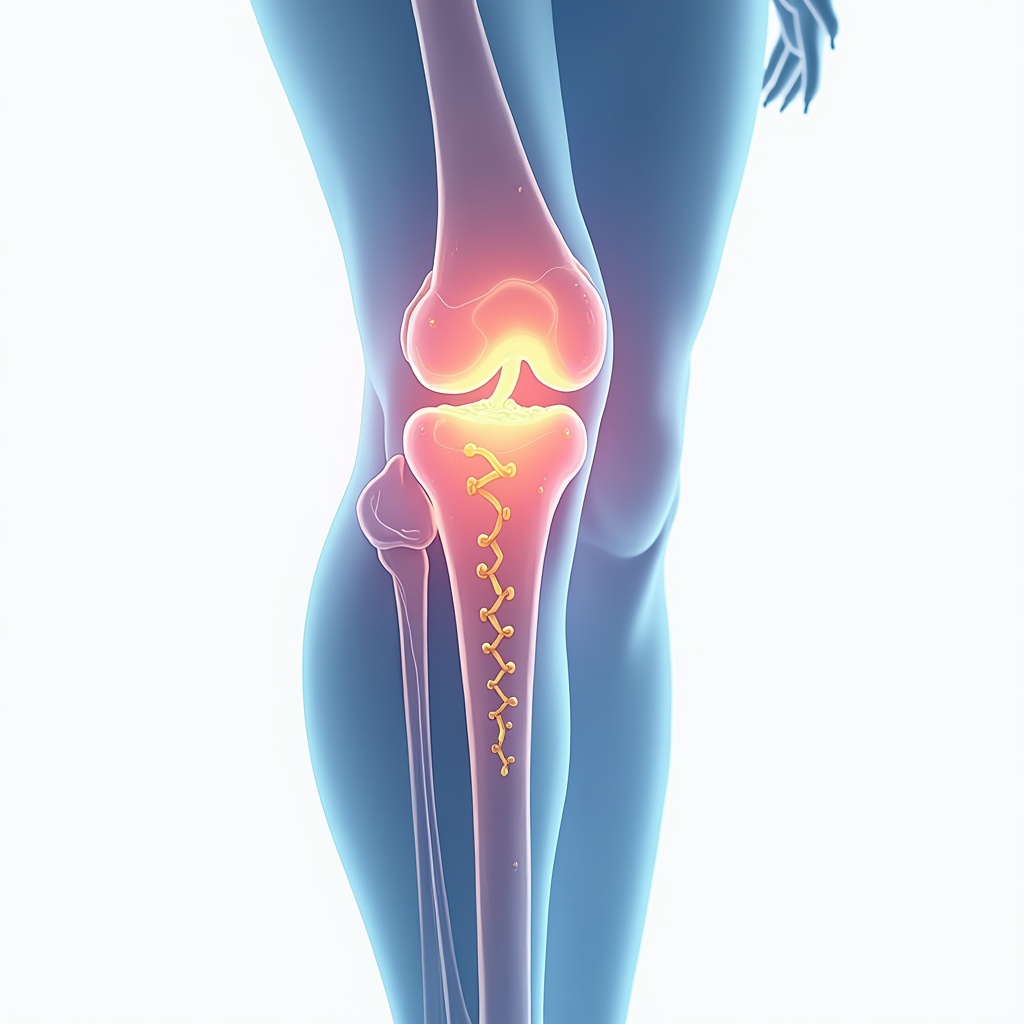
Torn Achilles tendon. Rotator cuff tear. Partial ACL rupture. If you have ever dealt with any of these, you know the standard treatment: months of physiotherapy, handfuls of NSAIDs, and hoping the tissue somehow knits back together.
The problem is that tendons and ligaments heal slower than any other tissue in your body. Poor blood supply, low cellular activity, and a tendency to form scar tissue instead of proper regeneration. That is why even after an injury is technically healed, many people feel the spot is never quite the same.
Peptides do not replace surgery for complete ruptures. But for partial tears, tendinitis, and ligament sprains, they do something no anti-inflammatory can: they trigger actual tissue regeneration at the cellular level.
Why Tendons and Ligaments Heal So Slowly
To understand why peptides matter, it helps to understand why these tissues are so stubborn about healing.
Blood supply. Muscle is packed with capillaries — when damaged, blood brings growth factors, immune cells, building materials. A tendon is nearly avascular, especially in its mid-section where most ruptures happen. Less blood means fewer resources for repair.
Cell density. Tenocytes (tendon cells) sit far apart in a dense collagen matrix. There simply aren't many of them, and they divide slowly. Ligaments are similar — fibroblasts maintain the tissue but cannot rebuild it quickly.
Fibrosis instead of regeneration. When healing finally starts, the body often patches the damage with scar tissue — type III collagen instead of the normal type I. Scar tissue is less elastic, less strong, and more prone to re-injury.
NSAIDs make it worse. Ibuprofen, diclofenac, and other anti-inflammatories relieve pain but suppress the very inflammatory signals that kickstart regeneration. Studies show chronic NSAID use slows tendon healing by roughly 30%.
BPC-157: The Primary Tendon Peptide
Body Protection Compound-157 is a 15-amino-acid peptide identical to a fragment of a protein found in gastric juice. For tendon and ligament injuries, it is the most studied molecule in the peptide recovery space.
What it does at the cellular level:
- Triggers angiogenesis. Upregulates VEGF (vascular endothelial growth factor). New capillaries grow into the injury zone, supplying oxygen and nutrients. In studies on transected rat Achilles tendons, angiogenesis was observed as early as day 4.
- Accelerates tenocyte migration. Tendon cells reach the rupture site faster and begin synthesizing collagen.
- Switches collagen synthesis. Instead of emergency type III collagen, it stimulates production of normal type I collagen. The result is tissue closer to the original rather than a scar.
- Modulates inflammation. Does not shut it down entirely (like NSAIDs do) but directs it. The early inflammatory phase proceeds normally, while the transition to proliferation and remodeling speeds up.
BPC-157 cuts tendon recovery time by 40-50% — with initial relief often felt within 5-7 days. This is not a marketing slogan but averaged data from a series of animal studies involving Achilles, supraspinatus, and MCL injuries.
BPC-157 at Peptex — view dosages and formats.
TB-500: Systemic Recovery
Thymosin Beta-4 (TB-500) is a 43-amino-acid peptide that works differently from BPC-157 and complements it well.
Key mechanisms:
- Actin regulation. TB-500 binds G-actin, the main structural protein of the cytoskeleton. This increases cell mobility — cells migrate to injury sites faster.
- Inflammation reduction. Suppresses pro-inflammatory cytokines (IL-1B, TNF-alpha) without blocking the beneficial inflammation phase. Reduces swelling and soreness.
- New blood vessel formation. Like BPC-157, it promotes angiogenesis but through different signaling pathways. Using both gives an additive effect.
- Systemic distribution. Unlike BPC-157 which works best with local injections, TB-500 is effective when injected subcutaneously anywhere on the body. The peptide finds the damage on its own.
In equine and veterinary studies, TB-500 accelerated tendon and ligament healing by an average of 30-40%. Racehorses with superficial digital flexor tendon damage recovered in 4-5 months instead of the usual 8-12.
TB-500 at Peptex — explore your options.
KLOW (KPV + Low-Dose): Tackling Chronic Inflammation
Tendon and ligament injuries often come with chronic inflammation that standard treatments cannot resolve. Tendinopathies are essentially chronic inflammation combined with failed healing attempts.
KLOW is an anti-inflammatory peptide based on KPV (a tripeptide fragment of alpha-MSH). It targets NF-kB — the central switch of the inflammatory cascade. When NF-kB is overactive, tissue gets stuck in a damage-inflammation-damage loop. KLOW helps break that cycle.
In tendon recovery protocols, KLOW is used alongside BPC-157 and TB-500 for chronic injuries (tendinitis, tendinosis) or when the standard pair does not provide sufficient pain relief.
Practical Protocols by Injury
Achilles Tendon (Tendinitis, Partial Tear)
The Achilles is the largest and most heavily loaded tendon in the body — and one of the most problematic for healing due to a watershed zone of reduced blood supply in its mid-third.
Basic protocol (4-8 weeks):
- BPC-157: 250-500 mcg daily, subcutaneous, as close to the injury as possible. Inject into the fat fold on the posterior surface of the ankle, 2-3 cm from the pain site.
- TB-500: loading phase — 5 mg twice per week for 4 weeks. Then maintenance — 2.5 mg once per week. Subcutaneous, injection site does not matter.
Extended protocol (add for chronic pain):
- KLOW: daily as directed, for chronic inflammation and background pain control.
What to expect: reduced pain when walking within 5-7 days. Less morning stiffness within 10-14 days. Light activity possible within 3-4 weeks.
Rotator Cuff (Tendinitis, Partial Tear)
Four rotator cuff muscles attach to the humerus through tendons that pass through a very tight space. Any swelling equals impingement equals pain equals more swelling. A vicious cycle.
Protocol (6-10 weeks):
- BPC-157: 250-500 mcg/day, subcutaneous. Best injection zone — front or side of the shoulder, below the acromion. Rotate sites.
- TB-500: 5 mg twice weekly for 4 weeks, then 2.5 mg/week. Subcutaneous, site not critical (abdomen, thigh).
- KLOW: add if night pain or rest pain is present — signs of active inflammatory process.
Important: start rotator cuff exercises with bands at minimal resistance in parallel. Peptides accelerate healing, but without mechanical stimulation collagen fibers lay down chaotically rather than along stress lines.
Knee Ligaments (ACL, MCL, Patellar Tendinitis)
The knee is the most complex case. A complete ACL tear requires surgery — peptides will not replace reconstruction. But for partial tears, MCL sprains, and "jumper's knee" (patellar tendinitis), peptide support delivers real results.
Protocol for partial ligament damage (6-8 weeks):
- BPC-157: 500 mcg/day, subcutaneous near the knee. For ACL — medial side, just below the joint line. For patellar tendinitis — directly below the kneecap.
- TB-500: standard loading at 5 mg twice weekly, then 2.5 mg/week.
Jumper's knee protocol (4-6 weeks):
- BPC-157: 250 mcg/day, subcutaneous at the lower pole of the patella.
- KLOW: daily as directed. Patellar tendinitis is primarily chronic inflammation, and KLOW plays the main anti-inflammatory role here.
BPC-157 + TB-500: Why Combine Them
Each peptide works through its own pathways. BPC-157 excels at local action — it literally repairs tissue at the injection site through VEGF and tenocyte migration. TB-500 works systemically — it finds injuries through actin binding and provides an anti-inflammatory baseline.
When used together:
- Angiogenesis is amplified through two independent mechanisms
- Anti-inflammatory effect is achieved without suppressing the beneficial inflammation phase
- Type I collagen synthesis accelerates
- Both local and systemic recovery needs are covered
This is not theoretical — the BPC-157 and TB-500 combination has become the de facto standard in recovery protocols among athletes and in regenerative medicine.
Practical Details: Storage, Reconstitution, Cycle Length
Storage. Lyophilized powder — in the freezer. Reconstituted solution — in the fridge, use within 2-3 weeks. Do not refreeze.
Reconstitution. Bacteriostatic water. Sterile syringe, inject slowly along the vial wall. Do not shake — peptides are sensitive to mechanical stress.
Cycle length. Standard is 4-8 weeks. For chronic tendinopathies — up to 10-12 weeks. Break between cycles — at least 2-4 weeks.
Injection timing. Morning on an empty stomach or before bed. BPC-157 can be split twice daily (125-250 mcg morning + evening) for more stable levels.
What Peptides Do NOT Do
An honest conversation. Peptides are not magic, and it is important ...
PEPTEX levert in Nederland en België — snelle verzending, gecertificeerde kwaliteit, gratis levering boven 150 €.
Lees meer: Peptiden voor pees- en ligamentherstel – BPC-157 en TB-500
💬 Комментарии