Kup zastrzyki NAD+ — dlaczego pigułki nie działają | NAD+ Dawkowanie i protokół | Peptex
Opublikowano: 2026-02-13 16:18:00 | PEPTEX Research
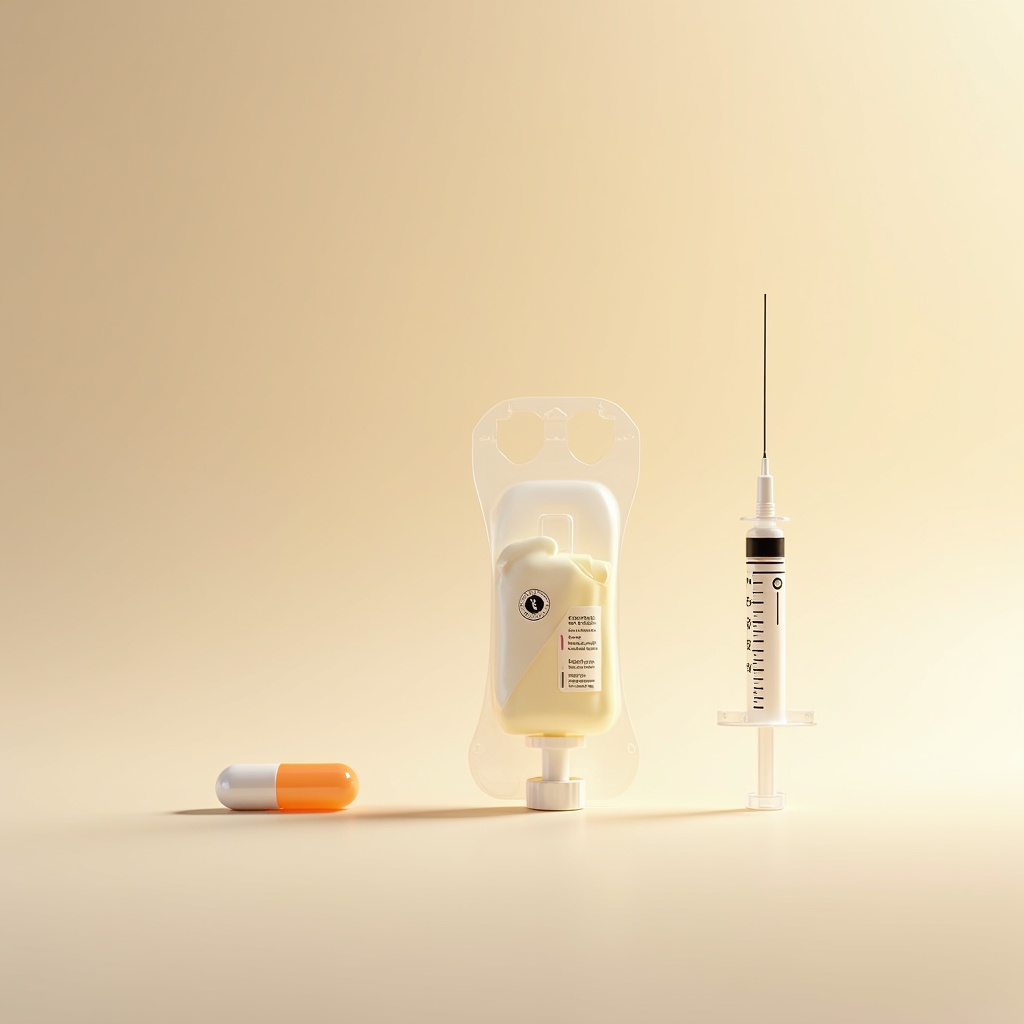
Here is a question worth considering: what does your car's spark plug have in common with a molecule you have probably never heard of? They both do the same thing — initiate a process without which nothing works. In the case of your body, that molecule is NAD+ (nicotinamide adenine dinucleotide). And right now, your levels are declining.
What NAD+ is and why you literally cannot function without it
NAD+ is a coenzyme present in every single cell of your body. No exaggeration — every one. Its primary job is to serve as an electron carrier in the Krebs cycle, that process inside your mitochondria that produces ATP. ATP is the energy currency of the cell. No NAD+ means no electron transfer, no ATP, no energy. Full stop.
But NAD+ does far more than just spin the energy turbine. It activates sirtuins — a family of proteins responsible for DNA repair, inflammation suppression, and cellular aging regulation. Think of sirtuins as your body's repair crew and NAD+ as their fuel. The crew can be world-class, but without fuel, they just stand there.
The age-related decline: a quiet catastrophe
Here is what happens to NAD+ as you age: you are born with high levels, and for the first twenty to thirty years, everything is fine. Then the decline begins. By age 50, NAD+ levels drop by more than 50% compared to what they were at 20. By 60, even lower.
What does this feel like? Meet the symptoms:
- Chronic fatigue — not the kind from bad sleep, but deep, cellular exhaustion. When coffee stops helping.
- Brain fog — thoughts feel like wading through mud, focus drops, names slip away.
- Slower recovery — workouts leave you sore for three days instead of one. Cuts heal slower.
- Cellular breakdown — sirtuins without fuel cannot repair DNA, errors accumulate, aging accelerates.
This is not "just getting older." This is a specific biochemical process with a specific cause.
Why oral NAD+ supplements are expensive placebo
The logical thought: "If NAD+ is dropping, I will take NAD+ pills." Sounds reasonable. Does not work.
The reason is called first-pass liver metabolism. When you swallow an NAD+ capsule, it enters your stomach, then intestines, then the portal vein, and straight into the liver. The liver is a filter, and it destroys most of the NAD+ molecule before it ever reaches general circulation. The result: from an expensive $2-3 capsule, only a tiny fraction reaches your cells.
This is not theory — this is basic pharmacokinetics. The NAD+ molecule is too large and too unstable for oral delivery.
NMN and NR: better, but still limited
The next idea was smarter: instead of NAD+ itself, supply its precursors — NMN (nicotinamide mononucleotide) and NR (nicotinamide riboside). The logic: the body synthesizes NAD+ from these molecules, bypassing the direct absorption problem.
And this is genuinely better than swallowing NAD+ directly. But the fundamental problem remains — oral bioavailability. Any molecule passing through the GI tract loses a significant portion along the way. NMN and NR require large doses (500-1000 mg daily) for modest NAD+ increases. Meanwhile, quality NMN costs $50-100 per month, and the effect is far from dramatic.
NMN is a reasonable option if injections are absolutely off the table for you. But if you are open to other delivery methods, there are options in a different league entirely.
IV NAD+: the gold standard with serious caveats
Intravenous NAD+ infusions deliver 100% bioavailability. The molecule enters the bloodstream directly, completely bypassing the liver. From an efficacy standpoint, this is the ideal.
From a practicality standpoint, it is a nightmare:
- Cost: $500-1000 per session. A course of 4-6 sessions runs $2000-6000.
- Time: 2-4 hours per drip. Because you cannot infuse it faster.
- Side effects: and here is where it gets interesting. At high infusion rates, patients report chest tightness, nausea, anxiety, and what medical literature delicately calls a "feeling of impending doom." Not dangerous, but intensely unpleasant.
IV NAD+ is excellent for occasional intensive protocols. For regular use, it is unrealistic. Few people can afford to spend half a day and $500+ every week.
Subcutaneous NAD+ injections: the sweet spot
Now we arrive at the option that combines the benefits while eliminating most drawbacks. Subcutaneous (SubQ) NAD+ injections.
What this delivers:
- Time: 3 minutes. Literally. Draw up — inject — done.
- Bioavailability: high. The molecule enters subcutaneous fat tissue and slowly absorbs into the bloodstream, bypassing hepatic metabolism.
- Steady-state levels: unlike IV (sharp peak followed by rapid drop), SubQ provides smooth, sustained NAD+ elevation.
- Side effects: minimal. Redness at the injection site resembling a mosquito bite. Gone within 15-30 minutes. No "feeling of impending doom."
This is the protocol recommended by practitioners in anti-aging medicine, including Dr. John. The reason is straightforward — it is the only method that genuinely works AND is practical for regular use.
Dosing protocol: from zero to maintenance
You cannot start at 100 mg right away. The body needs to adapt. Here is the standard protocol:
Initiation phase (2 months)
- Weeks 1-2: 25 mg, twice per week
- Weeks 3-4: 50 mg, twice per week
- Weeks 5-8: 100 mg, twice per week
Maintenance phase
- 100 mg, once per week
Cycling
- 3 months on, 1 month off, repeat
Why cycle? With continuous exogenous NAD+ supply, the body begins downregulating its own production — the feedback principle. A month off allows endogenous synthesis to recover, then you boost it again from outside. The result: consistently high NAD+ levels without developing supplement dependency.
NAD+ pen vs vial: which to choose
The NAD+ pen is a pre-filled injection pen. Here is what makes it appealing:
- No reconstitution needed — everything is ready to go
- Precise dosing — each click equals a fixed dose
- Travel-friendly — compact, no need to carry bacteriostatic water
- Perfect for beginners who do not want to deal with vials
The NAD+ vial is lyophilized powder that requires reconstitution with bacteriostatic water. Advantages:
- Full dosing flexibility — draw up exactly what you need
- More economical for long-term use
- Suited for experienced users who want to control every aspect
Both options deliver the same result. The difference is convenience versus flexibility.
What you will actually feel: realistic expectations
NAD+ is not caffeine. You will not get a sharp jolt followed by a crash. Here is what people report after 2-4 weeks on protocol:
- Energy: clean, steady, no jitteriness. Not "alertness" but rather the absence of fatigue. You simply... can. All day.
- Mental clarity: brain fog lifts. Thoughts are sharper, focus is better, multitasking comes easier.
- Recovery: post-workout soreness is milder and resolves faster. Sleep is deeper.
- DNA repair: you will not feel this directly, but sirtuins with adequate NAD+ levels actively repair DNA damage — a long-term investment in cellular health.
Important: NAD+ is not a magic pill (or rather, not a magic injection). It restores what should be normal. If you sleep four hours and eat fast food, NAD+ will not compensate for that. But if the basics are in order, the effect is pronounced.
Who should not use NAD+
Two strict contraindications:
- Active cancer. NAD+ fuels ALL cells indiscriminately — including cancerous ones. If you have a confirmed oncological process, NAD+ is off limits until full remission.
- Pregnancy. Insufficient safety data. Do not take the risk.
Stacking: NAD+ as part of a system
NAD+ works excellently on its own. But in combination with other molecules, the effect amplifies:
NAD+ + Epithalon — the longevity stack
Epithalon works on telomere elongation — the protective caps at chromosome ends. NAD+ activates sirtuins for DNA repair. Together: a two-pronged attack on aging mechanisms — chromosome structure protection plus damage repair.
NAD+ + MOTS-C — the mitochondrial double hit
MOTS-C (or the MOTS-C pen for convenience) is a mitochondrial peptide that improves glucose metabolism and activates AMPK. NAD+ drives the Krebs cycle. Together: complete mitochondrial function optimization — better fuel delivery and a more efficient engine.
NAD+ + GLP-1 — the anti-deficit stack
If you use GLP-1 agonists for weight management, you know the familiar problem — fatigue from caloric deficit. NAD+ compensates by maintaining cellular energy even with reduced caloric intake. You lose weight without feeling drained.
The bottom line: w...
PEPTEX dostarcza do Polski — szybka wysyłka, certyfikowana jakość, darmowa dostawa od 150 €.
Czytaj więcej: Kup zastrzyki NAD+ — dlaczego pigułki nie działają | NAD+ Dawkowanie i protokół | Peptex
💬 Комментарии