Peptydy dla sportowców: kontuzje, regeneracja, wydajność | Peptex
Opublikowano: 2026-03-30 18:53:00 | PEPTEX Research
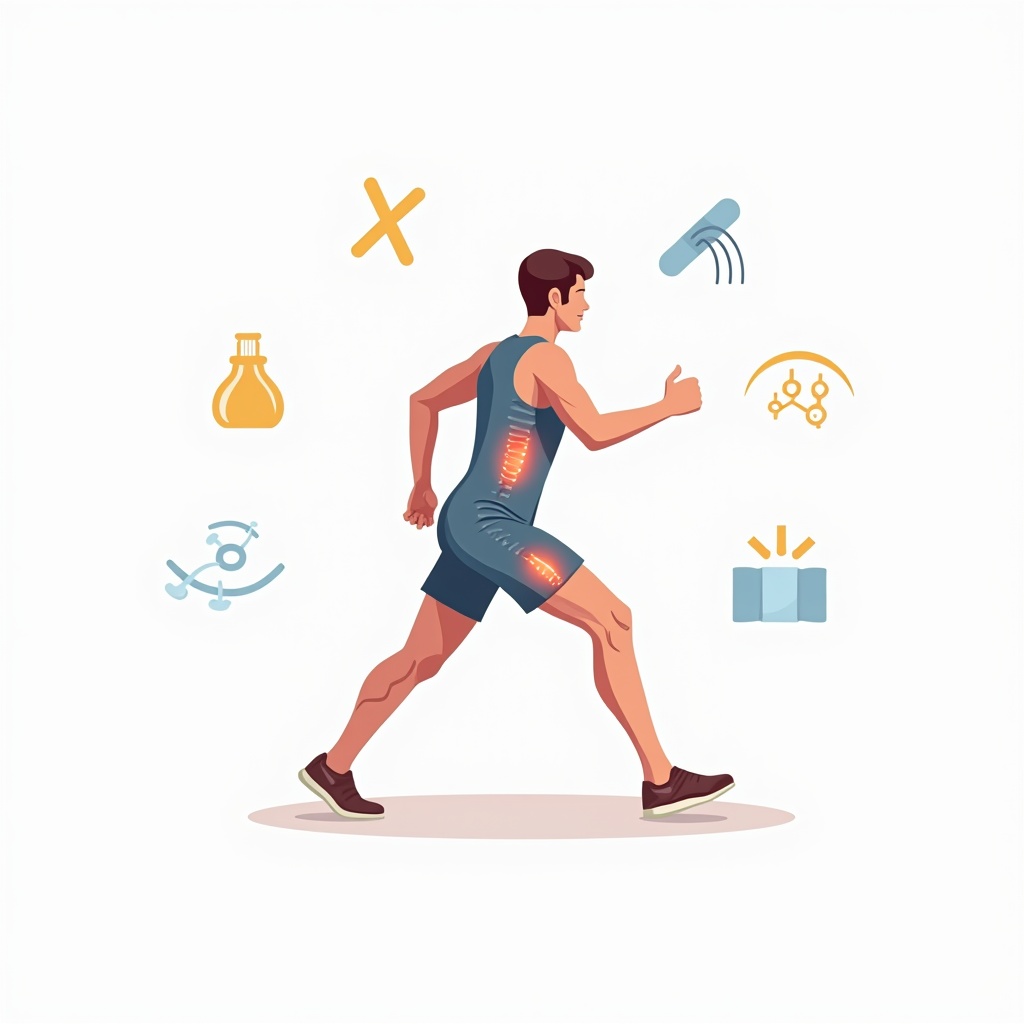
Injuries: every athlete's main problem
Injuries are not a question of if but when. Every serious athlete eventually faces damage to a tendon, ligament, muscle, or joint. And the speed of recovery determines whether the athlete returns to their previous level in weeks or months.
The traditional recovery approach (rest, ice, compression, elevation, RICE) slows inflammation but does not accelerate regeneration. Physical therapy helps but works within the natural healing pace. Peptides add a third component: direct stimulation of recovery processes at the cellular level.
BPC-157 plus TB-500: the gold standard for recovery
The BPC-157 and TB-500 combination is the most studied and popular pairing for sports injuries. Their mechanisms complement each other.
BPC-157: directed regeneration
BPC-157 stimulates angiogenesis (new vessel growth), accelerates fibroblast migration to the injury site, and activates growth factors (VEGF, EGF, FGF). It acts on all types of connective tissue: tendons, ligaments, muscles, even bone. In animal experiments, BPC-157 accelerated healing of torn Achilles tendons, damaged rotator cuffs, and muscle tears.
A distinctive feature of BPC-157 is systemic action from local injection. Injection near the injury provides high local concentration, but the peptide also works when injected far from the damage site (for example, subcutaneously in the abdomen). For sports injuries, local injection is recommended: as close to the injury as possible.
TB-500: infrastructure for healing
TB-500 (thymosin beta-4) is a cell migration peptide. It recruits stem cells and precursor cells to the injury site and builds new blood vessels. If BPC-157 signals start repairing, TB-500 delivers the construction crews and roads to the building site.
TB-500 also reduces inflammation and scar tissue formation. This is critical for tendons and ligaments: a crude scar in a tendon is a weak point prone to re-injury. TB-500 helps form more organized collagen structure.
Injury protocol
- BPC-157: 250-500 mcg subcutaneously near the injury, 1-2 times daily
- TB-500: 2-5 mg subcutaneously, 2-3 times weekly (loading phase first 2 weeks, then reduce)
- Duration: 4-8 weeks depending on severity
- Start: as soon as possible after injury
GH peptides and recovery through sleep
Post-training recovery occurs predominantly during sleep, and growth hormone plays a central role. GH stimulates muscle protein synthesis, accelerates repair of microdamage, and regulates fat metabolism. The GH peak coincides with deep delta sleep, which is why sleep quality directly affects recovery quality.
Ipamorelin before bed
Ipamorelin is a ghrelin mimetic that stimulates a clean GH release without significant effects on cortisol or prolactin. For athletes this is ideal: a powerful nighttime GH peak without unwanted hormonal shifts. 200-300 mcg subcutaneously 30-60 minutes before bed.
Tesamorelin for baseline support
Tesamorelin via GHRH receptors provides smoother, sustained GH stimulation. For athletes with high training volumes, the combination of Ipamorelin (evening) plus Tesamorelin (morning fasted) covers both windows: nighttime recovery and daytime anabolism.
Results athletes report: faster recovery between sessions (ability to train more frequently), improved body composition (less fat while maintaining muscle), deeper sleep, and reduced delayed onset muscle soreness (DOMS).
MOTS-C: endurance at the cellular level
MOTS-C is a mitochondrial peptide that activates AMPK and improves glucose utilization by muscle cells. For athletes this translates to concrete outcomes:
- Improved aerobic endurance as muscles use glucose and fatty acids more efficiently
- Higher fatigue threshold allowing training longer at the same intensity
- Better metabolic flexibility with rapid switching between energy substrates
- Faster glycogen replenishment after training
In mouse studies, MOTS-C improved running test performance and increased physical work capacity. Athletes using MOTS-C report that training feels easier and heart rate zones at the same workload drop lower, a classic sign of improved aerobic base.
Protocol: 10 mg subcutaneously 2-3 times weekly. Best in the morning, 1-2 hours before training. 8-week course.
NAD+: cellular energy and recovery
NAD+ is a coenzyme critically important for mitochondrial function. During intense training, NAD+ is consumed actively, and its deficit manifests as fatigue, prolonged recovery, and declining performance.
For athletes, NAD+ helps in several ways:
- Supporting muscle energy production through the mitochondrial electron transport chain
- Activating SIRT3, a sirtuin that protects mitochondria from exercise-induced oxidative stress
- Improving neuromuscular transmission for faster reactions and more precise coordination
- Accelerating nervous system recovery after heavy training sessions
Protocol: NAD+ infusion or injection courses of 4-6 weeks during high-volume training periods. Between courses, use oral precursors or the NAD+ pen.
GHK-Cu: skin, joints, and faster healing
GHK-Cu for athletes is not just about appearance. The peptide stimulates collagen synthesis, and collagen is the main structural protein of tendons, ligaments, cartilage, and fascia. Regular GHK-Cu use can strengthen connective tissue preventively, reducing injury risk.
Additional benefits for athletes:
- Faster healing of abrasions and surface injuries
- Improved skin condition under prolonged sweat and friction exposure
- Joint cartilage support
- Anti-inflammatory effect through MMP suppression (enzymes that break down collagen)
GLOW and KLOW for contact sports
Contact sport athletes (martial arts, rugby, hockey) face increased skin wear, frequent abrasions, and chronic skin inflammation from friction. GLOW and KLOW from Peptex offer a comprehensive approach: GLOW with BPC-157 and GHK-Cu for regeneration, KLOW with KPV for inflammation control.
Athletic protocols by goal
Acute injury (first 2-4 weeks)
- BPC-157 500 mcg daily locally
- TB-500 5 mg 3 times weekly
- NAD+ for recovery support
Competition prep (8 weeks)
- MOTS-C 10 mg 3 times weekly for endurance
- Ipamorelin 200-300 mcg before bed for sleep recovery
- NAD+ course for energy
Off-season (recovery and prevention)
- GHK-Cu 1-2 mg 3-5 times weekly for connective tissue strengthening
- BPC-157 plus TB-500 preventive course for microdamage healing
- Ipamorelin plus Tesamorelin for body composition optimization
Recovery after a heavy season
- NAD+ infusions for mitochondrial recharge
- BPC-157 plus TB-500 for targeted work on accumulated damage
- GHK-Cu for tissue restoration
Practical notes for athletes
Injection timing relative to training: BPC-157 and TB-500 are best administered after training, when microdamage has already occurred and peptides can direct resources toward repair. MOTS-C before training for improved energetics. Ipamorelin before bed for overnight recovery.
Hydration: peptides work in an aqueous environment. Adequate water intake (minimum 30 mL per kg body weight) is a baseline requirement for their effectiveness.
Protein: without sufficient dietary protein (1.6-2.2 g/kg for athletes), peptides cannot realize their anabolic potential. Building materials must be available.
For a personalized athletic protocol, contact support at Peptex.
PEPTEX dostarcza do Polski — szybka wysyłka, certyfikowana jakość, darmowa dostawa od 150 €.
Czytaj więcej: Peptydy dla sportowców: kontuzje, regeneracja, wydajność | Peptex
💬 Комментарии