Epithalon vs NAD+: Comparando dois peptídeos antienvelhecimento
Publicado: 2025-05-13 20:13:00 | PEPTEX Research
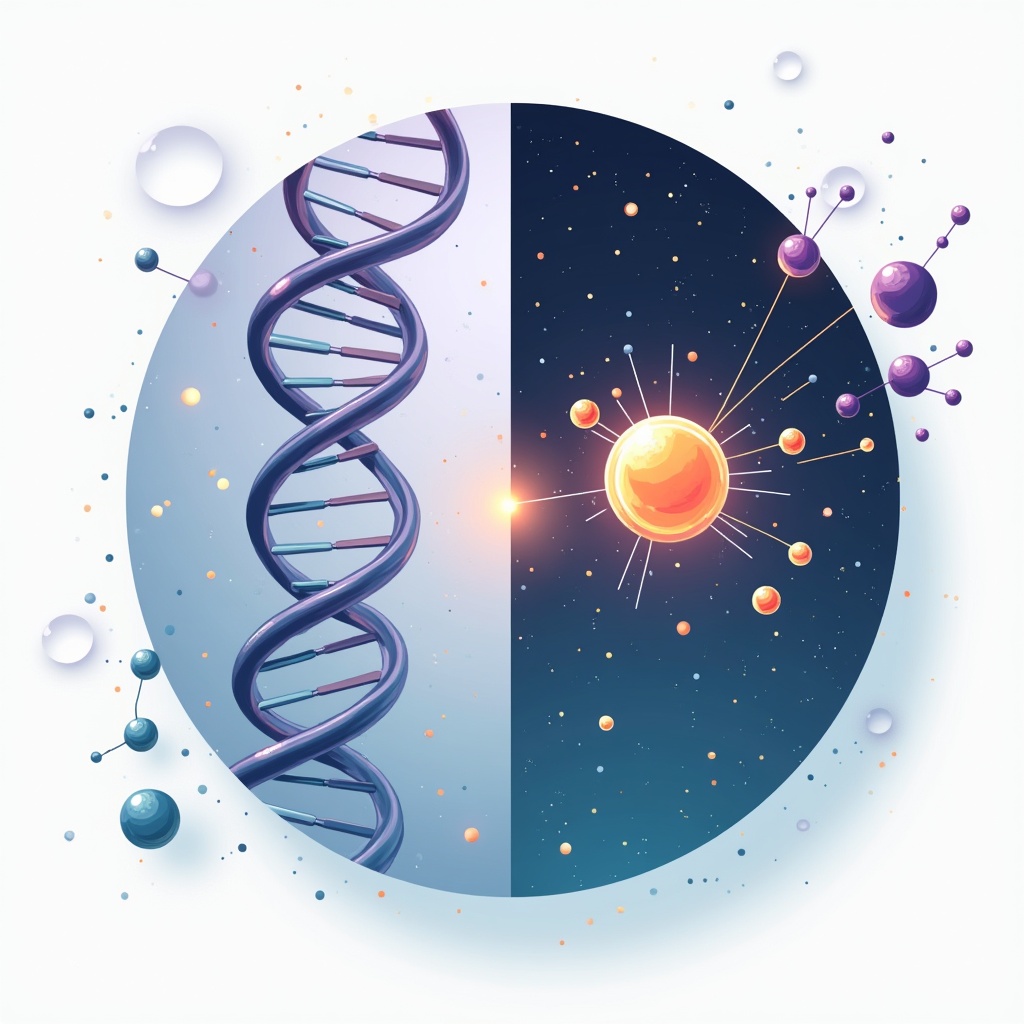
Anti-aging peptides work. But they don't all work the same way. Some extend telomeres. Others patch up cellular energy production. Epithalon and NAD+ attack aging from different directions, and understanding the difference determines whether you get real results or just spend money on a trendy supplement.
Epithalon: the telomere story
Epithalon (AEDG peptide) was synthesized by Vladimir Khavinson's group at the Saint Petersburg Institute of Bioregulation and Gerontology. The work started in the 1990s, and by now there's a substantial body of data. The core idea is straightforward: a four-amino-acid peptide (Ala-Glu-Asp-Gly) activates telomerase, the enzyme that rebuilds the end caps of chromosomes.
Why does this matter? Every time a cell divides, it loses a piece of its telomere. When telomeres shorten to a critical length, the cell stops dividing and enters senescence. It's technically alive but no longer functional. Worse, senescent cells secrete pro-inflammatory cytokines (the SASP phenotype), poisoning neighboring healthy cells. Khavinson and colleagues demonstrated in a 2003 study that epithalon increased telomere length in human fibroblast cultures by 33%. That's not a marginal effect.
An earlier study (Khavinson, 2002) on CBA mice showed epithalon increased average lifespan by 12%. Mice receiving the peptide maintained better immune function and reproductive capacity in older age groups. These aren't isolated findings. A 2004 study in rats demonstrated reduced frequency of spontaneous tumors in the epithalon group. Anisimov et al. (2001) found in HER-2/neu transgenic mice that chronic epithalon administration increased the latency period of mammary tumors.
Mechanism: epithalon stimulates expression of the hTERT gene, the catalytic subunit of telomerase. Without hTERT, telomerase doesn't work. Epithalon switches this gene on in somatic cells where it normally goes silent after the embryonic period. It also modulates activity of the shelterin complex proteins (TRF1, TRF2, POT1) that protect chromosome ends from degradation and from being falsely recognized as damaged DNA.
There's another layer. Epithalon affects melatonin. Khavinson's 2003 study showed that in elderly monkeys, epithalon restored the nighttime melatonin peak to levels seen in young animals. Melatonin, beyond sleep regulation, is a potent antioxidant and immunomodulator. For older adults whose pineal gland has gone quiet and barely produces melatonin, this is a particularly significant effect.
A lot of people who buy epithalon start specifically because of sleep problems. Restoring melatonin rhythm through epithalon works differently from taking a sleeping pill (external input). It's more like rebooting the body's own system.
NAD+: the energy crisis of aging
NAD+ (nicotinamide adenine dinucleotide) is a coenzyme present in every cell. It participates in hundreds of metabolic reactions: oxidative phosphorylation, DNA repair, protein deacetylation via sirtuins. The problem is that NAD+ levels decline with age. By 50, you have roughly half the NAD+ you had at 20. By 70, the decline can reach 50-80%.
Imai & Guarente's 2014 work in Cell drew a direct line between NAD+ decline and age-related mitochondrial dysfunction. Less efficient mitochondria mean less ATP, more free radicals, accelerated cell damage. A vicious cycle that spins faster with each passing year.
Where does the NAD+ actually go? Partly it gets consumed by CD38, an enzyme whose expression increases with age and chronic inflammation. Camacho-Pereira et al. (2016) in Cell Metabolism showed that inhibiting CD38 in old mice restored NAD+ levels and improved mitochondrial function. This explains why simply adding exogenous NAD+ produces such a pronounced effect: you're compensating for what CD38 is destroying.
People who buy NAD+ often notice the effect within the first few days. This isn't placebo. Mitochondria are literally getting a cofactor they've been starved of, and cellular energy responds quickly.
Sirtuins. The SIRT1-SIRT7 protein family regulates DNA repair, inflammation, fat metabolism. All of them depend on NAD+ as a cofactor. When NAD+ drops, sirtuins slow down. Sinclair's 2013 work in Cell demonstrated that boosting NAD+ in old mice led to muscle tissue that was indistinguishable from young tissue by biomarkers within a week. SIRT1 also suppresses NF-kB, the master transcription factor of inflammation. When NAD+ is adequate, SIRT1 keeps inflammation in check. When it's low, chronic inflammation (inflammaging) escalates.
Zhang (2016) showed neuroprotective effects: NAD+ reduced neurodegeneration in mouse models of Alzheimer's disease. Another study (Mills et al., 2016, Cell Metabolism) found that long-term NMN administration (an NAD+ precursor) prevented age-related weight gain, improved insulin sensitivity, and increased physical activity in mice. A clinical trial of NMN in humans (Yi et al., 2023, GeroScience) confirmed improved walking speed and muscle strength in older men.
Head-to-head comparison
| Parameter | Epithalon | NAD+ |
|---|---|---|
| Primary target | Telomeres / telomerase | Mitochondria / sirtuins |
| Mechanism | hTERT activation, shelterin modulation | Cofactor for 500+ enzymes, SIRT1-7 activation |
| DNA effects | Telomere elongation, end protection | Enhanced repair via PARP1 |
| Cellular energy | Indirect (via melatonin, antioxidants) | Direct (oxidative phosphorylation, ATP) |
| Sleep effects | Yes (restores melatonin peak) | Yes (via circadian rhythms, SIRT1-CLOCK) |
| Anti-inflammatory | Moderate (via melatonin) | Strong (SIRT1 suppresses NF-kB) |
| Cancer protection | Khavinson data: reduced tumor incidence | Data is mixed (PARP vs tumor metabolism) |
| Administration | Subcutaneous injections, 10-20 day cycles | Subcutaneous injections, daily or 2-3x/week |
| Speed of effect | Weeks to months | Days |
| Human studies | Limited (Khavinson, elderly) | Growing number of clinical trials |
Dosing: what it looks like in practice
Epithalon is typically used in cycles: 5-10 mg subcutaneously daily for 10-20 days, then a 4-6 month break. This schedule is based on Khavinson's protocols. A single [[Epithalon|15]] 50 mg vial covers a full ten-day course at 5 mg/day. For a 10 mg/day course, you'd need two vials. Reconstitute with bacteriostatic water, inject into subcutaneous tissue of abdomen or thigh.
NAD+ is injected subcutaneously, typical dosing is 100-300 mg two to three times per week. Some protocols call for daily injections in the first 2 weeks followed by a maintenance dose. One [[NAD+|14]] vial contains 500 mg, enough to assess the effect over the first 2-3 weeks. At 100 mg every other day, a single vial lasts almost a month.
For those who prefer to skip the reconstitution step, there's the [[NAD+ Pen|35]] with pre-filled doses. Easier to store, simpler to dose, no fuss with bacteriostatic water and syringes. A solid option for travel or if you're just starting and want to try without the full preparation routine.
Important note: NAD+ commonly causes a flushing sensation and mild nausea with the first injections. This is a normal reaction that passes within 15-30 minutes and diminishes with each subsequent injection. If the reaction is strong, cut the dose in half and titrate up gradually.
Synergy: why combine them
Aging isn't a single breakdown. It's a cascade: telomeres shorten, NAD+ drops, mitochondria lose efficiency, senescent cells accumulate, chronic inflammation rises. Targeting one link is logical, but you can do better.
If you're looking to order anti-aging peptides, the epithalon + NAD+ combination is a logical starting stack. Subjectively, the energy boost from NAD+ shows up within the first few days (mitochondria getting their fuel), while epithalon's effects unfold more gradually over a longer timeline. Objectively, there's reason to believe NAD+ enhances epithalon's work because telomerase activity itself is an energy-demanding process.
Sahin et al. (2011, Nature) established a connection between telomere dysfunction and mitochondrial stress via the p53-PGC1-alpha pathway. When telomeres get too short, p53 suppresses PGC1-alpha, leading to mitochondrial degradation. This creates a feedback loop: damaged telomeres degrade mitochondria, and damaged mitochondria generate oxidative stress that accelerates telomere shortening.
The epithalon + NAD+ combination breaks this cycle from both sides. Epithalon restores telomere length, relieving p53-mediated suppression of PGC1-alpha. NAD+ directly supports mitochondrial biogenesis and reduces oxidative stress via sirtuins. The result: both processes reinforce each other instead of dragging the cell down.
Additional peptides for an anti-aging stack
If you're serious about this, consider adding [[MOTS-C|40]] and [[GHK-Cu|24]] to your protocol.
MOTS-C is a mitochondrial-derived peptide that functions as an exercise mimetic. It activates AMPK, improves glucose utilization, and enhances insulin sensitivity. Lee et al. (2015) in Cell Metabolism showed that MOTS-C prevented obesity on a high-fat diet in mice. In the anti-aging context, MOTS-C complements NAD+ because it also targets mitochondrial function but through a different pathway: AMPK instead of sirtuins.
GHK-Cu (copper peptide) stimulates collagen synthesis, has anti-inflammatory properties, and according to Pickart et al. (2012), can reprogram expression of over 4,000 genes toward...
PEPTEX entrega em Portugal — envio rápido, qualidade certificada, envio gratuito acima de 150 €.
Leia mais: Epithalon vs NAD+: Comparando dois peptídeos antienvelhecimento
💬 Комментарии