Peptídeos e a barreira hematoencefálica: mecanismos de transporte
Publicado: 2026-01-11 08:04:00 | PEPTEX Research
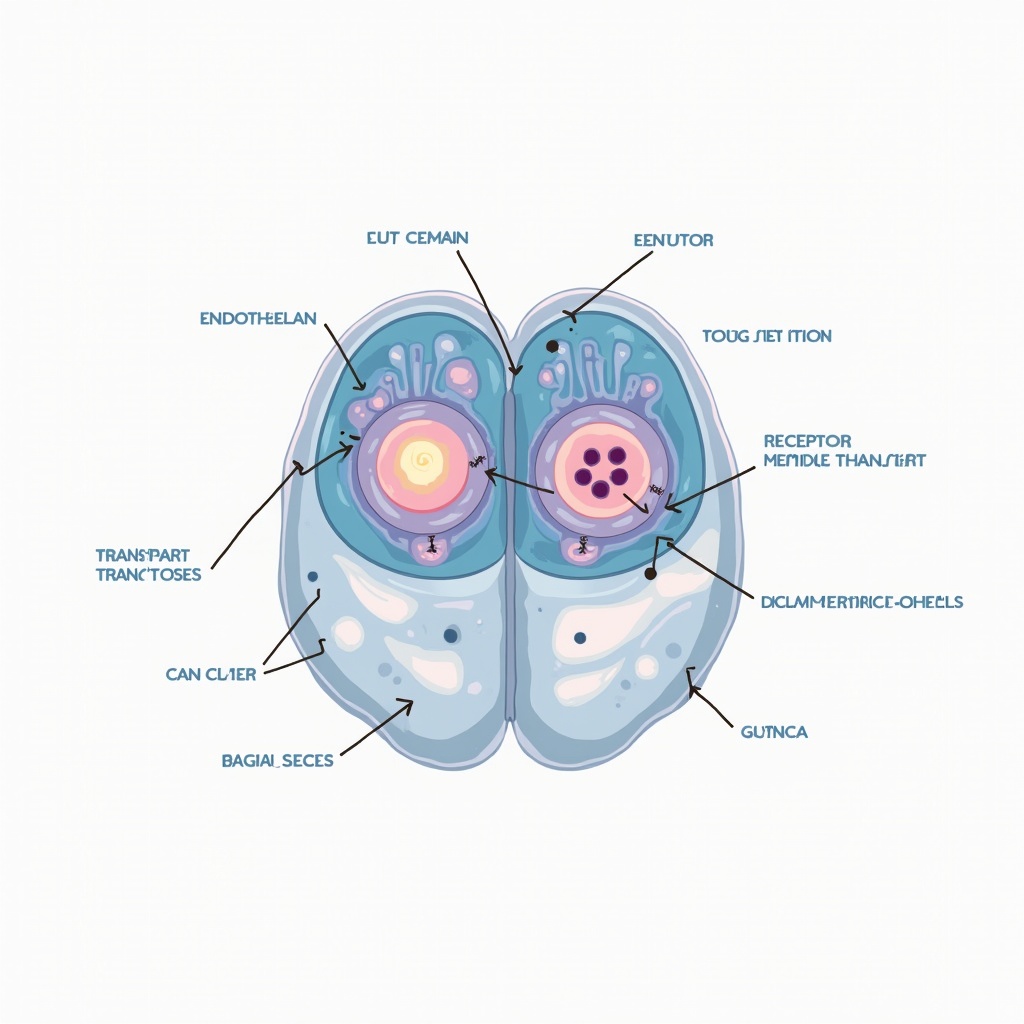
The blood-brain barrier remains one of the most selective gatekeepers in human physiology. Formed by tightly joined endothelial cells lining cerebral capillaries, it blocks roughly 98 percent of small-molecule drugs and nearly all large molecules from reaching brain tissue. For researchers and clinicians interested in neuropeptides, the obvious question follows: how do certain peptides still manage to reach the central nervous system?
Understanding the mechanisms behind peptide transport across the BBB has direct practical consequences. It shapes drug design, influences dosing strategies, and determines which peptide compounds can realistically target neurological processes. This article examines the principal pathways that peptides exploit to penetrate the barrier, the structural features that facilitate or prevent crossing, and what the existing evidence says about two specific compounds that have drawn attention for their apparent CNS activity: DSIP and BPC-157.
Architecture of the Blood-Brain Barrier
The BBB is not a single membrane but a functional unit comprising brain microvascular endothelial cells (BMECs), pericytes, astrocyte endfeet, and the basement membrane. Tight junction proteins, including claudins, occludin, and junctional adhesion molecules, create a paracellular seal that prevents passive diffusion of hydrophilic molecules between cells.
This arrangement forces most molecules to take a transcellular route, passing through the luminal membrane of the endothelial cell, traversing the cytoplasm, and exiting through the abluminal membrane. Lipophilic molecules under roughly 400-500 daltons can accomplish this passively. Peptides, being generally hydrophilic and often exceeding this molecular weight range, cannot.
The barrier also expresses efflux transporters, primarily P-glycoprotein (P-gp) and breast cancer resistance protein (BCRP), which actively pump substrates back into the bloodstream. Even peptides that partially penetrate the luminal membrane may be expelled before reaching the brain parenchyma. Any discussion of peptide BBB penetration must therefore account for both entry mechanisms and efflux clearance.
Transport Mechanisms Available to Peptides
Carrier-Mediated Transport (CMT)
Carrier-mediated transport relies on membrane-embedded transporter proteins that recognize specific molecular structures. The BBB expresses numerous carrier systems originally evolved to supply the brain with nutrients: glucose transporter GLUT1, large neutral amino acid transporter LAT1, cationic amino acid transporters, and several peptide-specific carriers.
Peptide transport system 1 (PTS-1) and peptide transport system 6 (PTS-6) are among the characterized saturable transport mechanisms for peptides at the BBB. PTS-1, for instance, transports several opioid peptides, including enkephalins and certain modified analogs. PTS-6 has been specifically associated with the transport of delta sleep-inducing peptide.
The key feature of CMT is substrate specificity. A peptide must present the correct structural motifs to bind the carrier, and transport can be competitively inhibited by other substrates sharing that carrier. This creates a ceiling: once the carrier is saturated, additional peptide in the bloodstream does not increase brain uptake proportionally. Understanding which carrier system a peptide uses informs both effective dosing and potential drug-drug interactions at the BBB level.
Receptor-Mediated Transcytosis (RMT)
Receptor-mediated transcytosis begins when a peptide or protein binds a receptor on the luminal surface of the endothelial cell. The receptor-ligand complex is internalized via clathrin-coated pits, packaged into endosomes, trafficked through the cell, and released from the abluminal side.
Classic RMT receptors at the BBB include the transferrin receptor (TfR), low-density lipoprotein receptor-related protein 1 (LRP1), and the insulin receptor. While these primarily serve endogenous ligands, researchers have exploited them for drug delivery by conjugating therapeutic peptides to receptor-binding molecules, essentially giving a cargo peptide a molecular passport to cross the barrier.
RMT differs from CMT in capacity and kinetics. It can move larger molecules, including full-length antibodies and nanoparticles, but typically operates more slowly and at lower throughput. For peptides, RMT becomes relevant when the compound either directly binds an RMT receptor or is conjugated to a targeting moiety that does.
Adsorptive-Mediated Transcytosis (AMT)
Adsorptive transcytosis is triggered by electrostatic interactions between positively charged (cationic) peptides and the negatively charged glycocalyx on the luminal endothelial surface. Unlike RMT, AMT does not require a specific receptor, making it less selective but broadly applicable to cationic peptide sequences.
Cell-penetrating peptides (CPPs) such as TAT-derived sequences exploit AMT to breach the BBB. While this mechanism is less physiologically precise, it opens a delivery strategy: attaching a cationic CPP sequence to a therapeutic peptide can enhance brain uptake. The tradeoff is reduced selectivity, which can lead to off-target accumulation in other organs.
Circumventricular Organs (CVOs)
Not all regions of the brain are equally protected. The circumventricular organs, including the area postrema, median eminence, subfornical organ, and organum vasculosum of the lamina terminalis, feature fenestrated capillaries that lack the characteristic tight junctions of the BBB proper. These regions serve as sensory interfaces between the blood and the brain, detecting circulating hormones, osmolality changes, and metabolic signals.
Peptides circulating in the bloodstream can access CVOs without requiring active transport. From there, some signals propagate into adjacent brain regions through local neural circuits. This pathway is particularly relevant for peptides involved in sleep regulation, stress responses, and neuroendocrine signaling. DSIP, for example, has been hypothesized to exert at least part of its central effects through interaction with CVO-accessible receptors rather than through wholesale barrier penetration.
The CVO route has practical implications for dosing. Because access does not depend on saturable transporters, the dose-response relationship at CVOs may differ from what is observed for carrier-mediated BBB transport. This can produce biphasic or non-linear dose-response curves that complicate clinical interpretation.
Structural Determinants of BBB Permeability
Several molecular characteristics influence whether a given peptide can cross the BBB:
- Molecular weight. Peptides below roughly 500-600 Da have a higher probability of passive or carrier-mediated transport. Larger peptides increasingly depend on transcytosis or CVO access.
- Lipophilicity. Moderate lipophilicity favors transcellular passage. Highly polar peptides are largely excluded unless they engage a carrier system.
- Charge. Cationic peptides can exploit AMT. Anionic peptides face electrostatic repulsion from the negatively charged endothelial surface.
- Metabolic stability. The BBB endothelium expresses peptidases that can degrade peptides during transit. Peptides with modified backbones, D-amino acids, or cyclization resist enzymatic cleavage and maintain higher effective concentrations during transport.
- Hydrogen bonding capacity. Excessive hydrogen bond donors and acceptors reduce membrane permeability. Intramolecular hydrogen bonds (as seen in cyclic peptides) can mask polar surfaces and improve permeability, a principle sometimes called the "chameleonic" effect.
- Efflux susceptibility. Even after entering the endothelial cell, peptides recognized by P-gp or other efflux pumps may be expelled. Structural modifications that reduce efflux pump recognition can substantially improve net brain penetration.
DSIP: A Peptide Designed by Evolution to Reach the Brain
Delta sleep-inducing peptide (DSIP) is a nonapeptide (nine amino acids: Trp-Ala-Gly-Gly-Asp-Ala-Ser-Gly-Glu) first isolated from the venous blood of rabbits during electrically induced slow-wave sleep. Its molecular weight of approximately 849 Da places it above the typical passive diffusion cutoff, yet radiolabeled studies have confirmed its appearance in brain tissue after peripheral administration.
The primary transport mechanism identified for DSIP at the BBB is peptide transport system 6 (PTS-6), a saturable carrier system characterized by William Banks and colleagues. PTS-6 transports DSIP in the blood-to-brain direction and shows a distinct pharmacological profile from other peptide transport systems. Importantly, PTS-6 is not inhibited by the same substrates that block PTS-1, indicating that DSIP uses a dedicated entry route.
In addition to carrier-mediated transport, DSIP likely accesses the brain through circumventricular organs. Given its documented effects on sleep architecture, stress hormone modulation, and neuroendocrine rhythms, CVO-mediated signaling provides a plausible complementary pathway. The median eminence, which interfaces with the hypothalamic-pituitary axis, is one region where circulating DSIP could influence central processes without full BBB penetration.
DSIP also demonstrates reasonable metabolic stability in plasma, with reported half-life values that, while short in absolute terms, are sufficient for meaningful BBB transport given the efficiency of PTS-6. Some research groups have explored modifications to extend its circulating half-life further, including N-terminal capping a...
PEPTEX entrega em Portugal — envio rápido, qualidade certificada, envio gratuito acima de 150 €.
Leia mais: Peptídeos e a barreira hematoencefálica: mecanismos de transporte
💬 Комментарии