Як TB-500 відновлює тканини серця | Peptex
Опубліковано: 2025-09-03 19:20:00 | PEPTEX Research
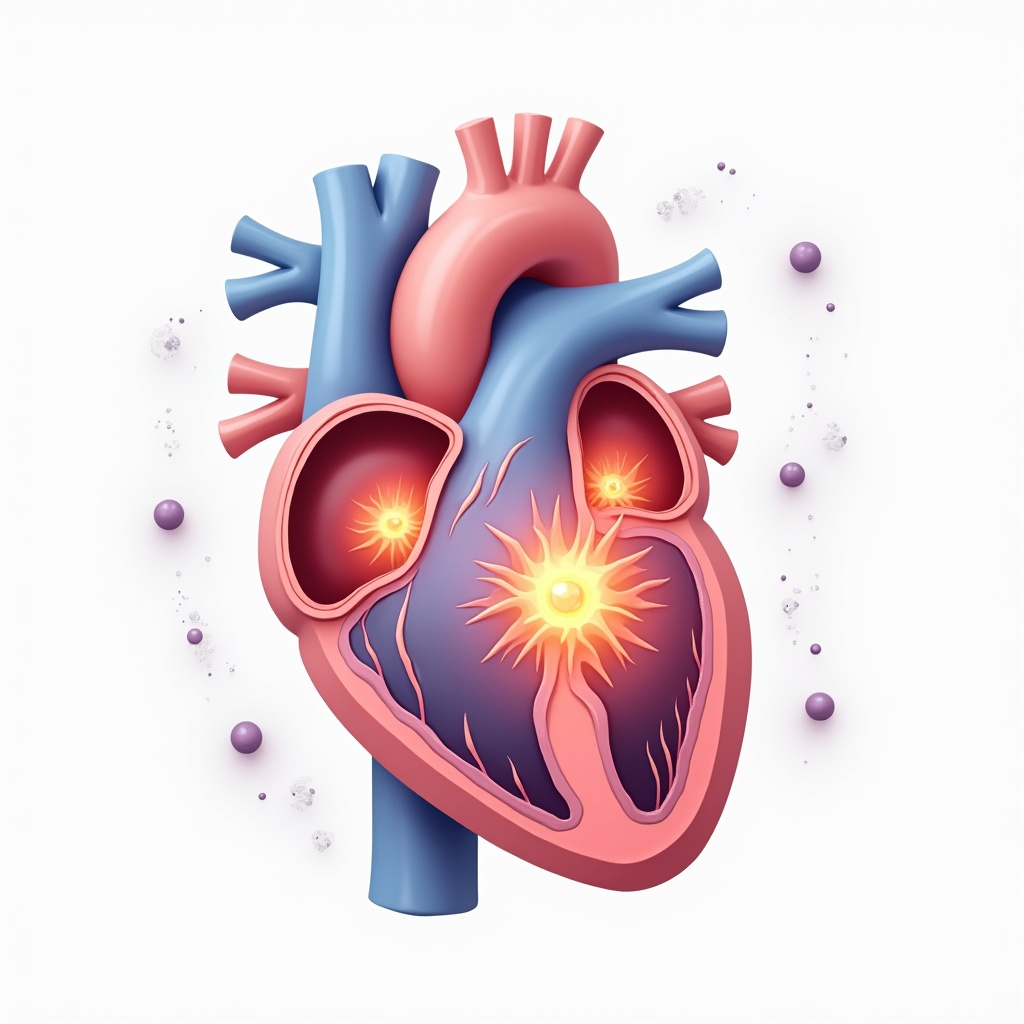
The Heart Doesn't Forgive. But TB-500 Might
For decades, cardiology operated under a near-axiom: cardiac muscle does not regenerate. A heart attack leaves a permanent scar. The myocardium doesn't grow back. All a physician can do is limit further damage. But over the past fifteen years, experimental data on thymosin beta-4 (commercially known as TB-500) has been chipping away at that dogma in some rather compelling ways.
Let's look at why researchers working with translational cardiac models are calling TB-500 one of the most interesting molecules to come along in a decade.
What TB-500 Actually Is
TB-500 is a synthetic fragment of thymosin beta-4 (Tβ4), a naturally occurring 43-amino-acid peptide. Tβ4 is present in virtually every human cell, but concentrations run especially high in platelets, macrophages, and wound exudate. That distribution isn't random: Tβ4 is a key modulator of cell migration, angiogenesis, and anti-inflammatory signaling.
Tβ4 was first isolated from calf thymus back in 1966 by Allan Goldstein, but real excitement didn't build until the early 2000s when Deepak Srivastava's group at the Gladstone Institutes demonstrated that this peptide could activate epicardial progenitor cells in the mouse heart after experimental myocardial infarction.
Since then, a solid body of evidence has accumulated. Not in humans — not yet. But in animal models, the results have been consistently reproduced across multiple independent laboratories, which is frankly unusual for peptide-based research.
Mechanism One: Waking Up Epicardial Progenitor Cells
The epicardium — the heart's outermost layer — harbors a population of dormant progenitor cells. During embryonic development, these cells actively participate in forming coronary vessels and myocardium. In adults, they go silent. But Tβ4 can wake them up.
A landmark study by Smart and colleagues (published in Nature, 2011) showed that pretreating mice with thymosin beta-4 before induced myocardial infarction led to reactivation of epicardial progenitors. A portion of these cells differentiated into cardiomyocytes — the working cells of the heart muscle. This was a genuine breakthrough: it demonstrated that the adult mammalian heart can form new muscle cells given the right chemical cue.
A critical nuance: the greatest effect was observed with "priming" — administering Tβ4 before the ischemic injury occurred. This finding led researchers toward thinking about the peptide's preventive potential. One practical implication under discussion is the possible use of TB-500 in individuals at high cardiovascular risk, though clinical protocols remain a long way off.
Mechanism Two: Angiogenesis and Ischemic Tissue Rescue
When a coronary artery gets blocked, downstream tissue starts dying from oxygen starvation. The speed at which new vessels form (angiogenesis) directly determines how much myocardium can be salvaged.
TB-500 drives angiogenesis through several parallel pathways:
- G-actin sequestration. Tβ4 is the primary intracellular buffer for monomeric actin. By binding G-actin, it regulates actin cytoskeleton dynamics in endothelial cells — critical for the migration and tube formation that constitute the first stage of angiogenesis.
- Integrin activation. Tβ4 promotes expression of integrin αvβ3 on endothelial cell surfaces, enhancing adhesion to the extracellular matrix and facilitating invasion into ischemic tissue.
- VEGF stimulation. Through an indirect mechanism, Tβ4 upregulates expression of vascular endothelial growth factor (VEGF), a central mediator of neovascularization. In a hindlimb ischemia model (Philp et al., 2003), Tβ4 treatment increased capillary density in the ischemic zone by 40-55%.
The practical result: in rat myocardial infarction models, TB-500 administration within the first hours after occlusion reduced the necrotic zone by 25-35% compared to controls. That's comparable to early reperfusion — without the need to mechanically open the artery.
Mechanism Three: Putting the Brakes on Fibrosis
After an infarction, a scar forms in the necrotic zone — dense fibrous tissue that neither contracts nor conducts electrical impulses. The scar is, functionally speaking, dead weight. The larger it gets, the worse the heart's pumping function becomes.
TB-500 attacks fibrosis on multiple fronts:
- TGF-β1 suppression. Transforming growth factor beta-1 is the master mediator of cardiac fibrosis. Tβ4 downregulates TGF-β1 expression and its downstream signaling cascades (Smad2/3), reducing differentiation of fibroblasts into myofibroblasts — the cells that actively synthesize collagen.
- NF-κB inhibition. By suppressing nuclear factor kappa-B, Tβ4 reduces expression of pro-inflammatory cytokines (TNF-α, IL-1β, IL-6) that sustain chronic inflammation and drive fibrogenesis.
- Matrix metalloproteinase (MMP) modulation. Tβ4 influences the MMP/TIMP balance, promoting controlled extracellular matrix remodeling without excessive collagen accumulation.
In a study by Hinkel and colleagues (published in JACC, 2015), intracoronary delivery of Tβ4 to pigs after experimental infarction reduced scar volume by 30% at 8 weeks and significantly improved left ventricular ejection fraction.
Anti-Inflammatory Action: Managing the Fire, Not Extinguishing It
The inflammatory response after an infarction is a double-edged sword. The initial inflammatory phase is necessary for clearing necrotic debris and initiating repair. But when inflammation lingers, it starts destroying viable myocardium on its own.
TB-500 appears to modulate rather than suppress the inflammatory response. It switches macrophages from the pro-inflammatory M1 phenotype to the reparative M2 phenotype, promoting faster resolution of inflammation and activation of regenerative programs. Simultaneously, Tβ4 reduces neutrophil adhesion to the endothelium of damaged vessels, limiting secondary reperfusion injury.
This immunomodulatory effect is one reason why TB-500 is interesting not just in acute infarction but also in chronic heart failure, where low-grade myocardial inflammation plays a central role in disease progression.
What Clinical Data Show So Far
There are no published clinical trials of TB-500 specifically for cardiac indications — yet. But there is an informative proxy: in ophthalmology, Tβ4 (as the drug RGN-259) completed Phase II/III clinical trials for dry eye syndrome, demonstrating a favorable safety profile. This matters because it shows that thymosin beta-4 is generally well-tolerated in humans.
RegeneRx Biopharmaceuticals, which developed therapeutic applications of Tβ4, at one point announced plans for cardiac studies, but those programs never reached clinical trials. Still, academic interest in the cardioprotective properties of Tβ4 hasn't waned.
In 2023, a group from Zhejiang University published work showing that Tβ4-loaded nanoparticles delivered directly to the infarct zone provided sustained peptide release over 2 weeks and significantly improved left ventricular function in rats. Targeted delivery may address one of the key challenges with systemic administration — rapid peptide clearance from the bloodstream.
TB-500 and Cardiac Fibrosis Beyond Infarction
Myocardial fibrosis isn't just a consequence of heart attacks. Diffuse interstitial fibrosis develops in hypertensive heart disease, diabetic cardiomyopathy, aging, and several other conditions. It impairs diastolic function, increases myocardial stiffness, and is one of the primary mechanisms driving heart failure with preserved ejection fraction (HFpEF) — a condition for which no effective treatment currently exists.
The antifibrotic properties of TB-500 could potentially be relevant precisely in HFpEF. Animal data from diabetic cardiomyopathy models show that Tβ4 reduces type I and type III collagen content in the myocardium, improves left ventricular compliance, and normalizes diastolic filling pressures.
Practical Considerations: How TB-500 Is Used Today
As of now, TB-500 is not approved by any regulatory authority for treating cardiovascular disease. All of the results described above come from preclinical animal studies. That said, the peptide is available as a research reagent and is used across multiple countries for research purposes.
At Peptex, we offer research-grade TB-500 with complete documentation. If you're interested in this peptide for research applications, we can help with selecting appropriate formats and quantities.
We carry various TB-500 package sizes suitable for both initial experiments and larger-scale research projects.
Synergy With Other Peptides
In research settings, TB-500 is frequently used alongside BPC-157 — a peptide that also demonstrates angiogenic and anti-inflammatory properties but through different signaling cascades. Theoretically, combining them could provide complementary effects: BPC-157 operates primarily through nitric oxide and the FAK-paxillin pathway, while TB-500 works via the actin cytoskeleton and epicardial activation.
However, the evidence base for combined use of these peptides in cardiac models remains insufficient — it's a promising but unvalidated direction.
Limitations and What You Should Understand
It would be dishonest not to mention the limitations of the existing evidence:
- No human data. All cardioprotective results come from mice, rats, and pigs. Extrapolation to humans is always risky.
- Dosing questions. O...
PEPTEX доставляє в Польщу, Чехію, Німеччину та по всій Європі — швидка доставка, сертифікована якість, безкоштовна доставка від 150 €.
Читати далі: Як TB-500 відновлює тканини серця | Peptex
💬 Комментарии