Майбутнє оральної доставки пептидів Наночастинки та ентеросолюбильні покриття
Опубліковано: 2026-02-09 19:23:00 | PEPTEX Research
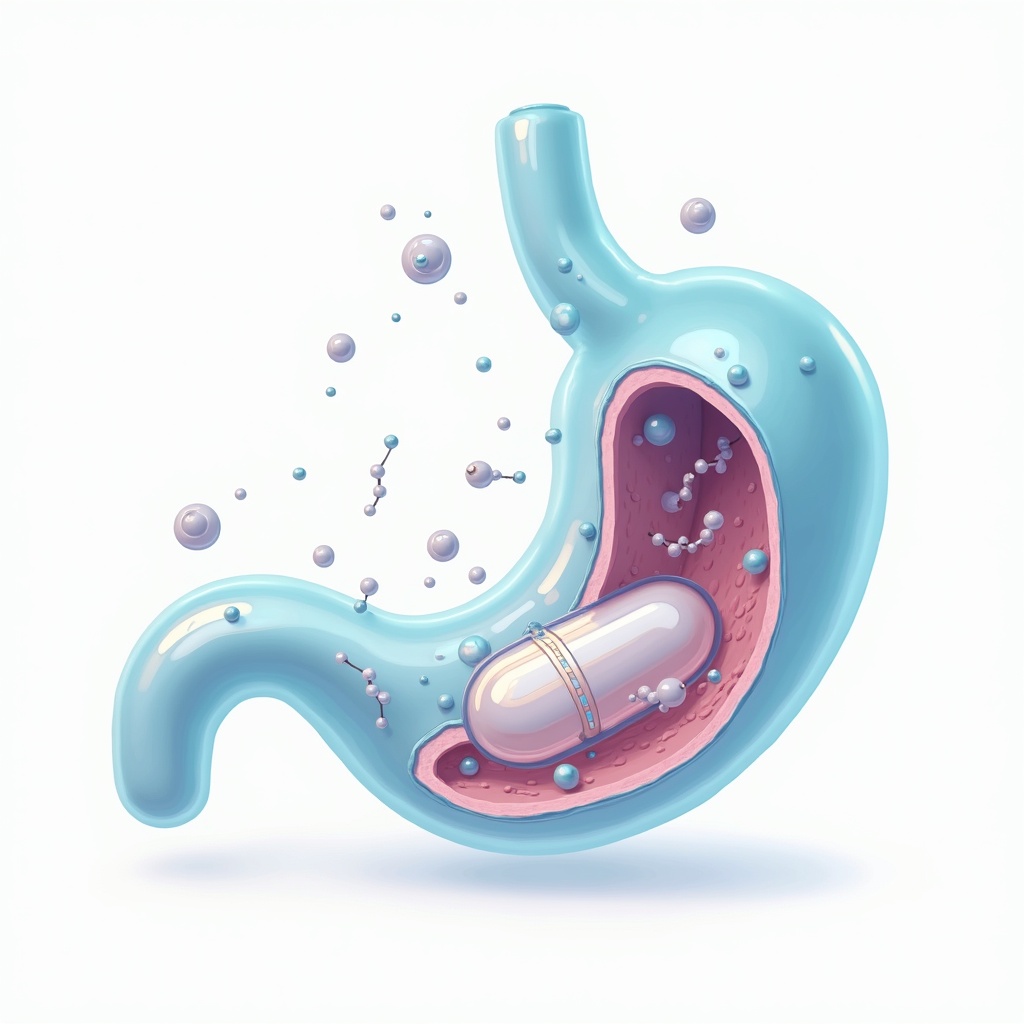
Why Oral Peptide Delivery Has Been So Difficult
Peptides are notoriously fragile travelers. Drop one into the harsh environment of the human gastrointestinal tract and three things conspire against it. First, stomach acid — with a pH hovering around 1.5 to 3.5 — denatures the peptide backbone within minutes. Second, digestive enzymes such as pepsin, trypsin, and chymotrypsin cleave peptide bonds with ruthless efficiency. Third, even if a peptide survives enzymatic degradation, the intestinal epithelium presents a formidable barrier: tight junctions between enterocytes restrict paracellular transport, while the hydrophilic nature and molecular weight of most peptides (typically 500–5000 Da) make transcellular absorption negligible.
The result? Oral bioavailability for unformulated peptides rarely exceeds 1–2%. For decades, this biological reality made injections the only viable route. Patients using GLP-1 receptor agonists, growth-hormone-releasing peptides, or BPC-157 had to accept subcutaneous needles as the price of treatment. That paradigm is now changing — not because the biology suddenly became forgiving, but because formulation science has become sophisticated enough to work around it.
Enteric Coatings: The First Line of Defense
The earliest breakthrough in oral peptide protection came from a straightforward observation: if stomach acid destroys peptides, prevent exposure to stomach acid. Enteric coatings are pH-responsive polymer films that remain intact in acidic conditions (pH < 5) but dissolve in the more neutral environment of the small intestine (pH 6–7.4).
The workhorses of modern enteric coating include methacrylic acid copolymers (Eudragit L and S series), hydroxypropyl methylcellulose phthalate (HPMCP), and cellulose acetate phthalate (CAP). Each has a slightly different dissolution threshold, allowing formulators to target specific regions of the GI tract. Eudragit L100-55, for example, dissolves at pH 5.5 — roughly the environment of the duodenum — while Eudragit S100 holds until pH 7.0, releasing payload in the ileum or colon.
However, enteric coatings alone solve only part of the problem. They protect the peptide from acid hydrolysis during gastric transit, but they do nothing about enzymatic degradation in the intestinal lumen or the absorption barrier posed by the epithelium. This is where the next generation of technologies comes in.
Permeation Enhancers: Opening the Intestinal Gate
Permeation enhancers are compounds that temporarily and reversibly increase the permeability of the intestinal epithelium, allowing peptides to cross the mucosal barrier into systemic circulation. The most clinically validated example is sodium N-[8-(2-hydroxybenzoyl)amino]caprylate, known by its abbreviation SNAC.
SNAC is the enabling technology behind oral semaglutide (marketed as Rybelsus), the first oral GLP-1 receptor agonist approved for type 2 diabetes. The mechanism involves multiple simultaneous effects. SNAC raises local pH in the stomach microenvironment around the tablet, creating a buffer zone that protects semaglutide from pepsin degradation. It also promotes monomeric conformation of the peptide, which enhances transcellular absorption across the gastric epithelium. Crucially, the permeability changes are transient — epithelial integrity is restored within 30 to 60 minutes after SNAC exposure.
Other permeation enhancers under investigation include medium-chain fatty acids (sodium caprate, or C10), which transiently open tight junctions through a calcium chelation mechanism; bile salts, which interact with membrane lipids to increase transcellular flux; and cell-penetrating peptides (CPPs) such as penetratin and Tat, which facilitate direct translocation through the lipid bilayer via both energy-dependent and energy-independent pathways.
The clinical track record of C10 is particularly compelling. It has been used in rectal and nasal formulations for decades and shows a clean safety profile even with repeated dosing. In oral formulations, C10 has demonstrated the ability to enhance absorption of antisense oligonucleotides and insulin analogs by 5- to 15-fold relative to unenhanced controls.
Nanoparticle Delivery Systems: Engineering at the Molecular Scale
While enteric coatings protect and permeation enhancers open doors, nanoparticle-based delivery systems attempt to do both — and more. Nanocarriers encapsulate peptides within structures ranging from 10 to 1000 nanometers in diameter, shielding them from enzymatic attack while facilitating uptake through mechanisms that bypass conventional paracellular and transcellular routes.
Polymeric Nanoparticles
Poly(lactic-co-glycolic acid) (PLGA) nanoparticles represent the gold standard in biodegradable polymeric carriers. PLGA is FDA-approved, well-characterized, and allows tunable release kinetics by adjusting the lactide-to-glycolide ratio and molecular weight. For oral peptide delivery, PLGA nanoparticles can be surface-modified with polyethylene glycol (PEG) to reduce mucus trapping and extend residence time in the intestinal lumen. Studies have shown 6- to 10-fold improvements in oral bioavailability of insulin when encapsulated in optimized PLGA-PEG nanoparticles compared to free peptide solution.
Chitosan-based nanoparticles offer an additional advantage: mucoadhesion. Chitosan, a cationic polysaccharide derived from chitin, adheres to the negatively charged mucus layer lining the intestinal epithelium, prolonging contact time and enhancing paracellular absorption by transiently opening tight junctions through interactions with zona occludens proteins. The combination of mucoadhesion and junction modulation makes chitosan an attractive excipient for oral peptide formulations, though challenges remain in controlling particle size and ensuring batch-to-batch reproducibility at manufacturing scale.
Lipid-Based Nanocarriers
Solid lipid nanoparticles (SLNs) and nanostructured lipid carriers (NLCs) use physiological lipids — triglycerides, fatty acids, waxes — to create matrices that are compatible with both the peptide cargo and the GI environment. Their lipophilic nature promotes interaction with the enterocyte membrane, while the lipid matrix provides physical protection against proteolysis. Self-emulsifying drug delivery systems (SEDDS) take this concept further, forming nanoemulsions spontaneously upon contact with GI fluids, maximizing the surface area available for absorption.
Targeted Nanoparticles
The most advanced nanoparticle systems incorporate active targeting. By decorating particle surfaces with ligands that bind specific receptors on enterocytes — such as vitamin B12 (targeting intrinsic factor-mediated transcytosis), transferrin, or folate — these systems exploit receptor-mediated endocytosis to achieve internalization rates far exceeding passive diffusion. Vitamin B12-conjugated nanoparticles have shown particular promise for oral insulin delivery, leveraging the body's own B12 absorption machinery to carry peptide cargo through the epithelial barrier.
Enzyme Inhibitor Co-Administration
A complementary strategy to physical protection is biochemical defense: co-formulating peptides with enzyme inhibitors that temporarily suppress proteolytic activity in the intestinal lumen. Aprotinin, a serine protease inhibitor, has been used in experimental oral peptide formulations to inhibit trypsin and chymotrypsin. Bowman-Birk inhibitors (BBIs) from soybean offer a plant-derived alternative with dual trypsin-chymotrypsin inhibition. More recently, site-specific enzyme inhibitors — such as camostat mesilate for trypsin and chymostatin for chymotrypsin — have been explored for their precision and potency.
The challenge with systemic enzyme inhibition is the risk of disrupting normal digestive physiology. The current consensus favors localized inhibition: confining the inhibitor to the immediate vicinity of the peptide release site, so that only the enzymes in direct contact with the formulation are affected. Enteric-coated matrix tablets that co-release peptide and inhibitor in a controlled fashion represent one practical implementation of this approach.
The Oral Semaglutide Blueprint
No discussion of oral peptide delivery is complete without examining the commercial success of oral semaglutide. Approved by the FDA in 2019, Rybelsus demonstrated that oral peptide therapeutics could achieve clinically meaningful bioavailability and efficacy in a large patient population. The formulation relies on SNAC co-formulation in a specific tablet architecture: 300 mg SNAC with 3, 7, or 14 mg semaglutide, taken on an empty stomach with no more than 120 mL of water, followed by a 30-minute fasting window.
The constraints of this dosing regimen — empty stomach, limited water, fasting window — reflect the fundamental difficulty of oral peptide absorption. Even with SNAC enhancement, oral semaglutide achieves only about 0.4–1% absolute bioavailability. Yet this is enough, because semaglutide is pharmacologically potent at low plasma concentrations. The lesson is clear: oral peptide delivery does not need to match injection bioavailability; it needs to deliver enough active compound to cross the therapeutic threshold.
Multiple pharmaceutical companies are now applying variations of this blueprint to other peptides. Oral GLP-1/GIP dual agonists, oral calcitonin for osteoporosis, and oral parathyroid hormone analogs are all in various stages of clinical development. The precedent set by Rybelsus has unlocked significant investment in oral peptide platforms.
Emerging Technologies on the Horizon
Beyond the currently validated approaches, several next-generation technologies are approaching clinical readiness.
Intestinal...
PEPTEX доставляє в Польщу, Чехію, Німеччину та по всій Європі — швидка доставка, сертифікована якість, безкоштовна доставка від 150 €.
Читати далі: Майбутнє оральної доставки пептидів Наночастинки та ентеросолюбильні покриття
💬 Комментарии