BPC-157 vs GHK-Cu: co jest lepsze do regeneracji
Opublikowano: 2025-05-05 12:13:00 | PEPTEX Research
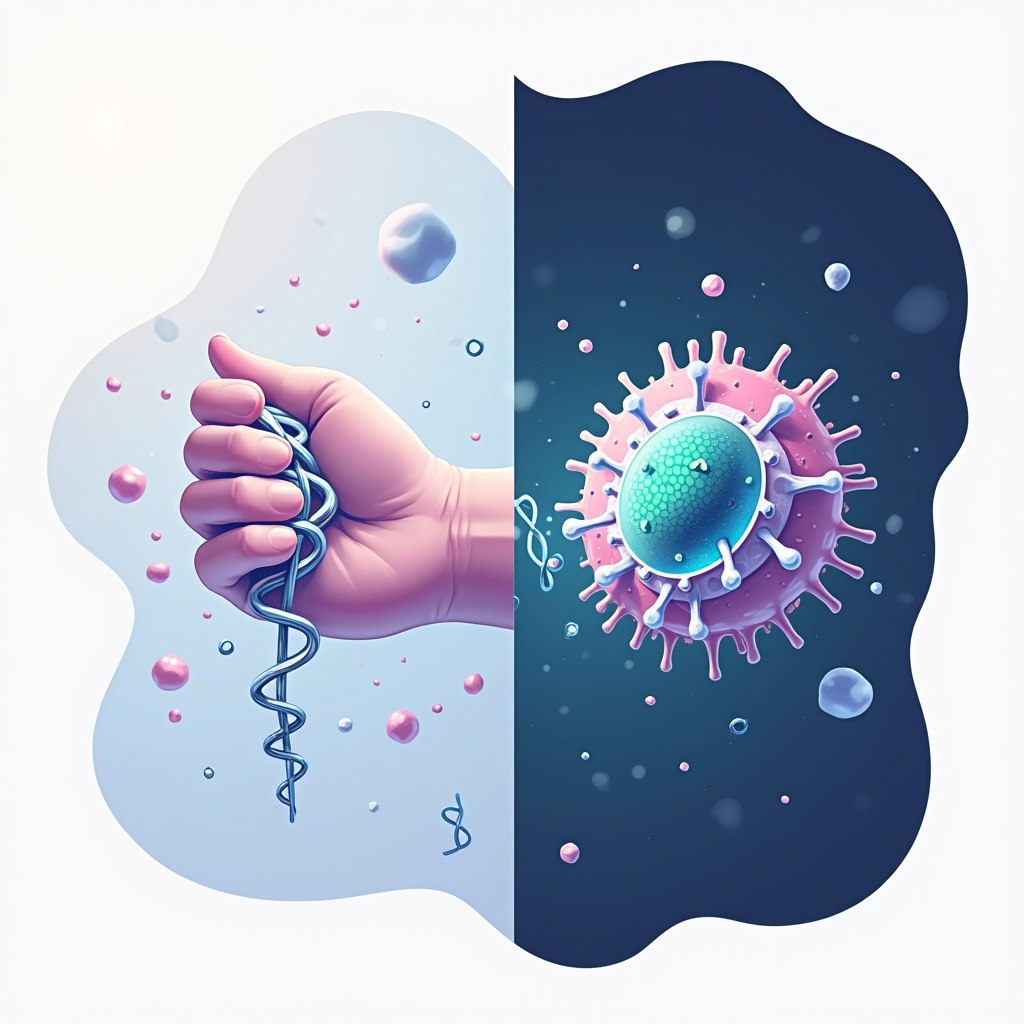
Two Peptides, Two Strategies
If you spend any time in peptide forums, you'll eventually run into the same question: BPC-157 or GHK-Cu? People frame it like a rivalry, but that misses the point. These molecules solve different problems at different biological levels. One rushes to close a wound. The other rewires the machinery that makes wound closure possible in the first place.
That distinction matters more than most people realize. Pick the wrong one for your situation and you'll spend weeks wondering why nothing changed. So let's actually break this apart.
BPC-157: The Body's Emergency Repair Crew
BPC-157 (Body Protection Compound) is a pentadecapeptide, 15 amino acids long, originally isolated from human gastric juice. The stomach lining regenerates faster than almost any tissue in the body, and researchers in the early 1990s wanted to understand why. What they found was a peptide fragment that appeared to orchestrate healing at a speed that didn't make sense.
In a 2010 study published in Journal of Physiology and Pharmacology, BPC-157 accelerated healing of transected rat Achilles tendons by over 70% compared to controls. That's not a minor improvement. The tendon-to-bone junctions reformed with organized collagen, not scar tissue. In a separate 2014 study from Current Pharmaceutical Design, the same peptide restored blood flow in rats with crushed muscle tissue by upregulating VEGF (vascular endothelial growth factor) and stimulating NO (nitric oxide) pathways.
What makes BPC-157 unusual is its range. Gut lining, tendons, ligaments, muscle, even nerve tissue. A 2019 study in Life Sciences demonstrated neuroprotective effects in a traumatic brain injury model, with treated animals showing reduced brain edema and improved cognitive scores. The peptide doesn't just "heal" in the generic sense. It seems to identify what's broken and direct the appropriate repair mechanism.
For practical use: most people who buy BPC-157 are dealing with specific injuries. Nagging tendon issues, slow-healing muscle tears, post-surgical recovery, or chronic gut inflammation. It's a targeted intervention. You have a problem, you throw BPC-157 at it, and it typically responds within days to weeks.
GHK-Cu: Cellular Software Update
GHK-Cu (glycyl-L-histidyl-L-lysine copper complex) works at a completely different layer. Discovered in 1973 by Loren Pickart, this tripeptide-copper complex was found in human plasma, saliva, and urine. Its concentration in plasma drops by roughly 60% between ages 20 and 60. That decline correlates suspiciously well with aging-related tissue deterioration.
Here's where it gets interesting. A landmark 2012 study by Pickart and colleagues found that GHK-Cu modulates the expression of over 4,000 genes. Not a typo. 31.2% of all human genes are affected in some way. Many of those shifts push gene expression profiles back toward younger, healthier configurations. The peptide upregulates genes associated with DNA repair, antioxidant defense, and stem cell maintenance while suppressing inflammatory and fibrotic pathways.
Practically speaking, GHK-Cu excels at three things: stimulating collagen synthesis (types I, III, and V), promoting angiogenesis (new blood vessel formation), and remodeling the extracellular matrix. A 2000 study in Wound Repair and Regeneration demonstrated that GHK-Cu dramatically accelerated wound closure in diabetic mice, a notoriously difficult healing environment.
People who buy GHK-Cu tend to be playing a longer game. They're not nursing a specific torn tendon. They're interested in systemic tissue quality, skin thickness, hair growth, overall connective tissue resilience. Think of it as upgrading the operating system rather than patching a specific bug.
Mechanism Comparison: How They Actually Work
Angiogenesis
Both peptides promote new blood vessel growth, but through different pathways. BPC-157 works primarily through the VEGF/NO axis with rapid onset. Blood flow to injured areas increases within hours. GHK-Cu stimulates angiogenesis through FGF-2 and VEGF, but more as part of a broader tissue remodeling program rather than an emergency response.
Collagen
GHK-Cu wins here by a wide margin. It directly stimulates fibroblasts to produce collagen and also recruits copper ions that are essential cofactors for lysyl oxidase, the enzyme that crosslinks collagen fibers into stable structures. BPC-157 supports collagen organization at injury sites but doesn't have the same global collagen-boosting effect.
Anti-inflammatory action
BPC-157 has stronger acute anti-inflammatory effects. It modulates the NO system, reduces TNF-alpha, and appears to interact with the dopamine and serotonin systems in ways that reduce inflammation-driven pain. GHK-Cu is anti-inflammatory too, but it works by shifting gene expression away from inflammatory profiles rather than directly suppressing cytokines.
Neuroprotection
BPC-157 shows clear neuroprotective activity. Multiple studies demonstrate nerve regeneration, protection against brain injury, and even reversal of NSAID-induced gut damage (which involves the enteric nervous system). GHK-Cu has some data on nerve growth factor stimulation, but the evidence for BPC-157 is substantially deeper.
Dosage Protocols
When you order BPC-157 for recovery, standard research protocols typically reference 200-800 mcg daily, administered subcutaneously near the injury site. Many users split this into two doses. Duration: 4-8 weeks for most applications.
GHK-Cu is commonly used at 1-3 mg daily subcutaneously. Topical formulations exist for skin-specific applications, typically at 1-2% concentration. Some users cycle 4 weeks on, 2 weeks off, though the evidence base for cycling versus continuous use is thin.
Both peptides have clean safety profiles in animal studies. No significant toxicity has been reported at standard doses. BPC-157 in particular has been tested at very high doses (10 mg/kg in rats, roughly 100x the typical human dose on a per-weight basis) without adverse effects.
When to Pick Which
Choose BPC-157 when:
- You have a specific acute or chronic injury (tendon, muscle, ligament, gut)
- Post-surgical recovery is the priority
- Gut inflammation or leaky gut is the target
- You need fast, visible results in a localized area
- You're dealing with NSAID-related GI damage
Choose GHK-Cu when:
- Skin quality, thickness, and elasticity are your goal
- Hair thinning or loss is a concern
- You want systemic anti-aging effects on connective tissue
- Post-procedure skin healing (dermal needling, lasers, chemical peels)
- General connective tissue maintenance over 40
Combining Them: The GLOW Approach
Here's the thing: these two aren't competing. They complement each other almost perfectly. BPC-157 handles the acute repair work. GHK-Cu provides the raw materials and genetic signals for deeper tissue renewal. Run them together and you cover both the short-term emergency response and the long-term regenerative remodeling.
This is exactly the logic behind the GLOW blend (BPC-157 + TB-500 + GHK-Cu). TB-500, the third component, adds systemic mobility to the mix. It helps thymosin beta-4 distribute through the body to upregulate actin, which is essential for cell migration and tissue repair. Three peptides, three layers of the healing cascade.
For people already running BPC-157 who want to buy GHK-Cu as an addition, the combination doesn't create interactions or conflicts. They operate through separate receptor pathways. Adding GHK-Cu to a BPC-157 protocol simply extends the biological scope from local repair to systemic regeneration.
What the Research Still Owes Us
Neither peptide has completed full human clinical trials for most of the applications people use them for. BPC-157 has human trial data for inflammatory bowel disease (Phase II), and GHK-Cu has extensive dermatological studies, but the broader injury-healing and anti-aging claims rest primarily on animal models and in vitro work.
That said, the volume and consistency of the preclinical data is impressive. Over 100 published studies on BPC-157 across dozens of tissue types. GHK-Cu has a 50+ year research history with consistent findings on collagen stimulation and gene expression modulation.
The absence of negative safety signals across that much data is meaningful. It doesn't replace human trials, but it provides a reasonable evidence floor.
Bottom Line
BPC-157 is your medic. GHK-Cu is your architect. The medic sprints to the injury and gets everything stabilized fast. The architect redesigns the structure from the foundation up so it lasts longer next time. Both do crucial work. Neither replaces the other.
If you're narrowing your choice and want advice specific to your situation, reach out to our team. We'll help you figure out which peptide, dose, and protocol matches what you're actually trying to accomplish.
Disclaimer: This article is for informational purposes only and does not constitute medical advice. Peptides discussed are sold strictly as research compounds. Consult a qualified healthcare professional before using any peptide product. Individual results may vary.
PEPTEX dostarcza do Polski — szybka wysyłka, certyfikowana jakość, darmowa dostawa od 150 €.
Czytaj więcej: BPC-157 vs GHK-Cu: co jest lepsze do regeneracji
💬 Комментарии