BPC-157 + TB-500 стек Росомахи: дозування, протокол, відновлення травм Peptex
Опубліковано: 2025-12-03 11:28:00 | PEPTEX Research
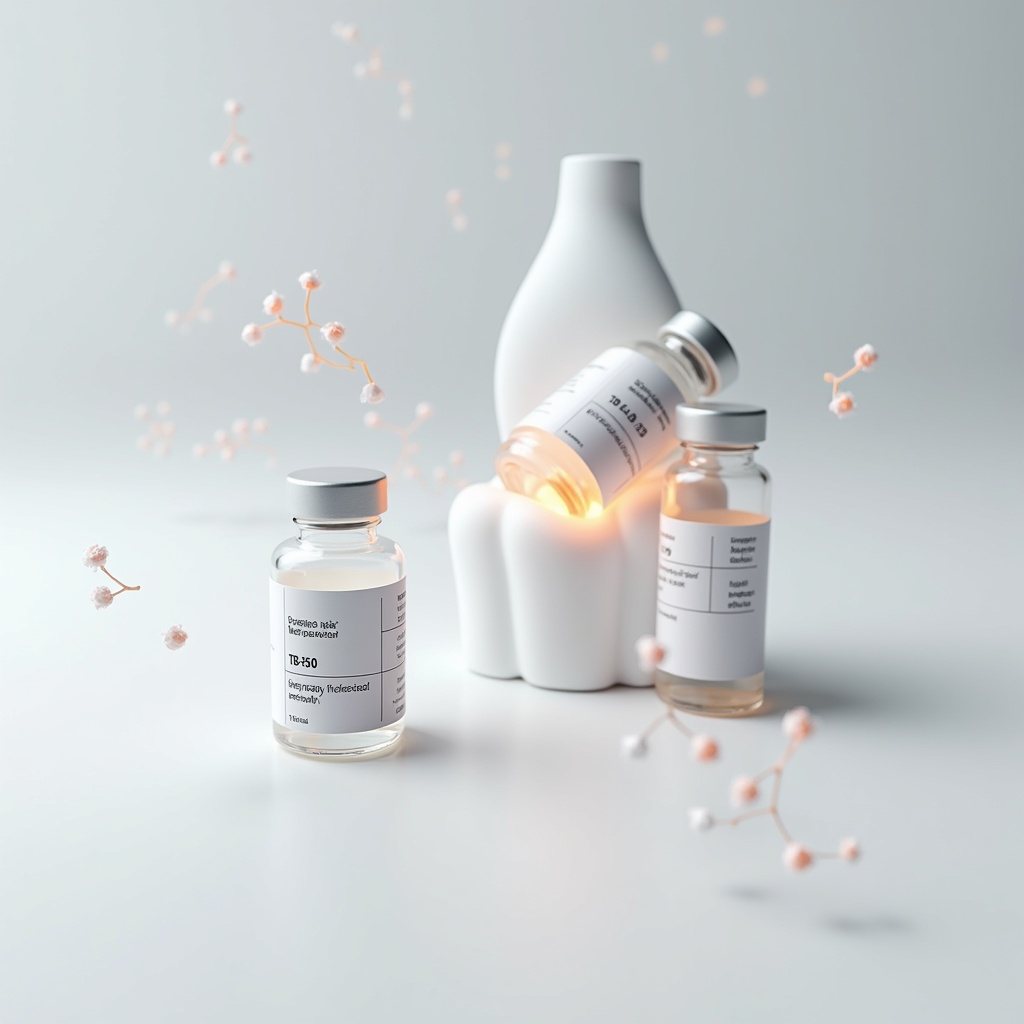
Why BPC-157 and TB-500 Work Better Together
Picture a torn ligament in your knee. The tissue is damaged, inflamed, and barely receiving blood flow. Your body wants to fix it, but it's running into two bottlenecks at once: not enough blood reaching the injury, and not enough repair cells arriving at the scene.
That's exactly why tendon and ligament injuries take forever to heal. Sometimes months. Sometimes they never fully recover.
BPC-157 and TB-500 attack this problem from both sides simultaneously. BPC-157 builds the highway to the injury site: it triggers new blood vessel growth through VEGF and nitric oxide (NO), flooding the damaged area with oxygen and nutrients. TB-500 sends the construction crew down that highway: it binds to actin inside cells, making stem cells and fibroblasts migrate toward the damage faster than they normally would.
Two completely different repair mechanisms. Two separate signaling pathways. Running in parallel without interfering with each other. The tissue gets both vascular supply and cellular repair at the same time.
Athletes and peptide-savvy physicians call this combination the "Wolverine Stack." The name is playful, but the concept behind it is serious: accelerated tissue regeneration that used to sound like science fiction.
BPC-157: Blood Flow and Collagen Synthesis
BPC-157 (Body Protection Compound) is a 15-amino-acid peptide derived from a protein naturally found in gastric juice. In the gut, it protects and repairs the mucosal lining. But when injected subcutaneously near an injury, it activates several repair pathways.
The most important one is angiogenesis. BPC-157 upregulates vascular endothelial growth factor (VEGF) and boosts nitric oxide (NO) production. This leads to the formation of new capillaries in the injured area. For tendons and ligaments, this is a game changer. These tissues have inherently poor blood supply, which is the primary reason they heal so slowly compared to muscles.
Second, BPC-157 stimulates collagen production by activating growth hormone receptors on fibroblasts. More active fibroblasts means more collagen deposited at the injury site, leading to stronger repaired tissue.
Third, it reduces inflammation by lowering pro-inflammatory cytokines. Less excessive inflammation means less swelling, less pain, and a cleaner environment for regeneration to occur.
Dr. Koniver, one of the pioneers in clinical peptide use, says [[Product|22]] is the single most prescribed peptide in his practice. He uses doses ranging from 500 to 5,000 mcg per day on a 5-days-on, 2-days-off protocol depending on severity.
TB-500: Cell Migration and Tissue Remodeling
TB-500 is a synthetic fragment of thymosin beta-4, a protein produced in the thymus gland. Its standout ability is actin binding.
Here's why that matters. Actin is essentially the "muscle" inside every cell. When [[Product|25]] binds to it, cells become more mobile. Stem cells, fibroblasts, and immune cells start migrating to the injury site faster than they normally would. Think of it as putting a turbocharger on your body's repair crew.
But TB-500 does more than just speed up cell migration. It also promotes angiogenesis through a different signaling pathway than BPC-157. When you use both together, you get new blood vessel formation through two independent mechanisms. The effect isn't just additive; the two pathways complement each other.
Another key benefit is its anti-fibrotic action. TB-500 reduces scar tissue formation. After a serious injury, this means the repaired tissue ends up closer in quality to the original, rather than being replaced by stiff, non-functional scar tissue.
Add in strong anti-inflammatory properties that stack with BPC-157's own inflammation control, and you have a powerful combination.
When to Use Each One (and When to Combine)
Dr. Quinn Stillson, MD, a physician specializing in regenerative medicine, lays out a straightforward decision framework:
Chronic injuries: tendinitis, lingering knee pain, nagging shoulder
Start with [[Product|22]] alone. In many cases, that's all you need. If you hit a plateau after 2 to 4 weeks (pain decreased but didn't resolve, mobility improved but isn't fully back), add TB-500. No reason to use both from the start if one peptide handles the job.
Acute serious injuries: ligament tear, post-surgical recovery
Both peptides from day one. When tissue is seriously damaged, you need maximum blood flow (BPC-157) and maximum cell migration (TB-500) as fast as possible. Every day of delay means more scar tissue and more lost function.
Minor strains and tweaks
BPC-157 solo typically resolves these within 1 to 2 weeks. A pulled muscle or mild tendon irritation after a workout doesn't warrant the full stack.
Brain injuries
A separate category entirely. For mild concussions, BPC-157 alone may be sufficient (it crosses the blood-brain barrier). For serious traumatic brain injury or stroke recovery, both peptides together provide maximum neuroprotective and regenerative support.
Dosing the Wolverine Stack
The standard combined protocol:
- BPC-157: 250 to 500 mcg per day, subcutaneous injection
- TB-500: 500 mcg per day, subcutaneous injection
- Timing: both peptides can be injected at the same time of day
- Injection sites: use different sites for each. If your knee is injured, inject one peptide near the knee and the other at a distant site (abdomen, thigh)
Cycle: 4 to 6 weeks on, 4 to 6 weeks off. Unlike hormonal compounds, BPC-157 and TB-500 don't cause receptor desensitization, so daily dosing is safe throughout the cycle. The off-period is more about assessing results and budget than medical necessity.
Dr. Koniver goes higher in complex cases, up to 5,000 mcg of BPC-157 daily. But for most people, 250 to 500 mcg is the effective range.
GLOW: The Wolverine Stack in a Single Vial
Buying three separate peptides ([[Product|22]], [[Product|25]], [[Product|24]]), reconstituting each one, calculating individual doses: it works, but it's not exactly convenient.
[[Product|23]] from Peptex combines BPC-157, TB-500, and GHK-Cu in one vial at effective dosages. One vial, one injection, three repair mechanisms.
The GHK-Cu component adds a third layer of recovery: it stimulates collagen synthesis, provides anti-inflammatory support, and accelerates tissue remodeling. Essentially, GLOW is the Wolverine Stack plus bonus collagen support.
For anyone who doesn't want to juggle three vials and three syringes, GLOW is the ready-made solution. Reconstitute with [[Product|30]], draw your dose, inject subcutaneously. Done.
Practical Tips for Running the Stack
If you're using separate BPC-157 and TB-500 vials:
- Reconstitute each vial with [[Product|30]] separately. Standard reconstitution volume is noted on the vial
- Inject at different body sites. Not strictly required, but it allows each peptide to work independently at its injection location
- Rotate injection sites: abdomen (a few inches from the navel), upper thigh, area near the injury. Don't use the same spot every day
- Store reconstituted peptides in the refrigerator at 2 to 8 degrees Celsius. Shelf life after reconstitution is 90 days
- Use insulin syringes (29 to 31 gauge) for minimal discomfort
Unreconstituted powder vials can be stored in the freezer for maximum shelf life. Once reconstituted, refrigerator only. Never freeze reconstituted peptides.
Dr. Josh Axe's Recovery Story
Dr. Josh Axe, bestselling health author and founder of Ancient Nutrition, went through one of the scariest medical situations imaginable. A spinal infection. His doctors told him he might never walk again.
The recovery protocol he assembled with his medical team included BPC-157 and TB-500 alongside hyperbaric oxygen therapy and ozone therapy. The outcome: a full recovery.
The peptides were part of a comprehensive approach, not a standalone treatment. But the fact that a physician facing a career-ending, life-altering injury chose this exact combination for his own protocol speaks volumes about the confidence practitioners have in these peptides.
Joe Rogan has discussed BPC-157 multiple times on his podcast, sharing his own experience using it for sports injuries. Regenerative peptides have moved from underground biohacking circles into mainstream conversation.
Who Should Not Use This Stack
For all its benefits, the Wolverine Stack isn't appropriate for everyone. There's one major contraindication category you need to be aware of before starting.
Both peptides promote angiogenesis: the growth of new blood vessels. That's exactly what you want for healing injuries. But if there's a malignant tumor somewhere in the body, those new blood vessels will feed the tumor too.
BPC-157 and TB-500 are contraindicated for:
- Active cancer of any type
- Precancerous conditions (polyps, dysplasia, suspicious growths)
- Strong family history of cancer (especially multiple cases among close relatives)
Recommendation: before starting a cycle, get baseline screening appropriate for your age and gender. A few days of testing gives you peace of mind for the entire course.
Months of Rehab or Weeks of Recovery
Here's the basic math. Standard recovery from a partial ligament tear runs 3 to 6 months. Physical therapy sessions, activity restrictions, pain, and frustration. Many people quit their sport because they can't handle the downtime...
PEPTEX доставляє в Польщу, Чехію, Німеччину та по всій Європі — швидка доставка, сертифікована якість, безкоштовна доставка від 150 €.
Читати далі: BPC-157 + TB-500 стек Росомахи: дозування, протокол, відновлення травм Peptex
💬 Комментарии